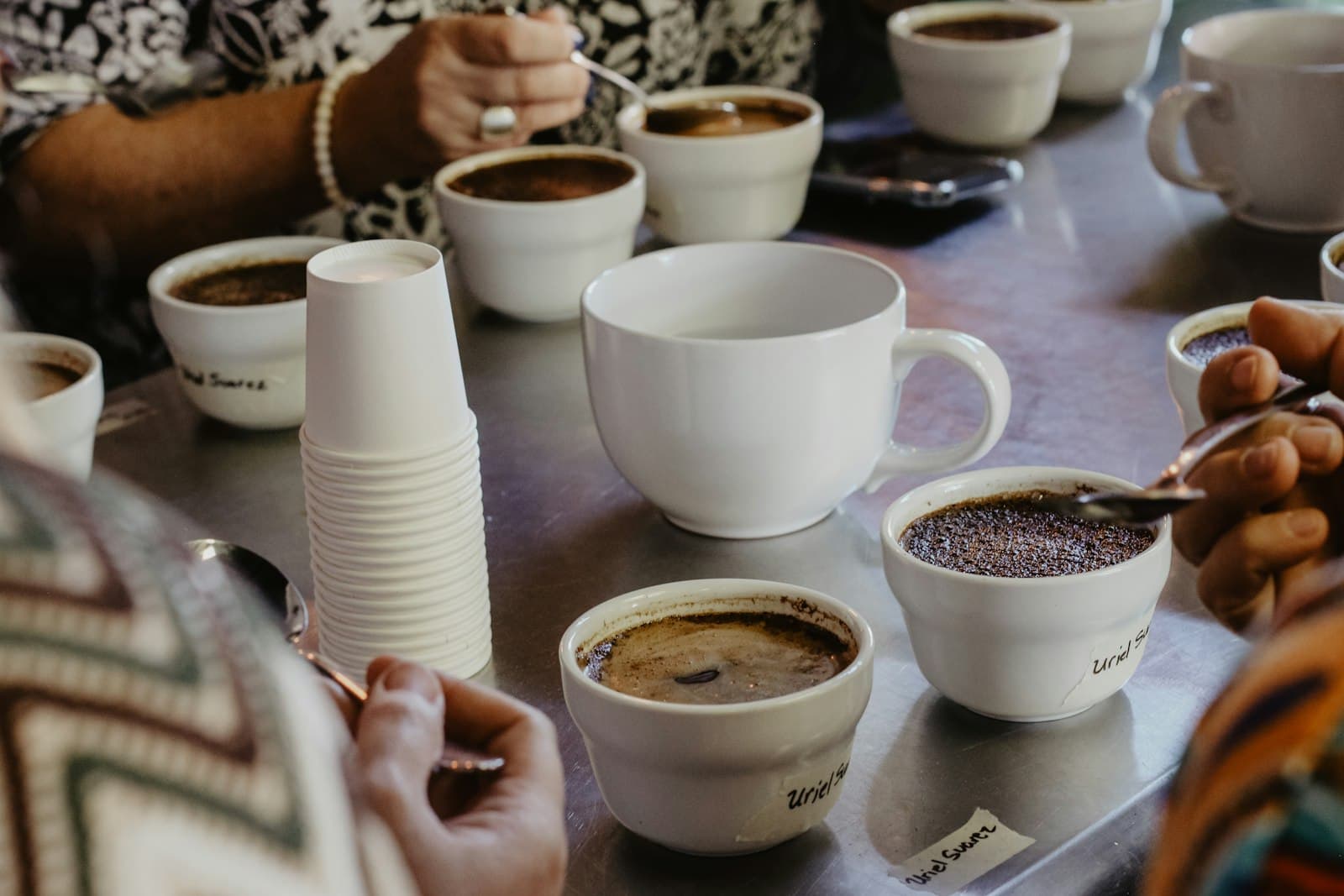
Yes, most people with Crohn's disease can drink coffee, and no major guideline tells people with Crohn's to avoid it. But coffee genuinely speeds up the bowel in some people, and in one large survey people with Crohn's were more than twice as likely as people with ulcerative colitis to say it affected their symptoms. So the useful question is not "am I allowed coffee?" but "what does my cup do to me, and when?"
This guide covers what coffee actually does inside the gut, why the answer can change between a flare and remission, the Crohn's-specific situations where it matters more (an ileostomy, strictures, low iron), and how to test your own tolerance without giving up something you love on the strength of one bad morning.
Can you drink coffee if you have Crohn's disease?
For most people, yes. There is no evidence-based rule that people with Crohn's should avoid coffee, and the main guidelines deliberately avoid one-size-fits-all food bans.
The European Society for Clinical Nutrition and Metabolism (ESPEN) states that there is no "IBD diet" that can be generally recommended to promote remission, and advises people with IBD to follow healthy dietary patterns while avoiding their individual nutritional triggers (Bischoff 2023). The British Society of Gastroenterology (BSG) guideline notes that many dietary components have been linked to IBD risk or relapse, but "no one dietary component is consistently blamed", and recommends a varied diet (Lamb 2019). Crohn's & Colitis UK's food guidance even lists coffee alongside water and tea as fluids that count towards your daily intake (Crohn's & Colitis UK).
What people with Crohn's actually do backs this up. In a survey of 442 members of the Swiss Crohn's and colitis patient association, 73% drank coffee regularly, and the proportion was almost identical in Crohn's and ulcerative colitis (Barthel 2015). The difference was in how people felt about it: 54% of those with Crohn's believed coffee affected their symptoms, compared with 22% of those with UC, and 45% of the Crohn's group felt the effect was negative. Nearly half of everyone who thought coffee worsened their symptoms still drank it regularly. The survey was short and did not record disease location, activity or how much coffee people drank, so it tells us about perception rather than cause.
The Reddit threads that prompted this article show the same spread. In r/CrohnsDisease, answers to "can anyone drink coffee?" ranged from several cups a day without a second thought to not even a sip, with many people landing on "it depends on the day" (r/CrohnsDisease thread).
What does coffee actually do to your gut?
Coffee is a gut stimulant in its own right, and not only because of caffeine. That is the most important thing to understand before deciding whether it is "a trigger".
It can wake up the colon within minutes. In a Sheffield study of 99 healthy young adults, 29% said coffee made them want to open their bowels. When researchers measured pressure in the lower colon of 14 volunteers, both regular and decaffeinated coffee increased activity within four minutes in the people who said coffee affected them, and the effect lasted at least 30 minutes. Hot water did nothing, and people who did not respond to coffee showed no change (Brown 1990).
Caffeine adds to the effect. A later study measured colonic activity in 12 healthy people. Caffeinated coffee stimulated the colon about as much as a 1,000 kcal meal, 60% more than water and 23% more than decaf (Rao 1998).
It also acts higher up. A review of the research found that coffee stimulates the release of gastrin and stomach acid, triggers the gut hormone cholecystokinin and gallbladder contraction, and promotes reflux. Because coffee has almost no calories and its effects cannot be explained by volume or acidity, the authors concluded it has drug-like effects, and that caffeine alone cannot account for all of them (Boekema 1999a).
That stimulating effect is useful enough that surgeons use it. A network meta-analysis of 32 randomised trials in 4,999 people found that drinking coffee after gastrointestinal surgery shortened the time to the first bowel movement and the hospital stay, while caffeine on its own did not show the same benefit (Sinz 2023). A separate meta-analysis did find that caffeinated drinks sped up the first bowel movement after planned keyhole bowel surgery (Vaghiri 2024), so exactly how much comes from caffeine is still debated. It explains why several people in r/CrohnsDisease were surprised to be handed a coffee the day after their resection (r/CrohnsDisease thread).
Why this matters for Crohn's: the Swiss survey authors pointed out that coffee's effect on motility "might simply increase stool frequency and thus adversely affect IBD symptoms" (Barthel 2015). If you already live with urgency, loose stools or a shortened bowel after surgery, a perfectly normal coffee response can feel much bigger. That is a symptom effect, not evidence that coffee is inflaming your gut.
Why can you tolerate coffee some weeks but not others?
Because coffee is rarely the only thing that changed. One of the most relatable posts on this topic described drinking coffee happily while visiting family, with filling meals and little stress, then getting reflux and a bad day from the same drink back home, where life was more stressful (r/CrohnsDisease thread). Several factors can explain that pattern.
Disease activity. When your bowel is inflamed, everything that speeds it up tends to matter more. Crohn's & Colitis UK lists caffeine, alcohol, artificial sweeteners and liquorice as things that might make diarrhoea worse (Crohn's & Colitis UK).
IBS-type symptoms on top of Crohn's. In a meta-analysis of 3,169 people with IBD in remission, 32.5% had symptoms meeting criteria for IBS. The figure was higher in Crohn's (36.6%) than UC, still about a quarter when remission was confirmed by endoscopy, and linked to higher anxiety and depression scores (Fairbrass 2020). A sensitive gut reacts more on stressful days, so coffee can seem like a trigger one week and harmless the next.
Sleep. In a cohort of 1,291 people whose Crohn's was in remission, those with disturbed sleep had twice the odds of active disease six months later (Ananthakrishnan 2013). That is an association, not proof that poor sleep causes flares, but it matters because caffeine affects sleep. A meta-analysis of 24 studies found caffeine cut total sleep by about 45 minutes, and estimated that a typical coffee should be finished nearly nine hours before bed to avoid losing sleep (Gardiner 2023). Several people in the Reddit threads noticed coffee hit their sleep harder than their bowel.
Empty stomach or with food. In a small crossover study, coffee did not increase acid reflux after meals, but it did increase reflux in people with reflux disease when drunk on an empty stomach (Boekema 1999b). Plenty of people with Crohn's say coffee only works for them after breakfast, which fits.
The drink itself. A small espresso, a large drip coffee left on the hotplate and a sweet iced latte are very different drinks, which brings us to the next question.
Is it the caffeine, the coffee, or what you put in it?
Often it is something other than the coffee. When people say "coffee" they usually mean a combination of coffee, caffeine, milk, sugar or syrup, a certain volume and a certain time of day. Each is a separate suspect, and the evidence for each is different.
| What in your cup | What it may do | How strong the evidence is | How to test it |
|---|---|---|---|
| Caffeine | Adds to colon stimulation; can disrupt sleep | Moderate: small physiology studies and a sleep meta-analysis | Compare regular and decaf of the same coffee, same size and time |
| Coffee itself (non-caffeine compounds) | Stimulates the colon, gastrin, acid and the gallbladder, even as decaf | Moderate: small studies, mostly in healthy people | If decaf still bothers you, caffeine is unlikely to be the whole story |
| Brew method and acidity | Cold brew contains fewer total acids than hot brew, though pH is similar | Weak: lab chemistry only, no symptom trials in IBD | Try cold brew at a similar strength and size to your usual coffee |
| Milk | Lactose may cause gas, bloating or loose stools if you do not digest it well | Moderate for lactose maldigestion; linked to small bowel Crohn's | Same coffee black or with lactose-free milk on several days |
| Sweeteners, syrups, creamers | Polyols such as sorbitol can cause symptoms, especially diarrhoea | Moderate in IBS; limited in IBD | Check labels; drop the syrup but keep everything else the same |
| Size and strength | A large or strong drink is a bigger stimulus | Plausible; community reports | Halve the size before cutting it out |
| Timing | Empty-stomach coffee may increase reflux in susceptible people | Weak to moderate: one small reflux study | Drink the same coffee with or after food |
Clairop logs meals, symptoms and stool in seconds, then looks for the foods your gut reacts to, including reactions that land days later.
Milk and lactose
Milk is one of the most common hidden culprits. A systematic review found lactose maldigestion was more common in IBD overall, but on closer analysis the raised risk was specific to Crohn's affecting the small bowel. It also depended heavily on ethnic background, and symptoms did not always track maldigestion (Szilagyi 2016). The same review warned that restricting dairy can have nutritional downsides, so switching to lactose-free milk is often a better first test than cutting dairy out.
One r/CrohnsDisease post described a barista using regular milk in a decaf order, with hours on the toilet afterwards. The comments were a good reminder that people's timing varies: some react to lactose within minutes, others hours later (r/CrohnsDisease thread).
Sweeteners, syrups and creamers
Flavoured syrups and creamers are easy to overlook. The NICE guideline for IBS advises people with diarrhoea to avoid sorbitol, found in sugar-free sweets and drinks (NICE CG61). In a double-blind study, sorbitol and mannitol increased gut symptoms in people with IBS but not in healthy volunteers (Yao 2014). Not every sugar-free syrup contains polyols, so check the ingredient list rather than assuming.
Cold brew, espresso and "low acid" coffee
Cold brew is the single most recommended swap in the Crohn's community, but the reasons given are often wrong. People frequently say cold brew is far less acidic. A lab study of six light-roast coffees found cold and hot brew had comparable pH (4.85 to 5.13), although hot brew extracted more total acids (Rao and Fuller 2018). Whether that difference changes symptoms in an inflamed bowel has never been tested.
The lived experience is genuinely mixed. One person could drink decaf espresso and cold brew but not caffeinated espresso, while a commenter reported the exact opposite (r/CrohnsDisease thread). Another post about a reduced-acid brand drew people who found low-acid coffee helpful and one who found even acid-free coffee painful and concluded caffeine was their issue (r/CrohnsDisease thread). Someone who switched to decaf and still had diarrhoea and pain was told by others that coffee itself, not only caffeine, gets the bowel moving (r/CrohnsDisease thread), which matches the research above.
The practical point: brew method might matter for you, but so might strength and size, and cold brew is often made stronger. Compare like with like.
Should you stop drinking coffee during a Crohn's flare?
Cutting back or pausing coffee during a flare is reasonable if it makes your urgency or diarrhoea worse, but it will not treat the flare, and a flare is the wrong time to decide whether coffee is a long-term problem.
No trial has tested stopping coffee during active Crohn's. The advice rests on physiology (coffee stimulates the colon) and on guidance that caffeine may worsen diarrhoea (Crohn's & Colitis UK). Many people in the Reddit threads describe exactly this pattern: no coffee in the worst part of a flare, one small cup as things settle, and back to normal in remission.
Two cautions. First, ESPEN is clear that no diet can be generally recommended to bring active IBD into remission (Bischoff 2023), so new or worsening symptoms need your IBD team, not just a coffee break. Second, inflammation produces so many symptoms of its own that testing coffee during a flare will almost always make it look guilty. One person in r/CrohnsDisease described a months-long flare that improved dramatically after they finally stopped coffee (r/CrohnsDisease thread). Experiences like that are real, but a flare also has its own natural course, so it is hard to know from one episode what did the work. They also described severe headaches when stopping caffeine, which is one reason some people cut down gradually rather than all at once.
Why do some doctors say no coffee after a Crohn's diagnosis?
Mostly out of caution. Coffee stimulates the colon, raises stomach acid and can promote reflux, and the review cited above opens by noting that doctors "tend to discourage its consumption in some diseases" (Boekema 1999a). When someone is newly diagnosed and inflamed, dropping a stimulant is an easy suggestion.
It is not a rule, and advice varies a lot. The person who asked "do you all drink coffee?" had been told no coffee after diagnosis, then later heard from their gastroenterologist that it was fine (r/CrohnsDisease thread). Others said their only specific warning was about high-fibre food.
The risk of blanket bans is that people end up restricting far more than they need to. In a UK survey of 400 people with IBD, 57% believed diet could trigger a flare, 66% deprived themselves of favourite foods to prevent relapse, and nearly half had never received formal dietary advice (Limdi 2016). The BSG guideline warns that self-imposed restrictions may harm nutrition and that dietitian support may be needed (Lamb 2019). ESPEN recommends that everyone with IBD has individual dietitian counselling as part of their care (Bischoff 2023). If you are unsure what you should avoid, asking for that referral is more useful than guessing.
Crohn's situations where coffee needs more thought
If you have an ileostomy
Coffee is more likely to matter here. A best-evidence summary on diet for high-output ileostomy advises limiting "hypotonic" drinks, including water, tea, coffee and fruit juice, because they can increase output and sodium loss, and recommends glucose-electrolyte solutions instead. It also lists coffee among drinks and foods to limit if gas is a problem (Wang 2025).
This is where the "coffee is fine for hydration" research does not transfer. In 50 men who habitually drank coffee, moderate coffee hydrated about as well as water (Killer 2014). Those men had a full colon to reabsorb fluid. With a high-output stoma, fluid balance works differently. In r/ostomy, someone asking for dehydration tips was advised that caffeine increases output and chose to drop their small black coffee (r/ostomy thread), while plenty of others with established stomas drink coffee without trouble. Your stoma nurse or dietitian should set your fluid plan.
If you have a stricture
No guideline singles out coffee for strictures. The BSG guideline says people with stricturing Crohn's may need to change their intake of fibre and fibrous foods (Lamb 2019), and ESPEN suggests a texture-adapted diet when a narrowing causes obstructive symptoms (Bischoff 2023). Coffee itself contains no fibre. Some people with strictures and constipation describe coffee as helping them go, but coffee does not treat a narrowing, and relying on it can mask a change that needs attention.
After bowel surgery or on a liquid diet
After surgery, coffee may help the bowel restart, which is why some hospitals offer it (Sinz 2023). During exclusive enteral nutrition, the BSG guideline notes that some units permit black coffee alongside the formula (Lamb 2019), and Crohn's & Colitis UK says your dietitian will tell you what you can drink (Crohn's & Colitis UK). Follow your own unit's instructions.
If your iron is low or you are always exhausted
This is the angle almost nobody talks about. The BSG guideline states that about a third of people with active IBD have iron deficiency anaemia, and that fatigue in IBD should be investigated for anaemia, iron deficiency, poor sleep and other causes (Lamb 2019).
Coffee interferes with iron absorption from food. In dual-isotope studies, a cup of coffee cut iron absorption from a hamburger meal by 39%. Coffee drunk an hour before the meal had no effect, but coffee an hour after reduced absorption just as much as drinking it with the meal (Morck 1983). Black tea, herbal teas and cocoa were also strong inhibitors, and adding milk made little difference (Hurrell 1999). Crohn's & Colitis UK suggests waiting an hour after eating before tea or coffee, even decaf (Crohn's & Colitis UK).
There is also a loop worth recognising. In a thread asking what people with Crohn's do for energy, one person summed it up as drinking coffee for energy, needing the bathroom repeatedly, feeling more tired and reaching for more caffeine, while others urged getting iron and B12 checked (r/CrohnsDisease thread). If you rely on coffee to get through the day, tell your team about the fatigue rather than just treating it with caffeine. If you take iron, ask your team or pharmacist about timing it around coffee and tea.
If you take regular medicines
Caffeine is processed mainly by one liver enzyme, CYP1A2, which handles about 95% of it. How fast people clear caffeine varies widely with genetics, age, hormones, smoking and liver health, and caffeine interacts with many medications (Nehlig 2018). If you start a new medicine and notice jitters, a racing heart or worse sleep from your usual coffee, mention it to your pharmacist. Do not change or stop any medicine on your own.
How to test whether coffee is a problem for you: a worked example
The only way to separate a coffee effect from coincidence is repetition and comparison, while your Crohn's is stable. Here is a made-up but typical example.
The situation. Sam has Crohn's affecting the end of the small bowel and colon. They are in remission on maintenance treatment and drink two large drip coffees with milk and a sugar-free vanilla syrup each morning. Some mornings bring urgency within an hour, and Sam wonders whether to quit coffee altogether.
Step 1: check the timing is right. Sam mentions it at their next IBD review. Their team is happy that the Crohn's is under control, and they agree Sam will not start while unwell, straight after a medication change, or during a particularly stressful stretch. If symptoms had been new or worsening, the first step would have been checking for active inflammation, not testing coffee.
Step 2: record the usual routine for two weeks. Without changing anything, Sam logs each coffee (size, type, milk, syrup, time, with or without food), bowel movements with Bristol stool type, urgency, sleep and stress. They log close to the moment rather than from memory at night. For why delayed and immediate reactions need separate windows, see our guide to how long after eating symptoms can start.
Step 3: change one thing at a time. Over the next few weeks Sam varies one element per block and keeps everything else the same: some mornings with no coffee, then one coffee instead of two, then coffee after breakfast rather than before, then no syrup, then lactose-free milk.
Step 4: compare, rather than remember. After six weeks, the pattern looks like this. Urgency followed about two thirds of mornings with two large coffees on an empty stomach, but only about a quarter of mornings with one coffee after breakfast, similar to no-coffee mornings. Afternoons with the sugar-free syrup had more bloating than afternoons without it. Switching milk made no visible difference.
Step 5: act on the pattern, then keep watching. Sam keeps one coffee after breakfast, drops the syrup and keeps regular milk. They share the summary at their next appointment. It is a pattern, not proof: expectation can shape symptoms, and Sam could not blind themselves to what they were drinking. But repeated comparisons are far more reliable than a single bad day.
Doing this by hand works. Clairop automates the comparison: it checks each food and drink you log against three delay windows (within six hours, six to 24 hours, and one to three days), compares symptoms after entries with and without it, and waits for at least five of each before showing a result. The method page explains why that minimum matters.
Myths about coffee and Crohn's disease
Myth: "Coffee is banned once you have Crohn's." No major guideline bans coffee. ESPEN advises healthy eating and avoiding your individual triggers, not a universal list (Bischoff 2023).
Myth: "Decaf can't affect your bowel." Decaf increased lower colon activity within minutes in people who respond to coffee (Brown 1990). It is somewhat less stimulating than regular coffee (Rao 1998), not inert.
Myth: "If coffee makes you go, it is making your Crohn's worse." About 29% of healthy young adults report the same urge (Brown 1990). A bowel response is not evidence of inflammation, though it can make existing symptoms harder to live with.
Myth: "Coffee dehydrates you." In habitual coffee drinkers with an intact colon, moderate coffee hydrated about as well as water (Killer 2014). High-output ileostomy is the important exception (Wang 2025).
Myth: "Cold brew is acid-free." Cold and hot brew had similar pH in lab testing; cold brew had fewer total acids (Rao and Fuller 2018). It may suit some people, but not for the reason usually given.
Myth: "Coffee causes Crohn's disease." The research does not support this, as the next section explains.
Does coffee cause or protect against Crohn's disease?
Neither has been shown. Studies on coffee and the risk of developing IBD are mostly observational and inconsistent, and none tells you how coffee affects Crohn's you already have.
A meta-analysis of 16 studies including 1,933 people with Crohn's found no significant link between coffee and Crohn's risk (Yang 2019). For ulcerative colitis, a similar analysis found a trend towards lower risk with coffee that was not statistically significant and was confounded by smoking (Nie 2017). A 2026 meta-analysis of 21 studies found no overall association between caffeine and IBD, with results varying by region, age and smoking status (Wu 2026). Another 2026 analysis found coffee drinkers had a lower risk of IBD, but most included studies were case-control designs with high heterogeneity (Peng 2026). In a US population survey of 12,759 adults, caffeine intake was not associated with IBD, while moderate intake was linked to less constipation (Yang 2025).
Coffee also has one of the strongest relationships of any food with the gut microbiome. Across more than 22,000 people, coffee drinking was consistently linked to a bacterium called Lawsonibacter asaccharolyticus (Manghi 2024). Interesting, but nobody yet knows what that means for Crohn's. The honest summary: drink coffee because you enjoy it and tolerate it, not to prevent or treat anything.
If you have ulcerative colitis or IBS-type symptoms too
Much of this applies to ulcerative colitis, although people with UC are less likely to feel coffee affects them (Barthel 2015). For more on food and UC specifically, see can food trigger a UC flare.
If you have IBS-type symptoms in remission, IBS guidance may be relevant. NICE's general dietary advice for IBS includes limiting tea and coffee to three cups a day, reducing alcohol and fizzy drinks, and eating regular meals (NICE CG61). That advice was written for IBS, not Crohn's, so run any bigger dietary changes past your IBD team or dietitian.
When to contact your IBD team
Coffee can make ordinary bowel symptoms more noticeable, but it should never be the explanation you settle on for a real change in your Crohn's.
Contact your IBD team promptly if you have:
- Blood in your stool, or black, tarry stools
- More frequent or looser stools than your usual pattern that do not settle when you cut out coffee
- Diarrhoea or pain that wakes you at night
- Fever, unexplained weight loss or loss of appetite
- New or worsening abdominal pain, or pain around the anus, swelling or discharge
- Unusual tiredness, breathlessness or looking pale, which can signal anaemia
- High stoma output with thirst, dizziness, dark urine or passing less urine, which can signal dehydration
Seek urgent care for severe abdominal pain, vomiting with a swollen belly, or being unable to pass stool or wind.
When you go, specifics help: how often you open your bowels compared with your normal, any blood or night-time episodes, and anything you have already tested. Clairop calculates the Harvey-Bradshaw Index from answers you have already logged and turns it into a one-page report, but a clear written summary of your pattern does the same job. For more on living with Crohn's day to day, browse our Crohn's disease guides.