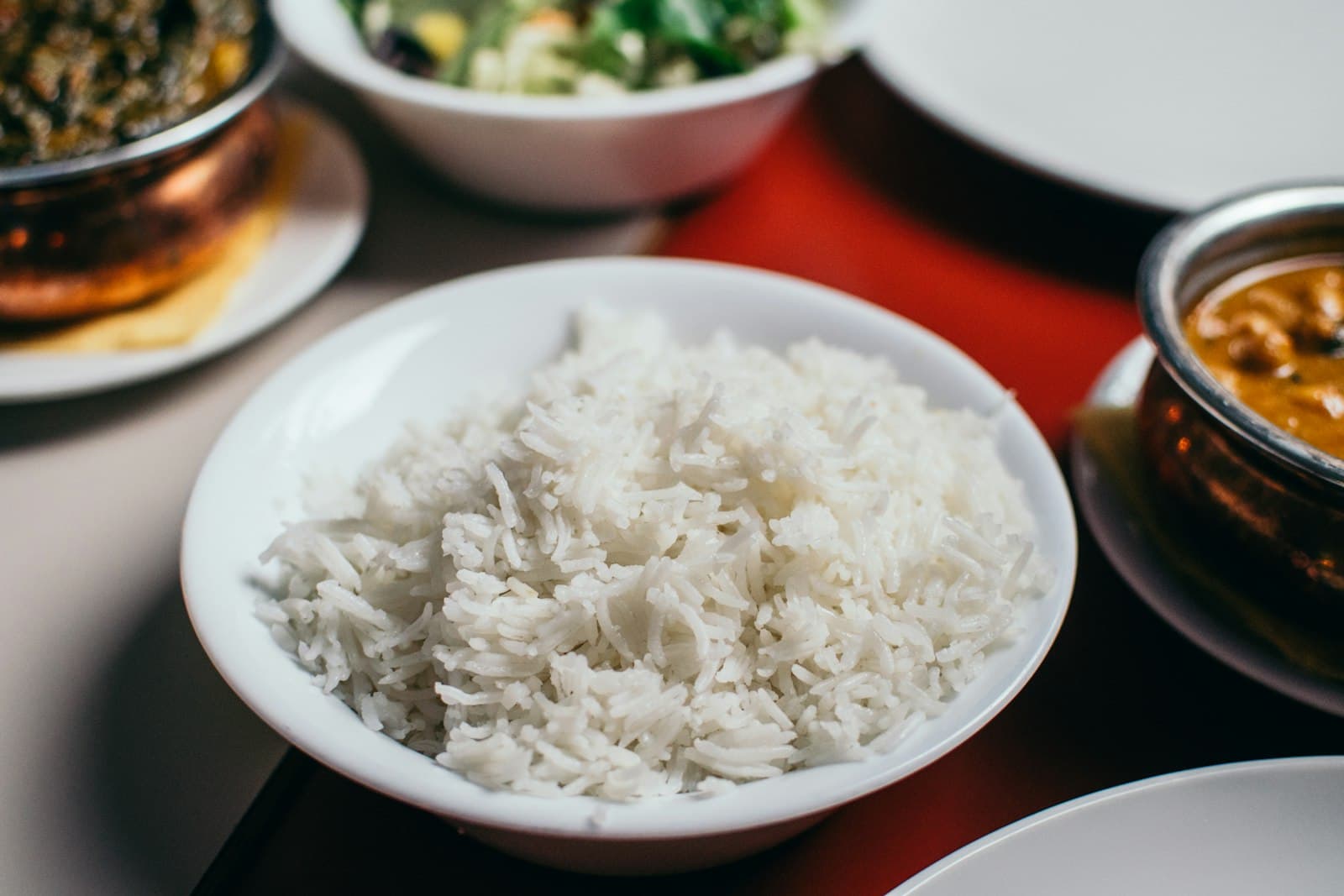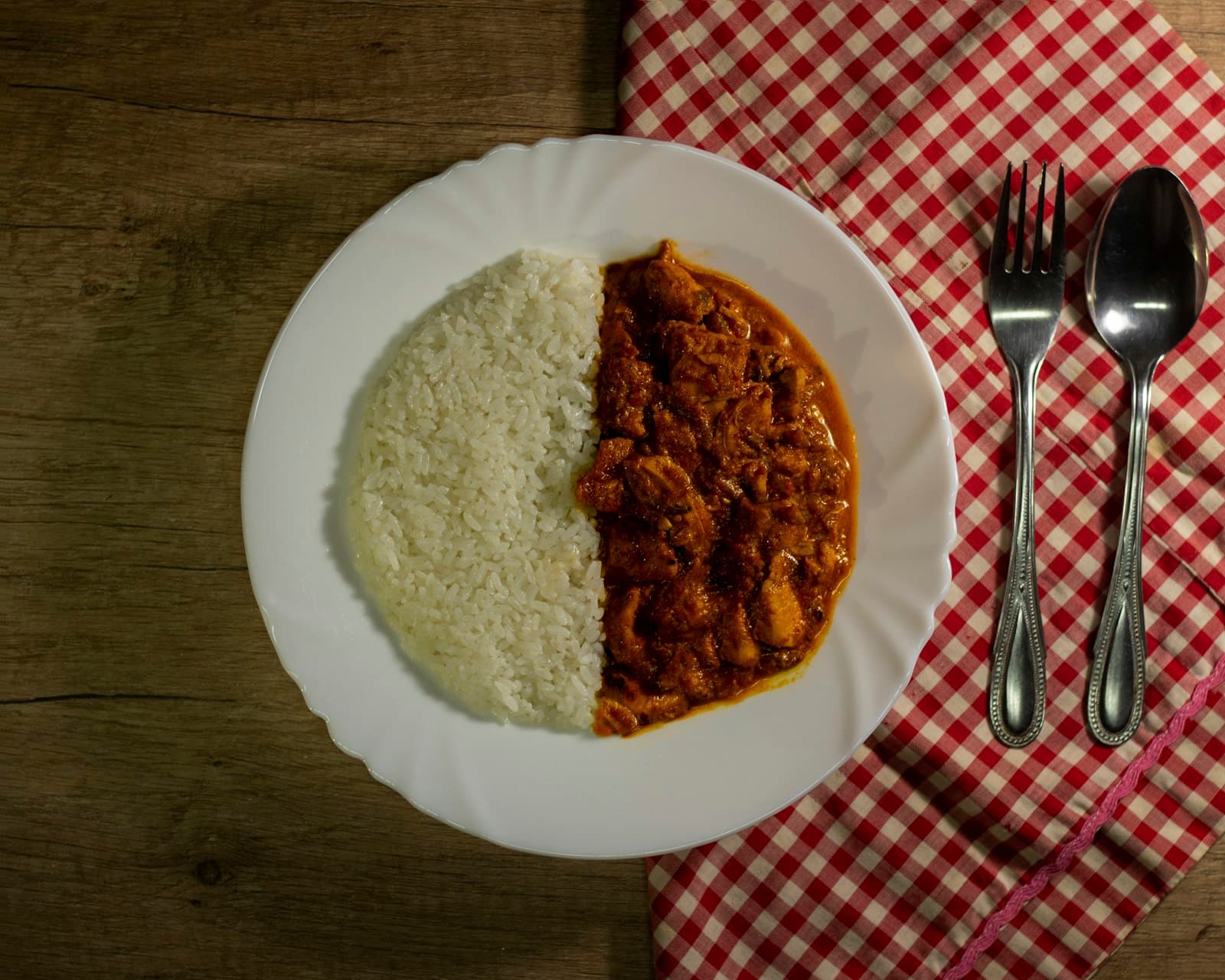
During a Crohn's flare, most people cope best with food that is soft, low in fibre, dense in calories, and eaten in smaller amounts more often. Fluid and salt matter as much as the food itself. That is the honest answer, and it is worth saying immediately that no clinical trial has ever tested a Crohn's flare food list against another one. Every page that hands you a confident menu, including this one, is working from physiology, guideline consensus and what large numbers of people report, not from a randomised comparison of applesauce against porridge.
There is one question that comes before any of it, though, and it is the reason this guide does not open with a shopping list. If you are vomiting, your tummy is distended and gas or stool has stopped moving, the thing you need is not a better breakfast. That pattern is how a bowel obstruction presents, and it is medical, not dietary. Get that question settled first, and then the food question becomes much simpler.
First: is this a flare, or is it an obstruction?
Before any food decision, work out whether what you are having is inflammation you can eat around, or a blockage that needs urgent assessment. They can feel similar at the start and they need completely different responses.
A thread in r/CrohnsDisease that sits right at the centre of this question was posted by someone with intense trapped gas pain, frequent vomiting, a suspected stricture or partial obstruction, and a GI appointment two days away. They had been living on sports drinks, were out of them, and were asking the sub what to buy at the shop (r/CrohnsDisease thread). Several of the most upvoted replies did not answer the food question at all. They said: go to the emergency department. One described having asked almost exactly the same question years earlier, waiting it out, then stopping passing stool, vomiting dark green fluid and needing emergency surgery.
That leaflet also sets out what its own patients are told to do while waiting for a response: nothing by mouth for three to six hours, then fluids only for 24 hours, then a gradual return to easy to digest food, staying low residue afterwards. Two things are worth noticing about it. First, it is a protocol issued by a team to its own patients who have been assessed and know their disease, not a general instruction to anyone with abdominal pain. Second, it is a holding plan while a clinician is being contacted, not a substitute for contacting one.
If you are not sure whether what you are having is a flare at all, our guide on how to tell if you are in a Crohn's flare covers the look-alikes, including stomach bugs, bile acid diarrhoea and post-resection changes, and what actually settles the question.
Why nobody can give you a real Crohn's flare food list
The lists on every page that ranks for this question are not wrong, exactly. They are just unsourced. They describe what clinicians have observed patients tolerate, and then they present it with the confidence of a guideline.
Here is what the evidence actually consists of. The US National Institute of Diabetes and Digestive and Kidney Diseases states plainly that researchers have not found that specific foods cause or worsen Crohn's disease symptoms, and suggests keeping a food diary to identify the ones that seem to make your own symptoms worse (NIDDK). The AGA Clinical Practice Update on diet in IBD is similarly restrained. It endorses a healthy Mediterranean pattern for people with IBD generally, adds that it may need accommodations for food texture where there are strictures or obstructions, and puts most of its emphasis on identifying and treating malnutrition, which it calls under-recognised in this population (Hashash 2024). The ESPEN clinical nutrition guideline for IBD runs to 71 recommendations covering general care, active disease and remission (Bischoff 2023).
Not one of those documents contains the phrase "eat applesauce during a flare". They cannot, because the trial that would justify it has never been run.
The closest thing to a controlled test of the low fibre approach is now forty years old and it did not find what most people expect. Seventy patients with non stenosing Crohn's disease were randomly assigned to a low residue diet or a normal Italian diet and followed for an average of 29 months. Compliance was good: the restricted group ate about 8 portions of fibre containing foods a week against 26.6 in the liberalised group. There was no difference in symptoms, hospitalisation, surgery, new complications, nutritional status or postoperative recurrence. There was no difference in intestinal obstruction either. The authors concluded that lifting dietary restrictions does not cause symptomatic deterioration or precipitate obstruction in Crohn's disease (Levenstein 1985).
Read the population before you generalise that. Everyone in the trial had non stenosing disease, so it says nothing at all about people with a known narrowing. And it was a study of the long term diet, not of what to eat in the middle of a bad week. What it does show is that permanent fibre restriction is not protective in people without strictures, which is a different and much more common claim than "soft food is easier during a flare".
There is one more finding buried in it that almost nobody quotes. Even in the group eating freely, 86% eliminated one or more permitted foods because of subjective intolerance, as did 65% of the restricted group. People with Crohn's disease restrict food whether or not anyone tells them to.
What "low residue" actually means
Residue is not the same as fibre, and the distinction matters when you are deciding whether to peel an apple or skip it.
Fibre is a nutrient category. Residue is everything that ends up in the colon undigested, which includes fibre but also tough connective tissue in meat, some resistant starch, and the sheer physical bulk of anything that arrives intact. A low residue approach is really a low bulk approach, and its aim during a flare is mechanical and symptomatic: fewer, softer, smaller pieces arriving at an inflamed or narrowed segment, and less gas produced when bacteria ferment what reaches the colon.
That framing explains several things people find confusing.
- Cooking, peeling, mincing and pureeing change the answer more than swapping the food. A raw carrot and a well cooked, mashed carrot are the same vegetable with very different mechanical behaviour.
- Blending does not remove fibre. It reduces particle size, which usually helps with passage, but the fermentable material is still there. A dense smoothie can still produce a lot of gas.
- White versions of starches are not nutritionally superior. They are simply lower in residue. That is a temporary trade, not an upgrade.
- Fat is not automatically the enemy. Heavy fat loads slow stomach emptying and can worsen nausea for some people, but the low fat rule people remember often comes from advice for specific situations, such as significant small bowel resection, rather than from general flare management.
Strictures change everything about this question
If part of your bowel is narrowed, the food conversation stops being about symptom comfort and becomes about whether something can physically get through. That is the single biggest fork in this topic, and it is the one the food-list pages skip.
Narrowing is not a rare complication. In a prospective French cohort of 209 people undergoing ileocecal resection for Crohn's disease, stricturing disease was the indication in 52% of cases and penetrating complications in a further 42% (Fumery 2017). Among people who reach surgery, obstruction is the commonest reason they get there. A separate pilot study of nutrition in stricturing Crohn's opens by noting that more than half of patients develop fibrosis-driven obstruction at some point in their disease course, though that is the authors' framing of the background literature rather than their own measurement; their trial itself was a 10 versus 10 randomised pilot of an amino acid and sodium butyrate supplement, far too small to change anyone's practice (Cavalcanti 2024).
The practical consequence is that with a stricture, the things that cause trouble are the ones that do not break down: nuts, seeds, popcorn, corn, sweetcorn, dried fruit, citrus pith and membranes, pineapple, skins, pips, mushrooms, celery strings, raw leafy greens and tough cuts of meat. One person in the flare food thread described being on day three of barely eating because they had eaten a few fresh blueberries and their stricture blocked (r/CrohnsDisease thread). A handful of blueberries is, by any nutritional standard, a good thing to eat. Behind a narrowing it is a mechanical hazard.
If you do not know whether you have a stricture, that is a question for your team, not something to infer from symptoms. It is also one of the most useful things to raise before a colonoscopy, since the answer changes how the prep is chosen; our colonoscopy prep tips for Crohn's covers why saying the word "stricture" early matters.
The fast food paradox
A recurring and genuinely interesting observation in r/CrohnsDisease is that fast food often sits better during a flare than the foods people have been told are good for them. One thread put it directly: plain pasta, bread, potatoes and soup caused near-vomiting pain, while a quarter pounder and fries, chicken minis or a bean burrito went down fine (r/CrohnsDisease thread). Replies described the same thing with fried chicken, hash browns and breakfast tacos, and several people noted that broccoli, cauliflower and Brussels sprouts were the reliable offenders. Our guide to why junk food feels better with Crohn's takes that apart mechanically, including the measured fructan content of the foods involved.
No study has tested this, and it should not be read as a recommendation. But it is not mysterious either. The comparison people are actually making is low residue against high residue, with the "healthy" label doing the confusing.
- A burger bun, a beef patty, fries and a milkshake contain almost no intact plant material. A salad, a stir fry, an acai bowl or a bean chilli deliver a large volume of it.
- Fast food is soft, uniform and pre-broken-down by cooking method. Roughage is not.
- Refined starch is absorbed high in the small bowel. Brassicas, legumes, onions and whole grains arrive in the colon with plenty left to ferment, which produces gas in a gut that is already distended and sensitive.
The same thread family throws up a more painful theme. A widely upvoted post described going to a cafe after six months of stability, ordering an acai bowl full of fresh fruit and granola because it seemed like the healthy choice, feeling fine while eating it, and then paying for it hours later once it reached the colon (r/CrohnsDisease thread). The replies are full of people describing being judged by family for eating "like a five year old", and one of the most upvoted said plainly that they would love to eat salad, raw vegetables, nuts and broccoli, and that potatoes, rice and pasta are not a preference but a constraint.
That delayed timing is worth flagging: a meal can feel fine going down and cause trouble many hours later, once it reaches the part of the gut that is inflamed. It is the same pattern we cover for a different mechanism in how long after eating IBS symptoms start, and it is why blaming the last thing you ate is usually wrong.
Bowel rest is not the active ingredient
This is the idea most worth dismantling, because it is the reasoning behind a lot of self-imposed starvation during flares. Several people in the flare threads described going onto fluids only specifically to "rest" the bowel and let it heal.
That hypothesis was tested directly and it did not hold up. In 1988, 51 people with active Crohn's disease unresponsive to other medical management were randomly assigned for 21 days to one of three things: total parenteral nutrition with nothing by mouth, a defined formula diet through a nasogastric tube, or partial intravenous nutrition plus unrestricted eating. Clinical remission occurred in 71%, 58% and 60% of each group respectively, and the probability of still being in remission at one year was 42%, 55% and 56%. None of these differences were significant. The authors concluded that bowel rest was not a major factor in achieving remission during nutritional support and did not influence outcome over a year (Greenberg 1988).
In other words, the group that ate normal food alongside some intravenous nutrition did just as well as the group that ate nothing at all. Nutrition was doing the work, not the resting.
That finding is easy to misread in the other direction too. An earlier retrospective series of 100 patients treated with total parenteral nutrition and complete bowel rest reported clinical remission in 77%, including 76% of those with subacute bowel obstruction (Ostro 1985). It has no control group, it is a selected hospital population refractory to other treatment, and read alongside the randomised trial it tells you that these were very sick people who improved on intensive nutritional support, not that starving helps.
Where the real dietary evidence in Crohn's actually is
If you want the food intervention with the strongest trial record in Crohn's disease, it is not a list of gentle foods. It is a liquid formula feed taken as the entire diet, known as exclusive enteral nutrition, and the evidence for it is considerably better in children than in adults.
The Cochrane review pooled 27 studies and 1,011 participants. Comparing enteral nutrition against corticosteroids in eight trials with 223 participants, 50% of those on enteral nutrition reached remission against 72% on steroids, a difference that did not reach significance overall. But the age subgroups diverged sharply. In adults, 45% on enteral nutrition reached remission against 73% on steroids, a clear advantage for steroids. In children, 83% on enteral nutrition reached remission against 61% on steroids, favouring nutrition but not significantly in the intention to treat analysis. The type of formula made no difference: elemental and polymeric feeds performed the same. All of this was graded very low quality evidence, and people on enteral nutrition were around three times more likely to withdraw because of adverse events, most commonly because they could not tolerate the diet (Narula 2018).
That is the honest picture. It is a real treatment with a real evidence base, it is mainstream first line therapy in paediatric Crohn's, and in adults the same review suggests steroids probably work better. It is also very hard to stick to.
The exclusion diets were designed to solve exactly that tolerability problem. The Crohn's Disease Exclusion Diet pairs a structured whole-food diet with partial enteral nutrition. In 78 children with mild to moderate Crohn's disease randomised to the exclusion diet plus formula or to exclusive enteral nutrition, the primary endpoint was tolerance, and the exclusion diet won it decisively: 97.5% tolerated it against 73.6% for exclusive enteral nutrition. At six weeks, corticosteroid-free remission was 75% versus 59%, not a significant difference. At twelve weeks it was 75.6% versus 45.1%, which was significant, though by then the comparison group had moved to a free diet plus partial enteral nutrition (Levine 2019).
In adults the picture is thinner. An open-label pilot randomised 44 adults with mild to moderate Crohn's disease to the exclusion diet with or without partial enteral nutrition. At week six, 68% versus 57% reached clinical remission, with no significant difference between the two arms, and 35% of the whole group were in endoscopic remission at week 24. Crucially, both arms received the diet, so the trial cannot tell you how either compares with no dietary change at all (Yanai 2022). An earlier single-centre case series of 21 patients failing biologic therapy reported remission in 61.9% at six weeks on partial enteral nutrition plus the exclusion diet, which is encouraging but is an uncontrolled series (Sigall Boneh 2017).
And one large trial deserves reporting as the miss it was. DINE-CD randomised 194 adults with mild to moderate Crohn's symptoms to the Specific Carbohydrate Diet or a Mediterranean diet, with prepared meals for the first six weeks. The primary outcome, symptomatic remission at week six, was 46.5% versus 43.5%: not superior. Faecal calprotectin response and CRP response were also no different, and CRP response was rare in both arms at 5.4% and 3.6%. The authors concluded that given the Mediterranean diet is easier to follow and has other health benefits, it may be preferred for most patients (Lewis 2021). The Specific Carbohydrate Diet is still marketed online as a Crohn's treatment. The trial designed to prove it was better did not.
There is one more use of formula feeding that is genuinely practical, and it is the one the AGA update singles out. In a matched study of adults with Crohn's disease needing urgent surgery for stricturing or penetrating complications, 25% of those given exclusive enteral nutrition avoided surgery altogether, CRP fell, operations were shorter, and going straight to surgery instead was associated with a ninefold increase in postoperative abscess or anastomotic leak (Heerasing 2017). It was a matched case-control design rather than a randomised trial, so the effect size should be held loosely. But if surgery is on the horizon, nutrition before it is not a side issue.
Clairop logs meals, symptoms and stool in seconds, then looks for the foods your gut reacts to, including reactions that land days later.
Shakes, broth and the protein problem
Meal replacement drinks came up in nearly every flare thread we read, and they matter especially to anyone trying to gain weight with Crohn's disease. They are one of the few community staples with a research trail behind them, because they are the same broad category of product used in enteral nutrition. That does not make a supermarket shake equivalent to a prescribed polymeric formula, and it certainly does not mean a shake treats inflammation. What it does mean is that drinking your calories when chewing them is unbearable is not a cop-out; it is close to how the one evidence-backed dietary therapy in Crohn's works.
The UHSx flare leaflet suggests its patients consider named liquid nutritional supplements while managing an obstructive episode (UHSx 2026). Which product suits you depends on whether you need extra calories, extra protein, a low residue profile, lactose avoidance, or something prescribable, and that is a dietitian question. Some are available on prescription in the UK, which is worth asking about rather than buying the most expensive tub on the shelf.
A note on the community favourites. Bone broth appears constantly in these threads and is described as soothing. It is warm, salty, fluid, and provides a small amount of protein, all of which are useful when nothing else is going down. There is no trial showing it does anything to Crohn's inflammation, and it should not displace a source of real calories. The same goes for collagen powders, fermented foods and probiotics: one commenter in the flare thread suggested eating fermented foods to help the microbiome, in a thread where the original poster was describing possible obstruction, which is exactly the wrong moment for extra fermentable bulk. Talk to your IBD team before adding any supplement, because some interact with treatment and none replaces it.
The nutrition bill a flare quietly runs up
The risk that gets least attention on flare food pages is not eating the wrong thing. It is eating too little for too long.
Malnutrition in IBD is common enough that a systematic review and meta-analysis has been devoted just to how to diagnose it. Pooling nine studies and 1,420 participants, the Global Leadership Initiative on Malnutrition criteria showed sensitivity of 0.80 and specificity of 0.71 against Subjective Global Assessment, with the certainty of evidence rated very low (Papageorgiou 2026). The AGA update is blunter, describing malnutrition as under-recognised in this population and recommending registered dietitians as part of the IBD team (Hashash 2024).
Micronutrients go the same way and are tested even less often. A retrospective review of 611 adults hospitalised for an IBD flare at one US tertiary centre found that copper, and vitamins A, E and K were measured in only 4.6% to 12.3% of patients. Among those tested with Crohn's disease, 25.4% were copper deficient, 53.3% vitamin A deficient, 23.7% vitamin E deficient and 29.4% vitamin K deficient (Kamel 2024). Those percentages look alarming, and they need reading carefully: when a micronutrient is checked in only one in ten patients, it is usually checked because someone suspected a problem, so the deficiency rate among those tested is not the rate in everyone. The useful takeaway is the testing gap, not the number. A separate single-institution cohort of 204 patients found vitamin D deficiency in 61.5%, iron in 46.4% and zinc in 40.5% of older patients with IBD (Andres 2024).
What actually changes how a meal lands
If you want something more useful than a food list, these are the variables worth adjusting. They are Crohn's-specific: the parallel guide for what to eat during an IBS flare works from gut sensitivity and FODMAP load, because there is no inflammation and no narrowing to manage. Here the levers are different.
| What to change | Why it matters in Crohn's | What it looks like |
|---|---|---|
| Texture | Determines whether food physically passes a narrowed segment and how much intact material reaches an inflamed one | Cooked over raw, peeled over skin-on, minced or blended over whole, tender cuts over tough |
| Portion size | Small bowel involvement means a large bolus distends an already irritated segment | Half portions eaten twice as often, rather than three full meals |
| Fibre type and form | Insoluble, structural fibre carries most of the mechanical risk; soluble fibre behaves differently | Peeled potato over corn on the cob, smooth nut butter over whole nuts |
| Fluid and salt | Diarrhoea and reduced intake cause dehydration fast, and plain water alone replaces volume but not salt | Oral rehydration solutions, broths, sipping through the day rather than large drinks with meals |
| Calorie density | Appetite is suppressed exactly when requirements are up | Adding fat or a supplement drink to small volumes rather than trying to eat larger amounts |
| Fat load in one sitting | Large fat loads slow gastric emptying and can worsen nausea, though tolerance varies widely | Spreading fat across the day rather than one heavy meal |
None of these is a treatment. They change how a flare feels while the treatment that addresses inflammation does its work. If your flare is not settling, the answer is a medication review with your team, not a stricter diet.
A worked example: five days of a bad patch
This is an illustration of the reasoning, not a meal plan, and it assumes you have already made contact with your IBD team and been told this is a flare rather than an obstruction.
Day 1. Pain and urgency are high, appetite is gone. Priorities are fluid, salt and any calories at all. Small amounts of broth, oral rehydration solution, a nourishing drink, sips rather than glasses. Nothing is being "tested" today; the aim is just to stay hydrated and out of a calorie hole.
Day 2. Still poor, but keeping fluids down. Add the softest, lowest residue solids that appeal: white toast, plain rice, mashed potato without skin, scrambled egg, plain pasta. Portions are deliberately small and frequent. Notice whether any of it makes pain worse within a couple of hours; that is information, not a verdict.
Day 3. Slight improvement. Protein becomes the priority, because it is the thing most easily missed on a starch-only diet. Tender chicken or fish, egg, smooth nut butter, a supplement drink if solids are still hard. Still no skins, no raw plants, no nuts or seeds.
Day 4. Cooked, peeled vegetables come back in, one at a time, in small amounts: carrot, squash, courgette without skin. If you have a known stricture, this is the step to discuss with your team rather than decide alone.
Day 5 and onward. Portions grow before variety does. Getting back to full meals of foods you already tolerate is easier on a recovering gut than introducing three new foods at half size. Then, over weeks not days, plant foods come back in the order you personally tolerate them.
The tracking point is worth making because it is where most people lose the thread. Symptoms during a flare are dominated by the flare, so almost anything you eat will look like a trigger. Logging still has a purpose, but it is a different one: recording what you actually managed to eat, and roughly how much, so that when you or a dietitian look back you can see whether the week contained any protein at all. Clairop is built for the harder version of this, capturing meals by voice when typing is the last thing you want to do and surfacing likely triggers with the delay window they were seen at, which matters when reactions land hours later rather than immediately. You can see how it works if that fits how you already record things. During a flare, though, the honest use is documentation, not trigger hunting.
After surgery, the rules change again
If you have had a resection, the food answer is no longer generic, because what was removed determines what is malabsorbed.
The terminal ileum is where bile acids and vitamin B12 are reabsorbed, so resections there produce two distinct problems. Bile acid diarrhoea behaves nothing like an inflammatory flare and is treated differently, which is one reason a post-resection change in bowel habit deserves a proper assessment rather than a dietary guess. For B12, the amount removed matters: in 56 patients with ileal resection assessed with Schilling testing, none of the 14 who had less than 20 cm removed developed abnormal results, while 52% of the remainder did, with no clear relationship between resection length and the result (Duerksen 2006). A larger series of 82 patients with ileorectal anastomosis found that resections over 60 cm invariably reduced B12 absorption, that 53% of those with less than 60 cm removed malabsorbed it, and that individual test results fluctuated between normal and abnormal over time (Behrend 1995). Those are old tests no longer in routine use, but the anatomy has not changed, and B12 monitoring after ileal resection is not optional.
If you have a stoma, output volume and consistency change the fluid and salt calculation substantially, and that is stoma nurse and dietitian territory rather than something to work out from a general flare guide.
Getting back to normal food is the hard part
The restriction is easier to start than to stop, and that is where the lasting damage tends to happen.
A systematic scoping review of 29 studies found food avoidance reported by between 28% and 89% of adults with IBD, and restrictive dietary behaviour by between 41% and 93%, with a Crohn's diagnosis, perceived active disease, female sex, dietary misinformation and fear of symptoms all associated with it (Day 2021). In a UK survey of 400 consecutive IBD clinic patients, 57% believed diet could trigger a flare, 66% deprived themselves of favourite foods to try to prevent relapse, and nearly half had never received any formal dietary advice while two thirds wanted some (Limdi 2016).
The sharper finding comes from a US clinic study of 161 patients screened for avoidant restrictive food intake disorder. 17% screened positive. 92% reported avoiding at least one food while symptomatic, and 74% were still avoiding at least one food in the absence of symptoms. Those who screened positive were far more likely to be at nutritional risk, 60.7% against 15.8% (Yelencich 2022). Screening tools identify risk rather than diagnose anything, but the direction is clear: the diet a flare forces on you tends to outlast the flare.
Food-related quality of life is now measured formally in IBD, and a systematic review found that disease activity, severe symptoms, a history of IBD surgery, negative emotional reactions and restrictive eating behaviour were the main influences on it (Zhu 2025). A German cross-sectional study of 233 patients found that sex differences outweighed specific dietary patterns in explaining food-related quality of life, which is a useful corrective to the assumption that eating the right things is what makes eating feel liveable (Pueschel 2025).
Our companion piece on whether restrictive eating tips into an eating disorder goes through the warning signs and what help actually looks like.
When people tell you what to eat
There is a whole category of flare experience that no clinical page covers, and it is one of the most upvoted topics in the subreddit: being told what to eat by people who do not have the disease.
One post titled "STOP TELLING ME WHAT TO EAT" drew over 400 upvotes describing the reflex people have to offer dietary expertise the moment they hear the word IBD (r/CrohnsDisease thread). Another, with over 200, described an anaesthetist reviewing a patient's records before gallbladder surgery and telling them their Crohn's was caused by their diet (r/CrohnsDisease thread). In the acai bowl thread, several people described being shamed by family for a diet heavy in carbohydrate and protein, when the alternative was days of symptoms.
Two things are worth holding onto here. The first is that nothing anyone eats causes Crohn's disease, and the NIDDK says as much about specific foods and symptoms too (NIDDK). The second is that eating white rice and chicken nuggets for a fortnight during a flare is not a moral failure; it is a reasonable response to a gut that cannot currently process anything else. The nutritional debt is real and worth addressing once things settle, but it is a problem to solve with a dietitian, not a character flaw.
If the dismissal is coming from a clinician rather than a relative, the approach is different, and our guide on getting a doctor to take gut symptoms seriously covers escalation routes that work.
Myths about eating during a Crohn's flare
"Oily fish and omega-3 will help prevent flares." This appears on several of the pages ranking for this question. It was tested properly. EPIC-1 and EPIC-2 randomised 363 and 375 patients with quiescent Crohn's disease to omega-3 free fatty acids or placebo for up to 58 weeks, with no other Crohn's treatment permitted. One year relapse rates were 31.6% versus 35.7% in EPIC-1 and 47.8% versus 48.8% in EPIC-2, neither significant. The conclusion was that omega-3 free fatty acids were not effective for preventing relapse in Crohn's disease (Feagan 2008). Eating fish is fine. Expecting it to hold off a flare is not supported.
"Fasting gives the bowel a chance to heal." Addressed above: the trial that isolated bowel rest found it was not the active ingredient (Greenberg 1988).
"You have to stay low fibre forever once you have Crohn's." Not unless you have a narrowing that makes it necessary. In non-stenosing disease, a long-term low residue diet showed no advantage over a normal diet across 29 months (Levenstein 1985), and the AGA update's general position is a Mediterranean pattern with texture accommodations where strictures exist (Hashash 2024).
"The low FODMAP diet will settle a Crohn's flare." It has not been tested during an active flare. The trial people are thinking of randomised 52 people with quiescent IBD and persistent gut symptoms to a low FODMAP or control diet for four weeks. More people reported adequate symptom relief on the low FODMAP diet, 52% against 16%, but the reduction in IBS severity score was not statistically different between groups, and markers of inflammation did not differ. Bifidobacterium and Faecalibacterium prausnitzii abundance fell on the low FODMAP arm (Cox 2020). If it has a role in Crohn's, it is for residual gut symptoms when inflammation is controlled, as a short and structured process with a dietitian and a proper reintroduction phase, never as a permanent diet. Our guide on whether low FODMAP is right for Crohn's goes through that in detail, including what a restricted diet can mask.
"A specific named diet can put Crohn's into remission." The largest head-to-head trial of a popular one found the Specific Carbohydrate Diet was no better than a Mediterranean diet on symptoms, calprotectin or CRP (Lewis 2021).
"Coffee always makes a flare worse." Tolerance varies a lot and the evidence is more mixed than the advice suggests; we went through it separately in coffee and Crohn's disease.
"If I get the diet right, I won't need the medication." No diet has been shown to replace maintenance treatment in Crohn's disease. Enteral nutrition is a treatment used alongside or instead of steroids in specific circumstances, on a clinician's advice. If you are struggling with treatment, that is a conversation to have, and our list of questions to ask your doctor about Crohn's is a reasonable starting point. Never stop or change a prescribed treatment on your own.
When to see a doctor promptly
Food decisions belong at the bottom of the list when any of the following is happening. Contact your IBD team or go to the emergency department:
- Persistent vomiting, or an inability to keep fluids down. Especially with abdominal distension and no passage of gas or stool, which is the classic obstruction picture (UHSx 2026).
- Severe or constant abdominal pain, particularly if your abdomen is rigid or painful when pressure is released.
- Fever, a racing heart, light-headedness, or feeling suddenly and markedly more unwell.
- Blood in your stool, or black tarry stool.
- Unexplained weight loss, or clothes becoming loose over a few weeks.
- Night-time symptoms that wake you, or symptoms that have changed character from your usual pattern.
- Signs of dehydration: very dark urine, passing little urine, dizziness on standing.
- A flare that is not settling on your usual approach after a few days, or one that needs steroids again soon after a previous course.
These all warrant seeing a doctor promptly rather than waiting. If you take painkillers regularly, raise it: the NHS leaflet cited above tells its own patients to avoid NSAIDs such as ibuprofen, aspirin, diclofenac and naproxen because they can worsen gut inflammation, and whether that applies to you is a question for your team, not one to answer from a web page. The UK national IBD guideline was updated in 2025 and is the reference document behind much of that service-level advice (Moran 2025).
One thing we could not source for you: the 2025 European Crohn's and Colitis Organisation consensus on dietary management of IBD is the most recent guideline in this space, but its full text is behind a paywall and Europe PMC carries no abstract for it, so we have not cited it rather than describe a document we could not read.
The short version
Eat softer, smaller, more often, and more than you feel like. Prioritise fluid, salt, protein and calories over getting the food list perfect, because the nutritional hole a flare digs is a bigger long-term problem than any individual meal. Treat any flare food list, including the reasoning in this article, as a starting point to test against your own pattern rather than a rule.
If you have a stricture, the texture rules are mechanical and worth getting formal advice on. If you are vomiting with no gas or stool moving, stop reading about food and get assessed. And when the flare settles, take the restriction off deliberately rather than letting it become your permanent diet, ideally with a dietitian, because three quarters of people in one clinic survey were still avoiding foods when they had no symptoms at all.
If you want to track the pattern properly once things calm down, how to tell if you are in a Crohn's flare and our explainer on the Harvey-Bradshaw Index cover what to record so the picture you bring to your next appointment is a measurement rather than an impression.