
What is the best app to track bloating in 2026?
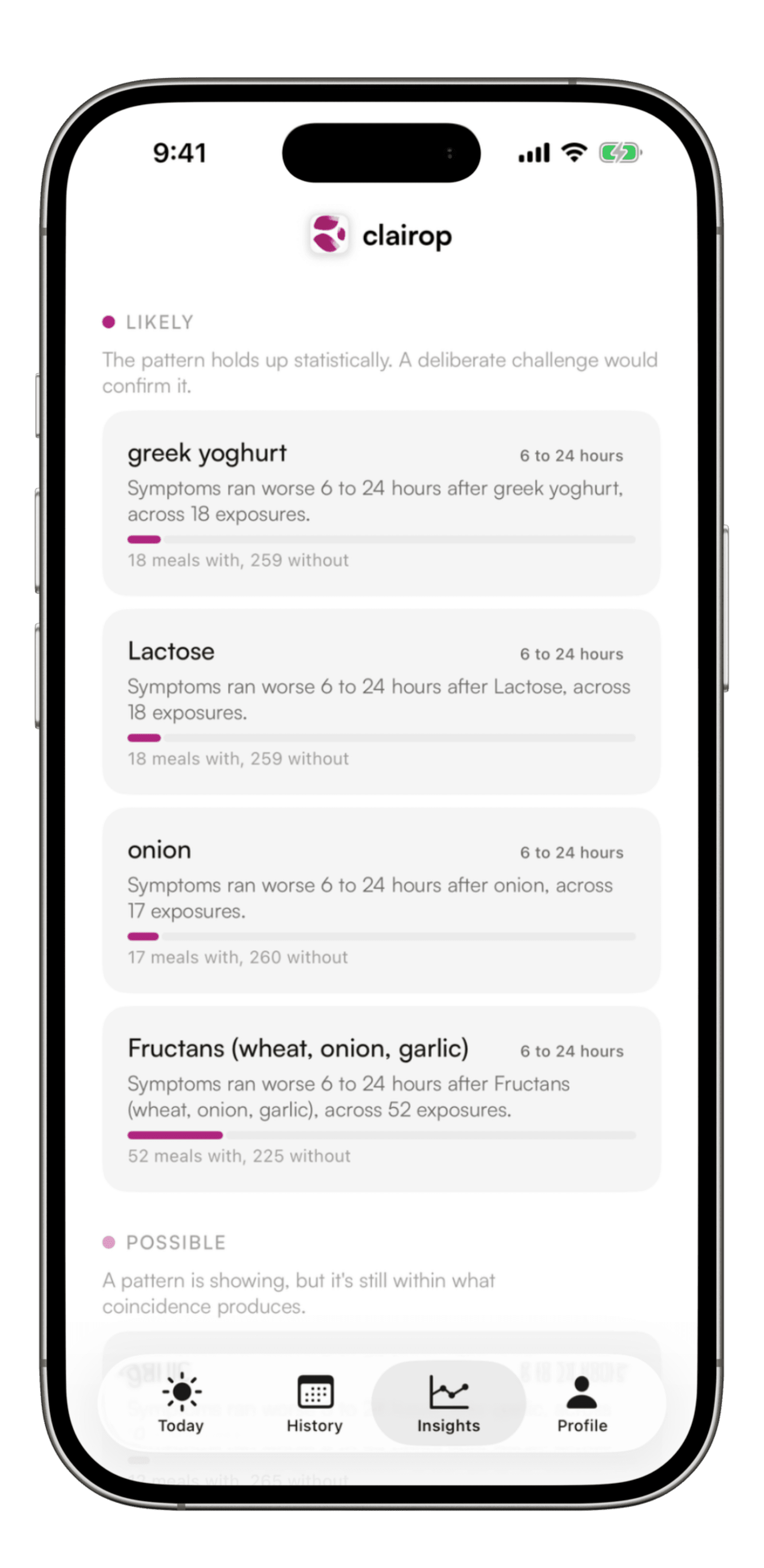
If your goal is to find what causes your bloating, Clairop is the strongest choice in 2026. Bloating is hard to track because it often lags the meal that caused it, and because bloating is common enough that many foods will line up with it by chance. Clairop checks three delay windows up to three days, shows FODMAP load by all six subgroups, and corrects for false triggers.
Other apps win other jobs. mySymptoms runs everywhere with a window you set. Plop and MyIBS are free and quick. Bloatless offers a simple one-hour check-in. Monash is the reference for FODMAP servings. None combine delayed windows, subgroup depth and false-trigger correction.
Why does delay matter most?
Gas from fermentation builds as food reaches the colon, which can take many hours. An app that asks "how do you feel an hour later?" will miss bloating that peaks that evening or the next morning. A single short check-in also cannot tell a meal that bloated you from one that did not yet. Our guide to why you are bloated after eating and the timing in how long after eating IBS flares up explain more. The full method is on the method page.
What helps bloating without an app
An app finds patterns. These steps are worth trying alongside it, if your doctor agrees.
- Check for constipation. It is a very common cause of bloating. Our Bristol stool chart checker shows stool types.
- Look at eating habits. Eating fast, chewing gum and fizzy drinks add swallowed air.
- Try a low FODMAP trial with a dietitian, not a permanent cut. See FODMAP stacking examples and how long to do the diet.
- Move after meals. A short walk can ease trapped gas. See how to relieve trapped gas with IBS.
- Know that cycles matter. Hormonal changes can shift bloating through the month. Our guide on IBS bloating that looks pregnant covers visible distension.
- Ask about other causes. Celiac disease, SIBO, ovarian conditions and others can cause bloating. See SIBO vs IBS symptoms.
How to use a bloating tracker well
- Rate bloating more than once a day, for example morning, afternoon and bedtime, plus a note about stool.
- Log for two to four weeks before reading much into results.
- Treat flagged foods as candidates, then test with a planned elimination and reintroduction.
- Bring the log to your appointment. See how to prepare for a GI appointment.
When should you see a doctor instead of using an app?
Bloating that is persistent, or new after age 50, needs a doctor. So do unexplained weight loss, blood in the stool, vomiting, fever, severe or worsening pain, waking at night to open your bowels, or a bloated abdomen that keeps growing. In women, persistent bloating should also be checked, since it can be a symptom of ovarian conditions. Check yourself with our gut red flags checker.