The alternatives to coffee for stimulating a bowel movement are, in order of evidence, a proper breakfast (which sets off the gastrocolonic response, the colon's own post-meal surge), movement, a few foods such as kiwifruit, and a better toilet posture. If you cannot go without your morning coffee, you are not imagining things. Coffee is a measurable stimulant of the lower colon, and a bowel movement within half an hour of the first cup is a genuine physiological response, not a habit alone. The catch is that nothing else you can drink has been shown to do the same job. What does have evidence is a different set of levers: eating breakfast, moving, a few specific foods, and how you sit on the toilet.
This guide explains what coffee does, which alternatives are backed by trials and which are only popular, and how to test a swap on yourself without fooling yourself. It is for people who want a gentler morning routine, who are cutting coffee for heartburn, pregnancy, anxiety or IBS, or who have noticed they simply cannot go without it.
What can you drink instead of coffee to stimulate a bowel movement?
No drink has been proven to replace coffee's effect on the colon. The best-supported options are a regular breakfast, which triggers the gastrocolonic response, kiwifruit or prunes taken as food, and, in guideline reviews, mineral water with a high mineral content. Warm water, herbal tea and broth are popular but have no trial showing they stimulate the bowel.
Here is the honest ranking, from the stronger evidence to the weaker. The table covers what the research tested and what it did not.
| Option | What the evidence shows | Strength | Watch out for |
|---|---|---|---|
| Breakfast with some fat | Meals trigger the gastrocolonic response within minutes; coffee matched a large meal in one study | Physiology studies, small | Triggers may differ with IBS-D |
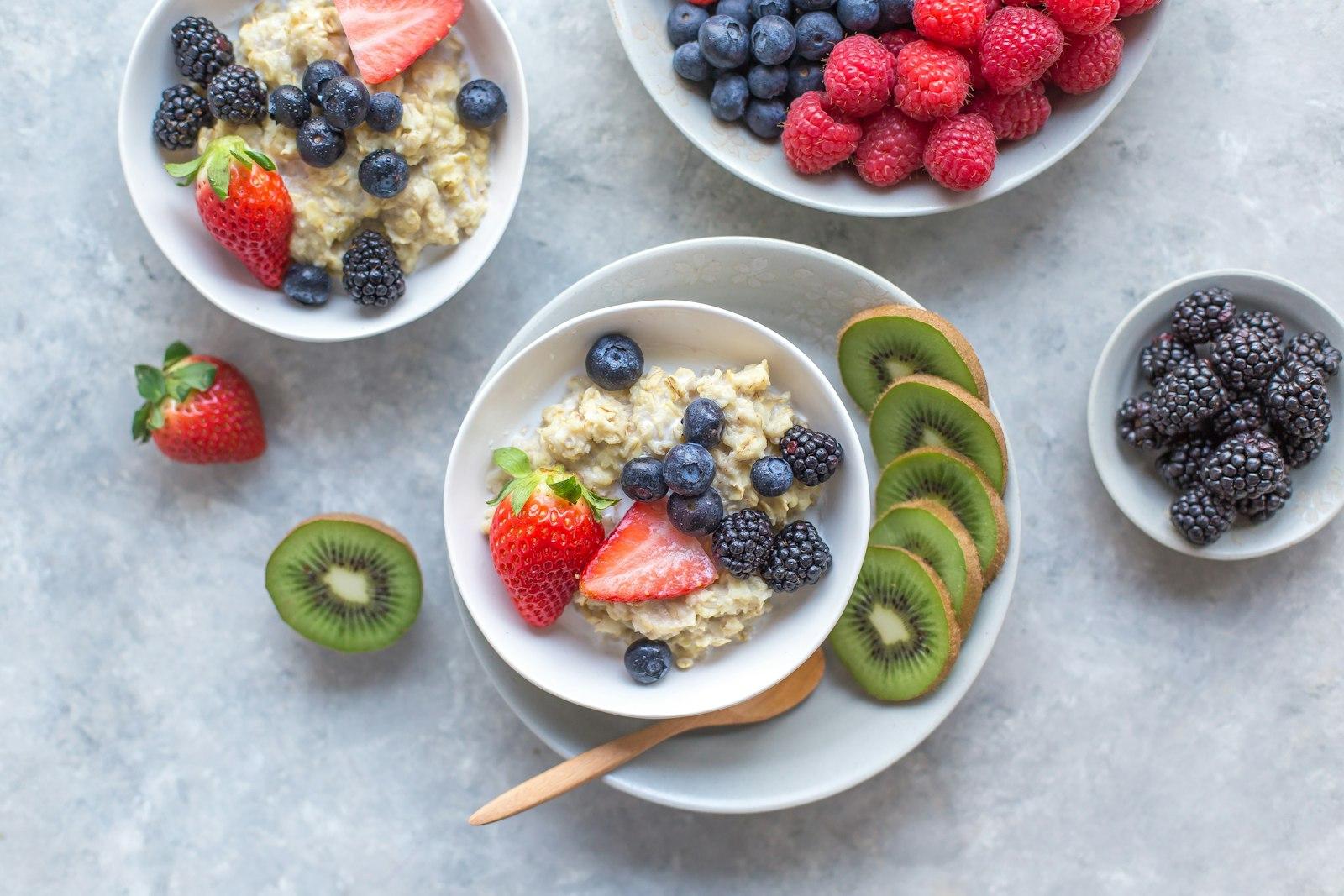
| Green kiwifruit | Raised complete spontaneous bowel movements in chronic constipation; fewest side effects of three options | One partly randomized trial plus guideline review | Not an IBS-specific trial |
| Prunes | Improved stool frequency and consistency vs psyllium in a crossover trial of 40 | Small trials | Sorbitol, high FODMAP at modest portions |
| Psyllium (soluble fiber) | Increased people with a clinical benefit in constipation in guideline meta-analysis | Low evidence, strong recommendation | Gas and fullness in some people |
| High-mineral water | More people reported benefit than with low-mineral water, but stool frequency did not differ | Low to moderate | Can loosen stools |
| Walking or exercise | Improved constipation symptoms across nine trials; improved IBS symptoms in one | High risk of bias | Same-day effect untested |
| Squat position or footstool | Less straining and more feeling of emptiness in small studies | Small, mostly healthy volunteers | Not a treatment for hard stools |
| Warm water | A glass of hot water did not raise colonic activity in the key study | No supporting trial | Pleasant, but not a stimulant |
| Coconut water, bone broth, herbal tea | Popular online | No trial found | Check FODMAP load |
The rest of this guide goes through the table in order, and then covers how to test it. If the whole question is really "why do I go so quickly after eating", start with why do I poop right after eating.
Why does coffee make you poop, and does decaf do it too?
Coffee stimulates the distal colon within about four minutes in people who respond to it, and the effect lasts at least 30 minutes. It is not only caffeine: decaffeinated coffee produced a similar response in responders, while hot water produced none. About one in three young adults in one survey said coffee gave them the urge.
The two studies behind this are old but have never been overturned. In a Sheffield questionnaire of 99 healthy volunteers, 29% said coffee made them want to open their bowels. When 14 volunteers were studied with manometry, motility rose within four minutes of regular or decaffeinated coffee in the eight who called themselves responders, and not in the six who did not. It lasted at least 30 minutes, and there was no increase in any subject after hot water (Brown 1990).
A decade later, an American group placed probes through the colon of 12 healthy volunteers and gave each of them 240 mL of black coffee, decaf, water (all at 45 degrees Celsius) and a 1,000 kcal meal. Caffeinated coffee, decaf and the meal all increased colonic activity compared with water. The size of the effect for caffeinated coffee was similar to the meal, about 60% stronger than water and about 23% stronger than decaf. The decaf result was not statistically different from either water or caffeinated coffee (Rao 1998).
Three things follow, and they shape every swap you can try.
First, temperature was not the story. Water at the same temperature did less than coffee, and in the Sheffield study hot water did nothing at all.
Second, caffeine is not the whole mechanism. Cutting it out may not remove the effect, which is why decaf still works for many people. We cover that side, including why it matters if you have IBS-D, in is coffee bad for IBS-D.
Third, a meal is a bigger lever than most people use. If caffeinated coffee is about as strong as a 1,000 kcal meal, then a proper breakfast is competing with it on equal terms, which brings us to the reflex behind it.
How does the gastrocolic reflex work, and can you use it on purpose?
The gastrocolic reflex, now usually called the gastrocolonic response, is a rise in colonic movement that starts within minutes of eating and continues for 30 to 120 minutes. Fat in the meal and stretch of the stomach are the main triggers, and it appears to be weaker in people with chronic constipation.
A recent review describes it in three phases: a cephalic phase (seeing, smelling and expecting food), a gastric phase driven by stretch receptors and the vagus nerve, and an intestinal phase driven by chemical sensors in the duodenum. Fat is an important component of the meal that provokes it, while the role of carbohydrate and protein remains unclear. Nerve pathways seem more important than hormones, and the response was abnormal or diminished in patients with chronic constipation (Shibata 2026). A second review lists gastric dilation, calories and fat content as the recognized triggers, and notes that the response is part of how doctors assess colonic movement on manometry (Dorfman 2022).
What that means in practice, with the caveat that nobody has run a trial of "breakfast design" for bowel timing:
- Eat something, and do not skip it. If your only morning trigger is coffee on an empty stomach, you are leaving the stronger, more reliable stimulus unused.
- Include a little fat. The research points to fat rather than sugar as a meaningful trigger, so a meal with some fat in it is a more plausible stimulus than juice alone.
- Give it time. The response lasts 30 to 120 minutes, so rushing out the door 10 minutes after eating can cost you the window.
- Expect it to be gentler if you are constipated. A diminished response is part of why constipation and a weak morning urge go together.
Many people in the community describe a bowel movement a few minutes after breakfast as their reliable cue, and a thread in r/ibs asking what to use instead of coffee collected exactly this kind of advice, along with warm water, exercise, coconut water or yogurt, and a small glass of prune juice the night before (r/ibs thread). One poster described hot oatmeal with butter and banana most mornings. That is lived experience, not evidence, but it lines up with the physiology: warmth, volume and a little fat are exactly the things the response is described as reacting to.
For the wider question of why the response can feel too strong, see how long after eating does IBS flare up and why does my IBS flare up in the morning.
Does warm water actually make you poop?
Warm water has no trial showing it stimulates the colon, and it did not in the one study that tested a hot drink against coffee. It may still help some people through stomach stretch, routine and relaxation, so a glass first thing is a reasonable low-risk experiment as long as you do not expect it to behave like coffee.
The most upvoted answer in the Reddit thread was simply warm water, and people clearly do swear by it. The research gives a mixed picture. In the Sheffield study, a drink of hot water increased rectosigmoid motility in none of the volunteers (Brown 1990). In the American study, water at 45 degrees Celsius produced less colonic activity than either coffee or a meal (Rao 1998).
Those were healthy volunteers, not people with constipation, and they were not studied in the context of a daily morning routine. There is also a plausible route that was not the subject of those experiments: a large volume of liquid stretches the stomach, and stomach dilation is one of the triggers of the gastrocolonic response (Dorfman 2022). So warm water may work as a small part of a routine without being a stimulant in its own right.
The honest bottom line is that warm water is harmless to try, and that the result of your own trial matters more than the average. If it works for you, keep it. If it does not, you have lost nothing.
The same goes for other warm drinks that appear on every "what to drink instead of coffee" list. Bone broth, herbal teas and coconut water are popular, but we could not find trials of any of them for bowel timing. Coconut water and some herbal blends can be higher in fermentable carbohydrates, so if you have IBS, check your portion in a FODMAP tool before building a routine around them.
Which foods have real trial evidence for constipation?
Three foods have trial support. Green kiwifruit, prunes and psyllium each increased bowel movements in adults with chronic constipation. Kiwifruit had the fewest side effects. The effects are modest, the trials are small, and none of them tested a morning-after-coffee swap, so treat them as evidence for constipation in general.
Kiwifruit, prunes and psyllium head to head. At a US medical center, 79 adults with constipation were partly randomized to two green kiwifruit a day, 100 g of prunes a day, or a psyllium supplement for four weeks. All three raised the weekly number of complete spontaneous bowel movements. Stool consistency improved with kiwifruit and prunes, straining improved with all three, and bloating improved with kiwifruit. Side effects were most common with psyllium and least common with kiwifruit, and fewer people were dissatisfied with kiwifruit (Chey 2021). The limits matter: it was exploratory, partly randomized, short, and mostly women.
Prunes versus psyllium. In a crossover trial of 40 constipated adults, prunes beat psyllium for complete spontaneous bowel movements and stool consistency, while straining and overall symptoms did not differ (Attaluri 2011). The trial was single-blind, small and short.
What the guideline reviews say. The British Dietetic Association guideline pooled 75 randomized trials and graded the evidence. It recommends psyllium among fiber supplements, kiwifruit and high-mineral water for specific outcomes, but most of its statements rest on low or very low evidence. It found kiwifruit raised stool frequency by about 0.36 bowel movements a week compared with psyllium, an effect it calls small, and made no recommendation on whole-diet approaches because the evidence was lacking (Dimidi 2025). Mineral water with high mineral content increased the chance of a beneficial response but did not change stool frequency in that review.
Another narrative review reached a compatible conclusion: soluble fiber such as psyllium, kiwifruit or prunes, and magnesium or sulfate-rich mineral water have the most consistent evidence, while hydration in general, fermented foods and probiotics are more variable (Ribichini 2026). For a longer look at which foods suit IBS-C specifically, including portion notes, see what to eat with IBS-C.
None of these are quick fixes. They work over weeks, not in the ten minutes after you wake, which is why they are a better long-term supplement to a routine than a same-morning replacement for coffee.
Are prunes, prune juice and coconut water safe if you have IBS?
Not automatically. Prunes contain sorbitol, a polyol that Monash University lists as high at about four prunes (30 g) alongside fructans, so they can trigger bloating and cramps in IBS. The trials that showed benefit used much larger portions. Kiwifruit is the easier fit: green kiwifruit is listed as low FODMAP at two small peeled fruits.
This is the most useful catch in the Reddit thread, because the advice there is often "prune juice before bed". Monash states that prunes are high in both fiber and sorbitol, that these components both promote laxation in people with constipation, and that sorbitol is also a FODMAP that may trigger symptoms in IBS (Monash FODMAP on kiwifruit, psyllium and prunes). The 30 g it flags as high is roughly a third of the 100 g a day used in the US trial above, which shows how far the trial portion sits from what many people with IBS tolerate.
We did not find a Monash serving size for prune juice, so we cannot tell you whether a small glass is fine. The Monash app is the place to check, and its serving sizes are per meal, not per day. Clairop is not affiliated with Monash University.
Low FODMAP is a short, structured process best done with a dietitian, with reintroduction, not a permanent diet. If you are in the middle of one, our FODMAP stacking examples show how several modest portions can add up past your threshold in the same window.
Two further points matter for IBS specifically:
- The kiwifruit and prune trials enrolled people with chronic constipation, not IBS-C as such, so they are suggestive rather than proven for you.
- If you have IBS-D or alternate between constipation and loose stools, a laxative-type food may overshoot. If you are unsure which pattern you have, the difference between IBS-D and IBS-C explains the rule.
Does exercise or a walk help you poop in the morning?
Exercise has modest evidence for constipation in general. A meta-analysis of nine randomized trials with 680 people found exercise improved constipation symptoms, but the trials were at high risk of bias. Nobody has tested whether a 10 minute walk triggers a bowel movement within the hour, although many people report it does.
The meta-analysis pooled mostly aerobic exercise such as walking and qigong. Exercise improved constipation symptoms (relative risk 1.97), though there was very high heterogeneity and the authors stressed the methodological shortcomings and that the real effect cannot be determined (Gao 2019).
In IBS, a Swedish randomized trial of 102 people found that a physiotherapist-guided increase in physical activity improved IBS symptom severity compared with maintaining normal habits, and physically active participants were less likely to get worse (Johannesson 2011). It was about overall IBS symptoms, not about timing a bowel movement.
In the Reddit thread, one commenter said that after moving around they usually have to go within 5 to 10 minutes. That fits the gastrocolonic idea that stretch, movement and eating all feed the same system, but it is an anecdote and the research cannot confirm the timing.
If you try it, keep it gentle and after eating, not before. Vigorous exercise can itself trigger urgency in some people, which is covered in exercise and IBS flare-ups.
Does toilet posture make a difference?
Posture changes the effort, in small studies. Squatting reduced both the time to feel emptied and the felt effort compared with sitting in 28 healthy volunteers, and a posture-modifying device increased reported emptiness and reduced straining in 52 healthy adults. A scoping review judged the evidence promising but limited.
In the squatting study, all volunteers needed less time to feel satisfactorily empty, and reported less straining, in the squat than on either a standard seat or a lower one (Sikirov 2003). In a two-week crossover study of healthy adults, using a device that raised the knees increased the odds of feeling fully emptied (odds ratio 3.64) and cut straining (odds ratio 0.23), though the participants were young and mostly healthy, and the order of conditions was not randomized (Modi 2019). A scoping review of 42 studies concluded that squatting may reduce digestive strain and enhance evacuation, with small sample sizes and confounding preventing firm conclusions (Rahgoshay 2025).
None of these studies show that posture makes you go on a cold start. What they suggest is that once you are going, posture can make the job easier. For the practical version, sit with your knees above your hips (a small stool does it), lean forward with a straight back, and breathe out slowly rather than holding your breath and pushing. If you strain hard most days even with these, see the doctor section below.
Do not rush. The gastrocolonic response lasts up to two hours, so there is usually a second chance later in the morning. Standing up because nothing happened in two minutes is a common reason people conclude the routine does not work.
What about magnesium, fiber supplements and laxatives?
These are medicines and supplements, and the choice belongs with a doctor or pharmacist. The 2023 AGA and ACG guideline for chronic constipation gives strong recommendations to some prescription and over-the-counter agents and conditional ones to fiber and magnesium oxide. This article does not tell you whether to start, stop or change any of them.
For context only, the joint guideline reviewed fiber, osmotic laxatives (polyethylene glycol, magnesium oxide, lactulose), stimulant laxatives (bisacodyl, sodium picosulfate, senna), and prescription secretagogues and a 5-HT4 agonist. It made strong recommendations for polyethylene glycol, sodium picosulfate, linaclotide, plecanatide and prucalopride, and conditional recommendations for fiber, lactulose, senna, magnesium oxide and lubiprostone. It also stresses shared decision making based on patient preference, cost and availability (Chang 2023). That guideline covers chronic idiopathic constipation. For IBS with constipation, the American College of Gastroenterology guideline separately recommends two prescription classes, chloride channel activators and guanylate cyclase activators (Lacy 2021).
The point of mentioning the list is that if you rely on coffee because nothing else works, you are not out of options, and there is a conversation to be had. Magnesium supplements in particular can loosen stools and are covered in magnesium supplements and diarrhea in IBS. Whether any of these suits you, and how often, is a question for your prescriber or pharmacist, especially if you take other medicines.
How do you test which coffee alternative actually works for you?
Change one thing at a time for about a week and record the time to your first bowel movement, the Bristol stool form and any bloating. Mornings vary widely, so a single good or bad day tells you almost nothing. A week per swap, with everything else held steady, is the minimum that produces a readable answer.
Most people try three things on the same Monday, then credit whichever happened to coincide with a good morning. A cleaner approach:
- Baseline (3 to 5 days). Your usual morning, including coffee if you still drink it. Write down wake time, what you ate and drank, when you first went, and the stool form on the Bristol scale.
- Swap one lever for a week. For example, a fixed breakfast with a little fat, 20 to 30 minutes after waking, and no coffee. Keep everything else the same.
- Add a second lever. A short walk after eating, or a footstool, for another week.
- Then try one food. Two green kiwifruit are the best-supported and, per Monash, low FODMAP at the serving size they list. Give it a few weeks rather than a few days, because the trials ran for weeks.
- Compare. Look at the time to your first bowel movement, stool form, straining and bloating, not just whether you went.
Two warnings. If you stop coffee entirely, caffeine withdrawal can cause its own headache and fatigue, so give it time before judging the rest. And do not stack several higher-FODMAP swaps into the same morning, because the reaction may be the stack, not the food.
This is where a log earns its keep. Clairop lets you log a bowel movement with one tap on the Bristol scale and add what you had that morning by voice or a sentence, then looks for foods that line up with worse symptoms across delay windows, so you are comparing a week of mornings instead of relying on memory. It is a tracker, not a diagnosis, and you can see how the method works on the how it works page. The general logic of one-change-at-a-time testing is in how to find out what triggers my IBS.
Clairop logs meals, symptoms and stool in seconds, then looks for the foods your gut reacts to, including reactions that land days later.
What do the top search results tell you, and what do they skip?
Most pages list hot drinks and say caffeine drives the effect. The research is more specific: decaf works almost as well, hot water did nothing in the key study, and a meal is as strong a trigger as caffeinated coffee. The Reddit thread and the top pages also rarely mention IBS, where some popular swaps can backfire.
The top results for this query are a Reddit thread, a drinks-for-constipation list, and pages from hospital and health sites. Many recommend hot beverages, especially caffeinated ones, on the grounds that caffeine stimulates the colon. The physiology studies above complicate that: in responders the stimulus was not limited to caffeine, and warm water alone did not do it. The practical gaps are the same ones this guide fills. There is usually no explanation of why coffee works, no portion note for people with IBS, no distinction between constipation trials and IBS, and no way to test a swap properly.
What are the common myths about stimulating a bowel movement?
"Coffee works because of the caffeine." Decaffeinated coffee raised colonic motility in responders, so caffeine cannot be the whole story. Swapping to tea or an energy drink may therefore not reproduce the effect.
"Warm water is the same as coffee." In the key studies it was not. It may still be useful for other reasons.
"Prune juice is a safe natural option for everyone." Prunes carry sorbitol, which can trigger IBS symptoms, and the helpful trial portions were large.
"Squatting will make you go on demand." The studies suggest less straining once you are going. They do not suggest it starts the process.
"If I need coffee to go, something is wrong with me." Relying on a stimulus that works is common. What matters is whether you are passing stool regularly and without hard straining.
"Natural means you can take unlimited amounts." Even foods can loosen stools too far, as anyone who has overdone prunes knows. Start small and watch what happens.
When should you see a doctor about being unable to poop?
See a doctor promptly if constipation comes with blood in the stool, black or tarry stools, unexplained weight loss, fever, night-time symptoms, anemia, a new change in bowel habit after age 50, or a family history of bowel cancer or inflammatory bowel disease. Urgent abdominal pain with vomiting and no passage of stool or wind also needs same-day care.
Beyond those red flags, book an appointment if:
- you have fewer than three bowel movements most weeks, or you rely on a stimulant every day just to go
- you strain hard on most days, or feel you never empty
- you need to use a finger to help stool out
- a routine that used to work has stopped, without an obvious reason
- you have already tried the changes above for several weeks with no benefit
The straining and incomplete-emptying pattern deserves a specific mention. Evacuation disorders are common in chronically constipated people who do not respond to laxatives, and they are diagnosed with anorectal manometry or a balloon expulsion test. Posture-modifying devices have been proposed for them, but their ability to normalize anorectal function in adults with chronic constipation had not been studied when researchers raised the question (Koo 2023). A doctor can tell the difference between slow transit and a coordination problem, and the treatments differ.
Take your log with you. "I cannot go without coffee" is vague. "Seven mornings, no coffee, breakfast at 7:30, Bristol type 1 or 2 on five of them, straining on all of them" tells a clinician where to look.
The short version
Coffee is a real colonic stimulant, but not an irreplaceable one. A meal triggers the same system at least as strongly, decaf keeps part of the effect, and warm water on its own did not move the colon in the one study that tested it. The most dependable swaps are the unglamorous ones: eat breakfast with a little fat in it, give it 30 to 120 minutes, move a little, and sit with your knees raised.
For longer-term help, green kiwifruit and, with care, prunes and psyllium have trial support for constipation, with small effects and a catch for IBS because of sorbitol. Magnesium, fiber supplements and prescription options are a conversation for your prescriber, not a morning experiment. Whatever you try, change one thing at a time, write down what happened, and see a doctor promptly if blood, weight loss, fever, night-time symptoms or hard daily straining are part of the picture.