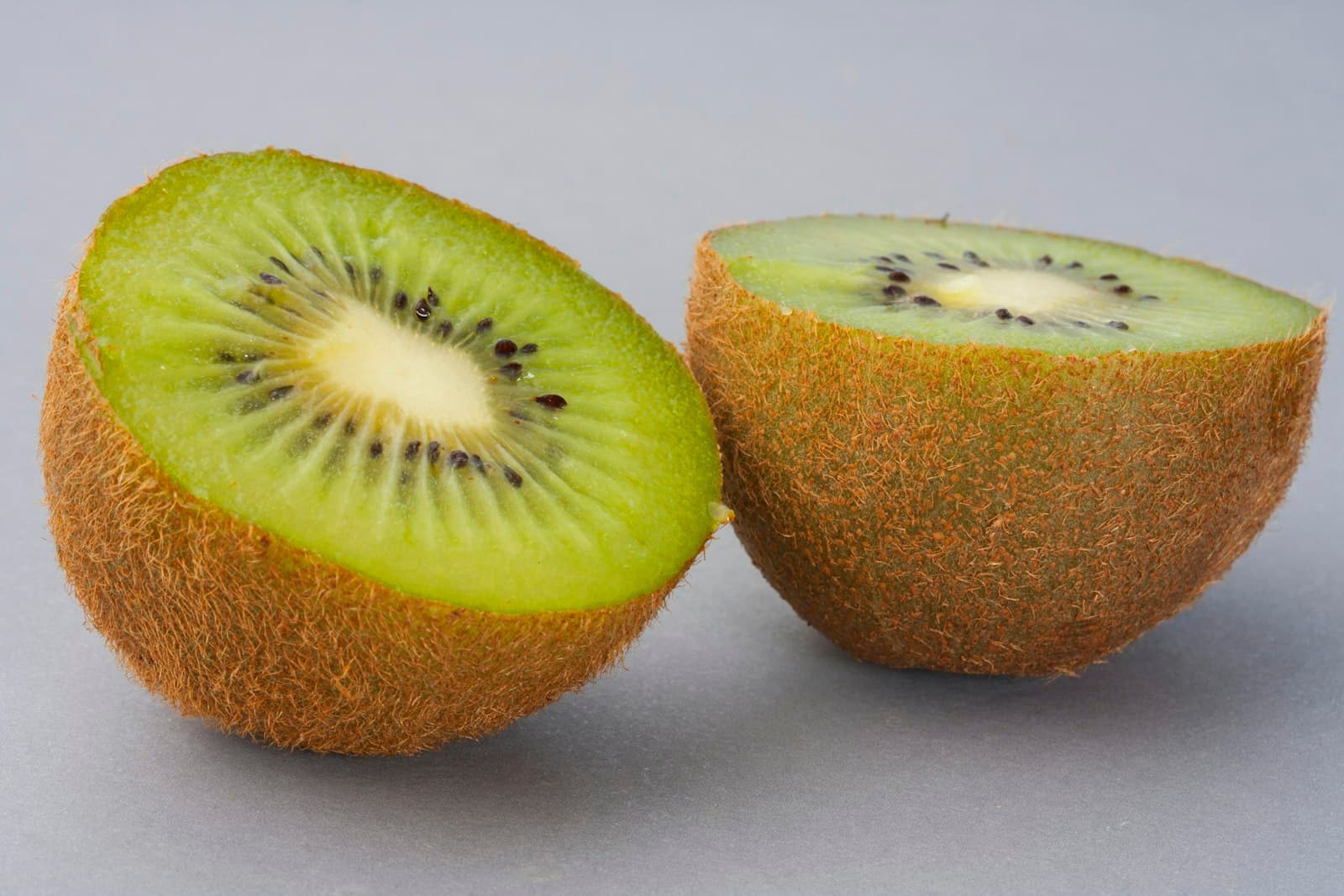
If you have IBS with constipation, the foods with the best record are the ones that loosen stool without feeding the gas and pain that make IBS what it is: green kiwifruit, oats and other soluble-fibre foods, and a soluble fibre supplement such as psyllium. The classic constipation foods, prunes, prune juice, bran and rye bread, do move things along in trials, but they were mostly tested in people with plain constipation, and several of them come with the cramping and bloating that people with IBS-C are trying to avoid.
That tension is the whole story of eating with IBS-C. You are living with two problems at once, slow or hard stools and a gut that over-reacts to stretch and gas, and the advice for each one was written by different people, tested in different patients, and sometimes points in opposite directions. The newest and most thorough constipation guideline, published by the British Dietetic Association in late 2025, is explicit that it covers adults with chronic idiopathic constipation, and only a handful of its trials also included people with IBS-C (Dimidi 2025). The IBS guidelines, meanwhile, are mostly about pain, bloating and overall symptoms, not about how often you go.
This article goes food by food through what has actually been tested, in whom, and what it measured, then shows how to put the pieces together without making the bloating worse. It does not give laxative doses or tell you to start or stop any medicine; those are conversations for your doctor or pharmacist.
A note on method: we searched PubMed and Europe PMC and read every study cited here. Where we say we found no trial on something, that reflects our searching, not proof that none exists.
The short answer: eat for two problems at once
The most useful IBS-C diet is your ordinary, tolerated diet plus a small number of additions with evidence on both sides of the problem. In practice that means regular meals, enough fluid to not be thirsty, soluble rather than insoluble fibre, and a trial of kiwifruit, with prunes, rye and other strong constipation foods held back until you know how your gut handles them.
That is not a flashy answer, and it is not what most pages ranking for this question say. The ones we read gave long "eat this, avoid that" lists without separating what was tested in IBS-C from what was tested in plain constipation, and two came from businesses selling testing, one of them an IgG food intolerance blood test. The British IBS guideline explicitly does not recommend elimination diets based on IgG antibody tests (Vasant 2021).
Three principles from the guidelines are worth holding onto before we get to individual foods:
- Traditional dietary advice comes first. The British guideline calls it first-line for everyone with IBS: regular meals, adequate nutrition, limiting alcohol and caffeine, adjusting fibre, and cutting back on fatty and spicy food (Vasant 2021). NICE's version adds not skipping meals or leaving long gaps between them (NICE CG61).
- Soluble fibre helps IBS; insoluble fibre such as wheat bran can make it worse. The British guideline pooled 15 trials in 946 people and found the benefit was confined to soluble fibre such as ispaghula (psyllium), with bran potentially worsening pain and bloating (Vasant 2021).
- Give a change four weeks. In the British Dietetic Association analysis, fibre supplements improved global constipation symptoms only in trials that lasted at least four weeks (Dimidi 2025). Most people abandon a food after three days.
If you are not sure you are really IBS-C rather than IBS-M, the subtype depends on stool form on your abnormal days, and our guide to the difference between IBS-D and IBS-C walks through the arithmetic. It matters here because several of the foods below would be a poor choice on a loose day.
Why IBS-C diet advice keeps contradicting itself
IBS-C advice contradicts itself because it is borrowed from two different evidence bases. Constipation advice says eat more whole grains, more fruit and more fibre. IBS advice says limit high-fibre whole grains, cap fruit, and watch fermentable carbohydrates. Both are telling the truth about the people they studied.
Look at NICE's IBS guideline. It says it "may be helpful to limit intake of high-fibre food (such as wholemeal or high-fibre flour and breads, cereals high in bran, and whole grains such as brown rice)", to limit fresh fruit to three portions a day of about 80 g each, and to reduce resistant starch (NICE CG61). Now look at the British Dietetic Association's constipation guideline: it recommends kiwifruit at two to three a day and includes rye bread among the foods that increased stool frequency (Dimidi 2025). A person with IBS-C who reads both is being told to eat more whole grain and less whole grain at the same time.
The resolution is to notice who each guideline was written for:
- The constipation guideline pooled 75 randomised trials in people with chronic idiopathic constipation. Its recommendations were only made where at least two trials contributed. In the detailed tables, many statements carry a note that "one study also included IBS-C" or "two studies also included IBS-C" alongside people with constipation (Dimidi 2025). So IBS-C patients are present, but as a minority.
- The IBS guidelines were built on trials in mixed IBS populations, where the headline outcome is usually global symptoms or pain, not bowel movement frequency (Vasant 2021).
There is also a genuine overlap problem. The British IBS guideline notes that straining and a feeling of incomplete emptying are common in both IBS-C and functional constipation, and that whether they arise from different mechanisms in the two disorders is unclear (Vasant 2021). So the borrowing is not unreasonable. It just needs a filter: the constipation food also has to be tolerable for a gut that is sensitive to stretch and gas.
An earlier systematic review shows how thin the IBS-C-specific layer is. Looking at trials from 2004 to 2014, it found fibre was beneficial in 5 of 7 studies in chronic constipation and in all 3 in IBS-C, while a low FODMAP diet improved IBS-C symptoms in only 1 of 3 studies. It graded the evidence for low FODMAP in IBS-C as poor (Rao 2015).
The scorecard: what was tested, in whom, and what it showed
Before the detail, here is the evidence in one place. "Constipation" here means chronic or functional constipation without IBS, unless the row says IBS-C.
| Food or drink | Who was studied | Helped bowel movements? | Effect on gut symptoms | Fit for IBS-C |
|---|---|---|---|---|
| Green kiwifruit | IBS-C (two trials) and constipation | Yes, similar to psyllium | Improved comfort scores; fewest side effects in one comparison | Good first choice |
| Kiwifruit capsule extract | IBS-C (one large trial) | Some secondary measures | Missed its main combined goal | Unproven |
| Prunes | Constipation; healthy low-fibre adults | Yes in trials | More flatulence than control | Try with care, small amounts |
| Prune juice | No trials we found | Unknown | Sorbitol, no fibre | Use with caution |
| Psyllium | IBS and constipation | Yes | Can add bloating at first | Recommended in guidelines |
| Wheat bran | IBS | No benefit in IBS | Can worsen pain and bloating | Avoid |
| Rye bread | Constipation | Small increase in frequency | Worse global symptoms than white bread | Not a staple |
| High-mineral water | Constipation | No change in frequency; more people responded | No change in pain or global symptoms | Narrow, industry-funded evidence |
| Extra plain water | Healthy volunteers; constipation with fibre | Only if you were short of fluid | Not tested | Drink to thirst |
| Low FODMAP diet | IBS overall; IBS-C weakly | Unclear for constipation | Helps pain and bloating in IBS | Second-line, with a dietitian |
| Chia seeds | Rats | Unknown in people | Unknown | Untested |
The rest of this article explains each row, and why some of the friendliest-sounding options have the weakest evidence.
Kiwifruit: the one food with IBS-C trials of its own
Green kiwifruit is the best-evidenced food for IBS-C, and the only one we found tested in people diagnosed with IBS-C specifically. The evidence is real but modest, and it comes with funding caveats worth knowing.
The oldest IBS-C study we found was small. Fifty-four people with IBS-C and 16 healthy adults took part; 41 of the IBS-C group ate two green kiwifruit a day for four weeks, and 13 took placebo capsules. Weekly bowel movements increased significantly in the kiwifruit IBS-C group, and colon transit time shortened (Chang 2010). It is small, the control group had only 13 people, the abstract does not say how people were allocated, and the reported changes are before-and-after comparisons within the kiwifruit group rather than kiwifruit against placebo. Treat it as encouraging, not decisive.
The largest whole-fruit trial is the international study that our low FODMAP breakfast guide covers in detail. In its IBS-C group of 61 people, two green kiwifruit a day increased complete spontaneous bowel movements by 1.73 a week from baseline and improved a validated gut comfort score (Gearry 2023). Psyllium, the comparison, also worked, and kiwifruit matched it rather than beating it. Zespri, a kiwifruit company, was the principal sponsor.
The capsule trial is the cautionary tale. A double-blind trial in 186 people with IBS-C compared a green kiwifruit extract in capsules with placebo for eight weeks. More people on the extract had increased bowel movement frequency (54% vs 36%), improved stool form (87% vs 73%) and improved pain (74% vs 59%). But the trial's predefined primary endpoint, which required both more complete bowel movements and at least a 30% reduction in pain, was met by 24% on the extract and 26% on placebo, so it was missed (Holtmann 2025). The paper states it was funded by Vital Food Processors Ltd, and the extract it tested is described as proprietary.
The British Dietetic Association's pooled analysis lines up with this picture. Whole kiwifruit did not differ from psyllium in the number of people who got a clinical benefit (risk ratio 1.32, 95% CI 0.91 to 1.92), increased stool frequency slightly more than psyllium (0.36 extra bowel movements a week), and did no better on stool consistency. Kiwifruit supplements in capsule or sachet form, by contrast, had no effect on stool frequency or consistency (Dimidi 2025). The fruit seems to matter, not just an extract of it.
The guideline's practical notes are useful for IBS-C: the trials used peeled fruit; keeping the skin on adds fibre but might add side effects; and kiwifruit "may be a preferred option over psyllium" for people who get bloating, pain or wind from psyllium (Dimidi 2025). In a smaller US comparison of kiwifruit, prunes and psyllium in chronic constipation, response rates were similar across all three, but kiwifruit had the fewest side effects, improved bloating scores, and left fewer people dissatisfied (Chey 2021).
What people in r/ibs describe matches the trials more closely than you might expect. In a popular thread about eating two kiwis a day with the skin on, people with IBS-C reported it helped, others found the acidity hard on gastritis or reflux, several preferred gold kiwifruit for the smoother skin while suspecting it was less effective, and the most upvoted reply came from someone with IBS-D who realised it was the last thing they needed. In another thread, someone who disliked the taste got the sensible advice not to force a food just because it is "good for IBS".
Three practical points follow from all of this:
- Green, whole and peeled is what was tested. Gold kiwifruit and eating the skin are reasonable experiments, but neither has IBS-C trial data.
- Give it four weeks. The trials ran for four weeks, and the guideline's own advice is at least four weeks.
- If reflux or mouth irritation is a problem, kiwifruit may simply not suit you. Psyllium is the alternative with equivalent evidence.
Prunes and prune juice: why they work and why they backfire
Prunes work, and for many people with IBS-C they also hurt. Both facts come from the same chemistry: prunes are rich in sorbitol, a sugar alcohol that draws water into the bowel and is then fermented by gut bacteria.
A review of prune composition gives the numbers. Dried prunes contain about 6.1 g of fibre and 14.7 g of sorbitol per 100 g. Prune juice contains about 6.1 g of sorbitol per 100 g and essentially no fibre, because it is filtered before bottling (Stacewicz-Sapuntzakis 2001). So prune juice is not a fibre drink. It is closer to a mild sorbitol laxative with flavour, which is exactly why it can work fast and exactly why it can cramp.
The trials are in people with plain constipation or healthy adults, not IBS-C:
- Prunes versus psyllium. In a single-blind crossover trial in 40 people with chronic constipation (37 of them women), prunes improved complete spontaneous bowel movements and stool consistency more than psyllium, with no difference in straining or global symptoms (Attaluri 2011). Our sorbitol guide covers why this trial cannot isolate sorbitol from the prunes' other contents.
- Prunes in healthy adults with low fibre intake. In a three-arm trial in 120 people, prunes increased stool weight and frequency compared with water alone, and flatulence was significantly more common on prunes (Lever 2019).
- Prunes, kiwifruit and psyllium compared. Response rates were similar for all three in chronic constipation; prunes improved stool consistency and straining, but kiwifruit caused fewer side effects and less dissatisfaction (Chey 2021).
The British Dietetic Association did not end up recommending prunes. Pooling two trials, prunes did no better than psyllium on stool consistency or straining, and the guideline's authors point out that because these were not designed as equivalence trials, "it is not possible to conclude that prunes are as effective as psyllium" (Dimidi 2025). It lists a proper placebo-controlled prune trial as a research priority. The same guideline also criticises older constipation advice for recommending "fruits high in sorbitol" without robust evidence.
Reddit is full of the other half of the story. In one thread with 45 replies, the original poster tried prune juice after six days without a bowel movement and described it working within the hour alongside severe cramping, gas and nausea, and a long line of people replied that the same had happened to them, often after small amounts. Others said prunes worked for a few days and then stopped. In another thread, people swapped advice about drinking it warm, starting small and being near a toilet. And in a third, someone found a quarter cup of prune juice caused pain and repeated trips without much result.
Should prune juice be warm?
We could find no study comparing warm and cold prune juice, so the warm-juice tip is folklore rather than evidence. What we can say is that in the two classic studies of coffee and the colon, hot water was the control drink, and it did little: in one, there was no increase in rectosigmoid activity after hot water in any subject (Brown 1990), and in the other, coffee and a large meal both stimulated the colon more than water served at the same 45 degrees (Rao 1998). If warmth itself were a strong trigger, the water would have done more. Warm juice may feel gentler, and that is a reasonable personal choice, but the sorbitol is what moves you.
If you want to try prunes anyway
They are a legitimate option with trial evidence in constipation. The IBS-specific risk is the sorbitol and fermentation load, so the sensible approach is a small amount on a day you are at home, not the full trial portion, and not on top of other sorbitol sources such as sugar-free gum or mints. If you react to sorbitol at all, kiwifruit or psyllium is the better first move.
Rye bread and whole grains: good for frequency, harder on comfort
Rye bread is the clearest example of a constipation food that may not suit IBS-C. It increased stool frequency in constipation trials, and it also made gut symptoms worse.
The British Dietetic Association pooled two trials in 48 people with constipation. Rye bread increased stool frequency compared with white bread by 0.43 bowel movements a week, a small effect, and it also increased global gut symptom scores by 2.0 points on an 18-point scale covering pain, flatulence, rumbling and bloating. The guideline calls that effect small and possibly not clinically important, and notes the trials used six to eight slices a day, which "may not be a realistic or manageable dose" (Dimidi 2025).
The individual trials show the trade-off clearly. In 59 women with self-reported constipation, fibre-rich rye bread shortened transit, increased frequency and softened stools, "but also increased gastrointestinal symptoms" compared with low-fibre toast (Hongisto 2006). The trial, which also tested a probiotic yoghurt, lists its sponsors as Valio Ltd and Fazer Bakeries Ltd. A later trial sharing three of its authors, in 51 constipated adults, found rye bread increased weekly bowel movements by 1.4 compared with white wheat bread and reported no significant difference in gut side effects between groups (Holma 2010). We could not read a funding statement for the second trial.
Neither trial was in IBS, and that matters for one more reason: rye is a significant source of fructans, the FODMAP group that is a common IBS trigger. Our guide to FODMAP groups explains which foods carry them. Rye sourdough and specially made low FODMAP rye breads are a different product, and our breakfast guide covers what the sourdough trials found.
The broader whole-grain point is the NICE conflict described earlier. NICE suggests that limiting high-fibre breads, bran cereals and whole grains such as brown rice may help in IBS (NICE CG61). For IBS-C, a reasonable middle path is to keep the whole grains you already tolerate, avoid wheat bran, and get extra fibre from soluble sources rather than from a big step up in whole-grain bread.
Fibre for IBS-C: the type matters more than the amount
For IBS-C, soluble fibre, especially psyllium, is the fibre with guideline support; insoluble wheat bran is the one to avoid. Our guide to whether fibre makes IBS worse explains the mechanisms in depth, so here are only the points that change what you eat with IBS-C.
- Soluble fibre is recommended in both British and US guidance. The British guideline recommends soluble fibre such as ispaghula for global symptoms and pain, started low and built up gradually to avoid bloating, and advises avoiding insoluble fibre such as wheat bran (Vasant 2021). The AGA's expert review says soluble fibre is efficacious for global IBS symptoms (Chey 2022).
- Psyllium also works for constipation. In the British Dietetic Association analysis, psyllium supplements increased the number of people with constipation who had a clinical benefit, whereas mixtures of inulin with other fibres did not, and may increase flatulence (Dimidi 2025).
- Fibre needs company. The same guideline's expert-opinion advice is that fibre supplements should be accompanied by additional fluid where clinically appropriate (Dimidi 2025).
- NICE suggests oats and linseeds for wind and bloating, with linseeds capped at a tablespoon a day, and oats as a source of soluble fibre (NICE CG61).
What about chia seeds, which come up constantly in r/FODMAPS? The only chia and constipation study we found was in a rat model of IBS-C, testing chia combined with two other ingredients. That does not mean chia does not help; it means nobody has tested it in people with IBS-C as far as we could find. If you like chia and tolerate it, it is a reasonable food. It is not an evidence-based treatment.
Partially hydrolysed guar gum, which several people recommended in the r/FODMAPS thread on constipation during low FODMAP, is covered in the fibre guide. One caution about that thread: its original post named a specific fibre product, and as with many supplement discussions, it is worth noticing when a brand appears in a question.
Water: drink enough, but more is not a laxative
Drink enough that you are not thirsty and your urine is pale; beyond that, the evidence that extra water helps constipation is weak. This is one of the most repeated pieces of IBS-C advice and one of the least supported.
The evidence comes in three pieces:
- Too little fluid does slow things down. In eight healthy young men, cutting drinks to under 500 ml a day for a week, compared with over 2.5 litres, lowered stool frequency from 6.9 to 4.9 a week and stool weight from 1.29 to 0.94 kg a week. The authors concluded that low intake should be corrected but that there was no evidence that increasing intake "within feasible limits" helps chronic constipation (Klauser 1990).
- Extra fluid on top of a normal intake went to the bladder. In 15 healthy volunteers, adding one and then two litres of water or an isotonic sports drink did not significantly change stool output, but urine output rose significantly (Chung 1999).
- With fibre, fluid may help. In 117 people with functional constipation all eating about 25 g of fibre a day, the group told to drink two litres of mineral water a day had a greater increase in stool frequency and a greater fall in laxative use than the group drinking as they liked (Anti 1998). The water was mineral water, so the effect of fluid and of minerals cannot be fully separated.
The British Dietetic Association summarises this as a lack of evidence that additional fluid alone is beneficial, with the Anti trial as the only direct test of water alongside fibre (Dimidi 2025). NICE's general IBS advice is at least eight cups of fluid a day, especially water or non-caffeinated drinks (NICE CG61). That is a sensible floor. Drinking four litres a day in the hope of softening stool is not supported, and one of the competitor pages we read stated that dehydration is "one of the top causes" of IBS-C without any source.
High-mineral water: a real but narrow effect
Water rich in magnesium and sulphate is the one drink with a recommendation in the British constipation guideline, and the evidence behind it is narrower than the recommendation suggests.
Pooling four trials in 755 people with constipation, high-mineral water increased the number of people reporting a clinical response by 47% compared with low-mineral water (risk ratio 1.47, 95% CI 1.20 to 1.81). But it made no difference to stool frequency, to global constipation symptoms, to abdominal pain, or to quality of life (Dimidi 2025).
Two of the trials behind that come from one product. In 244 women with functional constipation, a magnesium sulphate-rich French mineral water reduced constipation at week two in 37.5% of those drinking a litre a day, against 21.1% on low-mineral water (Dupont 2014). One of the three authors lists an affiliation with Nestlé Waters, which makes that water. A trial of a different sulphate-rich water, in 100 people, missed its primary endpoint at six weeks (p = 0.163), although the secondary three-week result was significant (Naumann 2016). The abstract's conclusion leads with the three-week result.
Two more cautions for IBS-C:
- The waters tested are not ordinary bottled water. The guideline's table shows the research waters contained 105 to 1,000 mg of magnesium and 1,530 to 2,000 mg of sulphate per litre, compared with up to 32 mg and 112 mg in UK tap water, and some contained up to 1,600 mg of sodium per litre (Dimidi 2025). If you have been told to watch your salt, check the label.
- None of the four trials was in IBS-C specifically, and none measured bloating or pain as an IBS outcome.
Coffee, breakfast and the morning window
For many people the most reliable time to have a bowel movement is after waking and eating, and coffee strengthens that signal in some, but not all, people. Our coffee and IBS-D guide covers the downside; here is the IBS-C angle.
In a questionnaire of healthy young volunteers, 29% said coffee made them want to defecate, and in those who did, both regular and decaffeinated coffee increased rectosigmoid activity within four minutes, lasting at least 30 minutes; in people who did not report the urge, it did not (Brown 1990). In a manometry study of 12 healthy people, caffeinated coffee stimulated colonic activity about as much as a 1,000-calorie meal, 60% more than water and 23% more than decaf (Rao 1998).
Two honest caveats. The Brown abstract reports 99 volunteers but gives the sexes as 58 men and 34 women, which sums to 92, and we could not resolve the gap from the abstract. The Rao abstract says decaffeinated coffee produced more colonic activity than water, then two sentences later that decaf's effects were "not significantly different from those of water"; we could not reconcile those from the abstract either. Neither study was in IBS, both were small, and both measured muscle activity rather than bowel movements.
The practical reading for IBS-C: if coffee helps you, a cup with breakfast and time afterwards to use the toilet without rushing is a reasonable routine. If it does not, there is no reason to start. NICE advises limiting tea and coffee to three cups a day in IBS (NICE CG61). The more universal point is the meal itself: a meal stimulated the colon as strongly as coffee in the Rao study, which is one more reason not to skip breakfast if mornings are your window. For why mornings behave differently, see why IBS often flares in the morning.
Clairop logs meals, symptoms and stool in seconds, then looks for the foods your gut reacts to, including reactions that land days later.
Does low FODMAP help IBS-C, or make it worse?
A low FODMAP diet reliably helps IBS pain and bloating, but its effect on constipation itself is uncertain, and some people find their constipation gets worse unless fibre is deliberately replaced. It is a second-line diet, best done with a dietitian, and it is meant to be short.
The overall evidence for low FODMAP in IBS is solid. The British guideline's updated meta-analysis of 11 trials in 658 people found it reduced the risk of remaining symptomatic (risk ratio 0.71, 95% CI 0.61 to 0.83). Against traditional dietary advice, the most realistic comparison, the effect was smaller and its confidence interval crossed no effect (0.82, 0.67 to 1.01) (Vasant 2021). The American College of Gastroenterology recommends a limited trial of low FODMAP to improve global IBS symptoms (Lacy 2021), and the AGA describes it as three phases: restriction for no more than four to six weeks, reintroduction, and personalisation (Chey 2022).
What is missing is strong evidence that it improves the constipation part of IBS-C. The 2015 systematic review found low FODMAP improved IBS-C symptoms in only one of three studies and rated the evidence poor (Rao 2015). That does not mean it fails in IBS-C; trials were not designed to answer the question by subtype.
Why constipation can get worse on low FODMAP
The thread that seeded this article put it plainly: low FODMAP fixed the bloating but made the constipation worse. The poster had relied on beans, certain fruits and whole grains to keep things moving, and those are among the first foods a strict elimination removes.
Part of the explanation is that fibre intake is often low to begin with. In an analysis of 130 people with IBS at a London centre, only 6 (5%) met the 30 g a day fibre target before any diet change. When a specialist dietitian delivered the low FODMAP diet for four weeks, intake of most nutrients did not differ from controls, but overall diet quality scores fell compared with people eating normally (Staudacher 2020). The abstract does not single out fibre, so we cannot say how much it changed. What it does suggest is that a self-guided version, without a dietitian planning replacements, has room to go wrong.
The fixes people describe in that thread line up reasonably well with the evidence: kiwifruit, oats, quinoa, potatoes, a soluble fibre supplement started slowly, and enough fluid. Our low FODMAP snacks guide and breakfast guide have portion-aware ideas. And reintroduction matters more for IBS-C than for most people, because some of the reintroduced foods are your fibre. If you are unsure how long to stay in the elimination phase, how long to do low FODMAP covers it, and what to do if low FODMAP does not work covers the next steps.
The Mediterranean diet: promising for IBS, barely tested in IBS-C
A Mediterranean-style diet is the most interesting new whole-diet option for IBS, but the trials so far either excluded people with IBS-C or did not report results by subtype.
The largest trial randomised 139 people with IBS across the UK to six weeks of a Mediterranean diet or traditional dietary advice, delivered online. Clinical response (a 50-point fall in the IBS Symptom Severity Score) was reached by 62% on the Mediterranean diet versus 42% on traditional advice, a difference of 20 percentage points (Bamidele 2025). The authors report no primary funding source. The abstract does not break the results down by subtype. A smaller, unblinded trial in 59 people with IBS and anxiety or depression found more gut-symptom responders on a Mediterranean diet than on habitual diet (83% vs 37%) (Staudacher 2024).
Two other recent trials explicitly left IBS-C out: a pilot comparing a Mediterranean diet with low FODMAP enrolled only IBS-D and IBS-M (Singh 2025), and a trial of a Mediterranean low FODMAP diet enrolled only non-constipation IBS (Kasti 2025). So the honest summary is that a Mediterranean pattern is a reasonable, healthy way to eat with IBS-C, rich in vegetables, olive oil, fish and legumes in tolerated amounts, but we cannot yet say it helps the constipation.
Fermented foods and probiotics
Fermented foods such as kefir are popular in IBS-C forums, but the evidence in constipation is still at the uncontrolled-trial stage. The British Dietetic Association lists kefir as a research priority, noting only a few small non-randomised and uncontrolled trials, and says it is still unclear which probiotic strains are effective in constipation (Dimidi 2025). NICE advises that anyone who chooses to try a probiotic in IBS should take it for at least four weeks while monitoring the effect (NICE CG61).
If you enjoy yoghurt or kefir and tolerate lactose, they are fine foods. They are not a proven IBS-C treatment, and we are not recommending any product.
What to eat when laxatives stop working
When laxatives have stopped working, the answer is rarely a different food, and it is worth seeing your doctor rather than escalating on your own. Several things can sit behind constipation that does not respond, and none of them is fixed by prunes.
- A defecation problem. Some people strain because the pelvic floor tightens rather than relaxes when they push. The British IBS guideline says that when symptoms suggest a defecation disorder, anorectal physiology tests can be considered to select those who might benefit from biofeedback (Vasant 2021). Our guide to feeling like you need to go again after you just went explains how this feels and what testing shows.
- Slow transit that fibre does not touch. The fibre guide covers the study in which most people with slow transit did not respond to fibre at all.
- Medicines that slow the gut. The British guideline names opioids and some psychotropic drugs among the medicines that can alter gut motility (Vasant 2021); a doctor or pharmacist can review yours.
There are also prescription options for IBS-C that work differently from over-the-counter laxatives. The AGA's 2022 guideline made a strong recommendation for one secretagogue and conditional recommendations for several other drug classes (Chang 2022), and the British guideline lists several second-line drugs for use in secondary care when laxatives have not helped (Vasant 2021). Which, if any, suits you is a decision for you and your clinician; we are not suggesting any.
A word on magnesium supplements, which come up in almost every Reddit thread on this topic. The British Dietetic Association does recommend magnesium oxide supplements for constipation, based on two trials in 94 people (Dimidi 2025). But that is a supplement with a dose, not a food, and it belongs in a conversation with your doctor or pharmacist, especially if you take other medicines or have any kidney condition. The same goes for the other remedies people recommend online. NICE specifically advises against aloe vera in IBS (NICE CG61).
A worked example: four weeks, one change at a time
Here is how the evidence above might look in practice, for a hypothetical 31-year-old with IBS-C who goes every three or four days, has hard stools (Bristol type 1 to 2), and bloats by mid-afternoon. She has already tried prune juice, which worked once and cramped badly.
Week 0: write down the baseline. For one week she changes nothing and logs each bowel movement with its Bristol type, plus a daily 0 to 10 score for bloating and pain. Result: three bowel movements, all type 1 or 2, bloating averaging 6.
Weeks 1 to 4: one change. She adds two peeled green kiwifruit a day, at breakfast, and changes nothing else. She stops the prune juice. She drinks to thirst, roughly what she drank before. Because kiwifruit is the option with IBS-C data and the fewest side effects in a head-to-head comparison, it is the obvious first move (Chey 2021).
End of week 4: compare. Four or five bowel movements a week, mostly type 3 to 4, bloating averaging 5. That is a modest improvement, roughly in line with what the trials found, not a transformation.
Weeks 5 to 8: a second change. Because bloating is still her main complaint, she does not add prunes or rye bread. Instead she starts a low dose of psyllium and builds it up slowly, as the British guideline advises, with a glass of water each time. She keeps the kiwifruit going.
End of week 8. Bowel movements most days, mostly type 4, bloating averaging 4 but worse in the first fortnight on psyllium before it settled. She now has a routine she can keep, and if she wants to try low FODMAP for the remaining bloating, she will do it with a dietitian and with these fibre sources already in place.
What made this work was not any single food. It was changing one variable at a time, for long enough, and writing the result down so that a good week or a bad week did not decide the answer.
How to test a change without fooling yourself
IBS-C symptoms swing from week to week on their own, so a food tried for three days during a good week will look like a miracle and the same food tried during a bad week will look like a failure. The fix is the same as for any trigger test: a written baseline, one change, a fixed trial length, and the same measures before and after. Our guide to finding your IBS triggers covers the design, and why a food diary sometimes shows no pattern explains the traps.
For IBS-C specifically, log three things: each bowel movement with its Bristol type, whether it felt complete, and a daily bloating score. Bowel movement count alone can mislead, since a food that doubles your trips but leaves you bloated and cramping has not helped. If you use an app for this, Clairop lets you log meals and bowel movements in seconds and checks foods against delayed windows of up to three days, which suits slow-moving symptoms; you can read how it works. A paper log does the same job if you keep it up.
Myths about eating with IBS-C
"Constipation means you need more fibre, any fibre." Wheat bran showed no benefit in IBS and can worsen pain and bloating, and the British guideline advises avoiding it (Vasant 2021). Type matters more than amount.
"Prune juice is the gentle natural option." It contains sorbitol and no fibre (Stacewicz-Sapuntzakis 2001). It works for many people, but for a sensitive gut it is often not gentle, and the constipation guideline did not recommend prunes (Dimidi 2025).
"Drink more water and the constipation will go." Extra water on top of a normal intake mostly increased urine in the one direct test (Chung 1999). Drink enough; more is not a laxative.
"Kiwifruit beats everything." It matched psyllium in the main trial, which was funded by a kiwifruit company (Gearry 2023), and a capsule extract missed its primary endpoint (Holtmann 2025). It is a good option, not a cure.
"Low FODMAP is the IBS-C diet." It helps IBS symptoms overall, but the evidence for the constipation itself is thin (Rao 2015), and done without planning it can make constipation worse.
"A food intolerance blood test will tell you what to eat." The British guideline recommends against elimination diets based on IgG antibody tests (Vasant 2021).
"Whole grains are always good for constipation." Rye bread increased frequency but also gut symptoms in constipation trials (Dimidi 2025), and NICE suggests limiting some high-fibre whole grains in IBS (NICE CG61).
When to see a doctor
See a doctor promptly if constipation comes with blood in your stool, unexplained weight loss, anaemia, a strong family history of bowel cancer, or if it is a new change in bowel habit in later life. The British IBS guideline lists rectal bleeding, substantial weight loss, anaemia, a strong family history of cancer and older age as reasons a GP refers for further tests (Vasant 2021). NICE says any red flag that appears during management should prompt further investigation (NICE CG61).
Get urgent care if you have severe abdominal pain with vomiting and cannot pass stool or wind, or a swollen, hard abdomen. Those can be signs of a blockage, which is an emergency.
It is also worth a routine appointment if:
- You go less than once a week, or regularly go weeks without a bowel movement. One person in an r/ibs thread described going every two to four weeks with constant cramping; that is beyond what diet changes should be expected to handle.
- Laxatives that used to work no longer do.
- You strain hard, need to press around the anus or vagina to empty, or feel blocked at the exit. Those suggest a defecation disorder that testing can identify.
- Your symptoms changed recently, or you have never actually been diagnosed and are assuming IBS.
Our guide on whether to see a gastroenterologist for IBS explains what a GP can do and when a referral makes sense.
The short version
With IBS-C, eat for both halves of the problem. Keep your regular, tolerated meals and do not skip breakfast. Try two green kiwifruit a day for four weeks, the food with the most IBS-C evidence and the fewest side effects. Use soluble fibre, such as psyllium or oats, rather than wheat bran, and build it up slowly. Drink to thirst, not to a heroic target. Treat prunes, prune juice and rye bread as strong options that work for frequency but often cost comfort, and try them, if at all, in small amounts on a home day. Use low FODMAP as a short, dietitian-guided experiment with fibre replaced on purpose, not as a permanent diet. And if laxatives have stopped working or a red flag appears, the next step is a doctor, not another food.