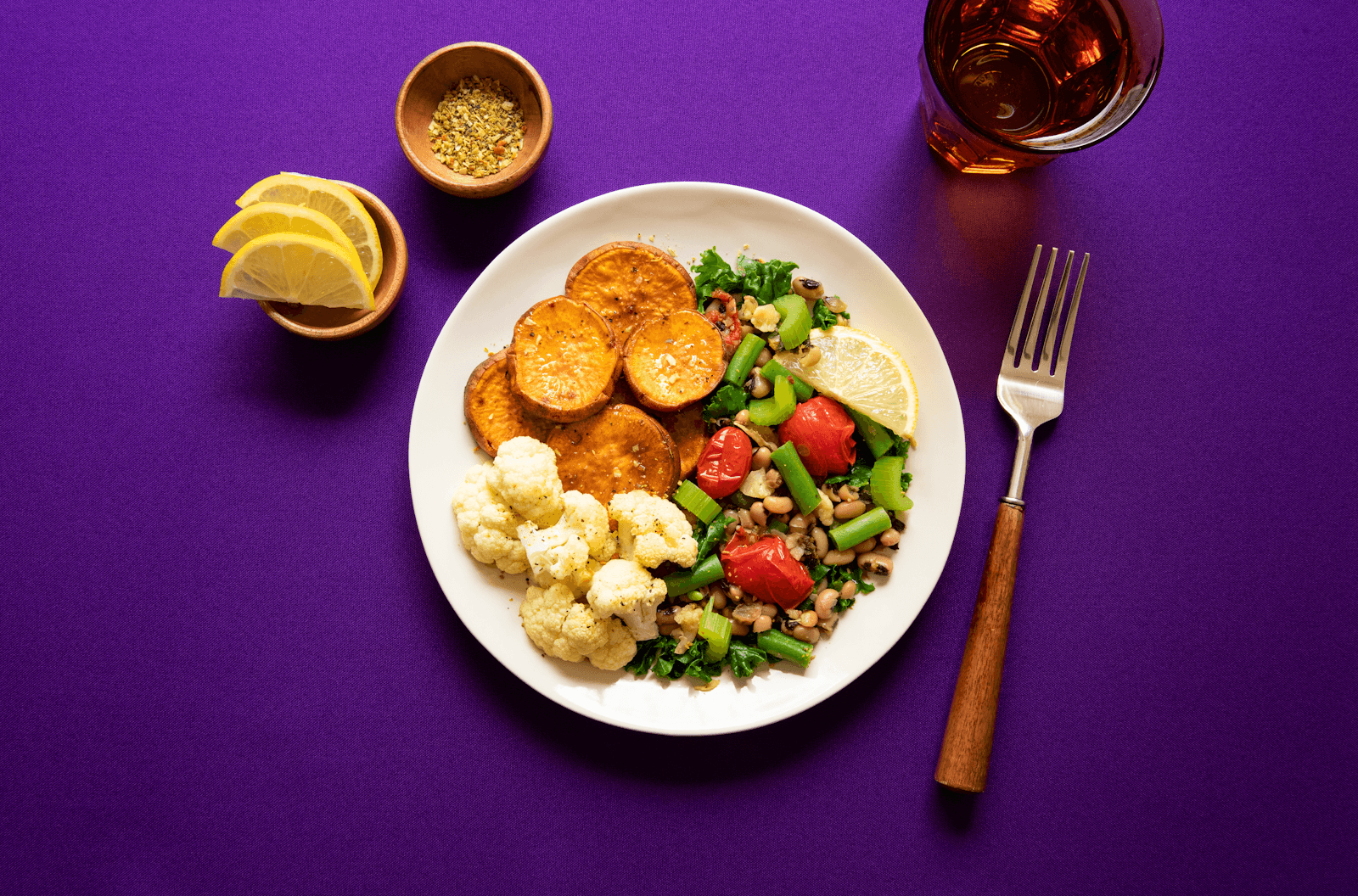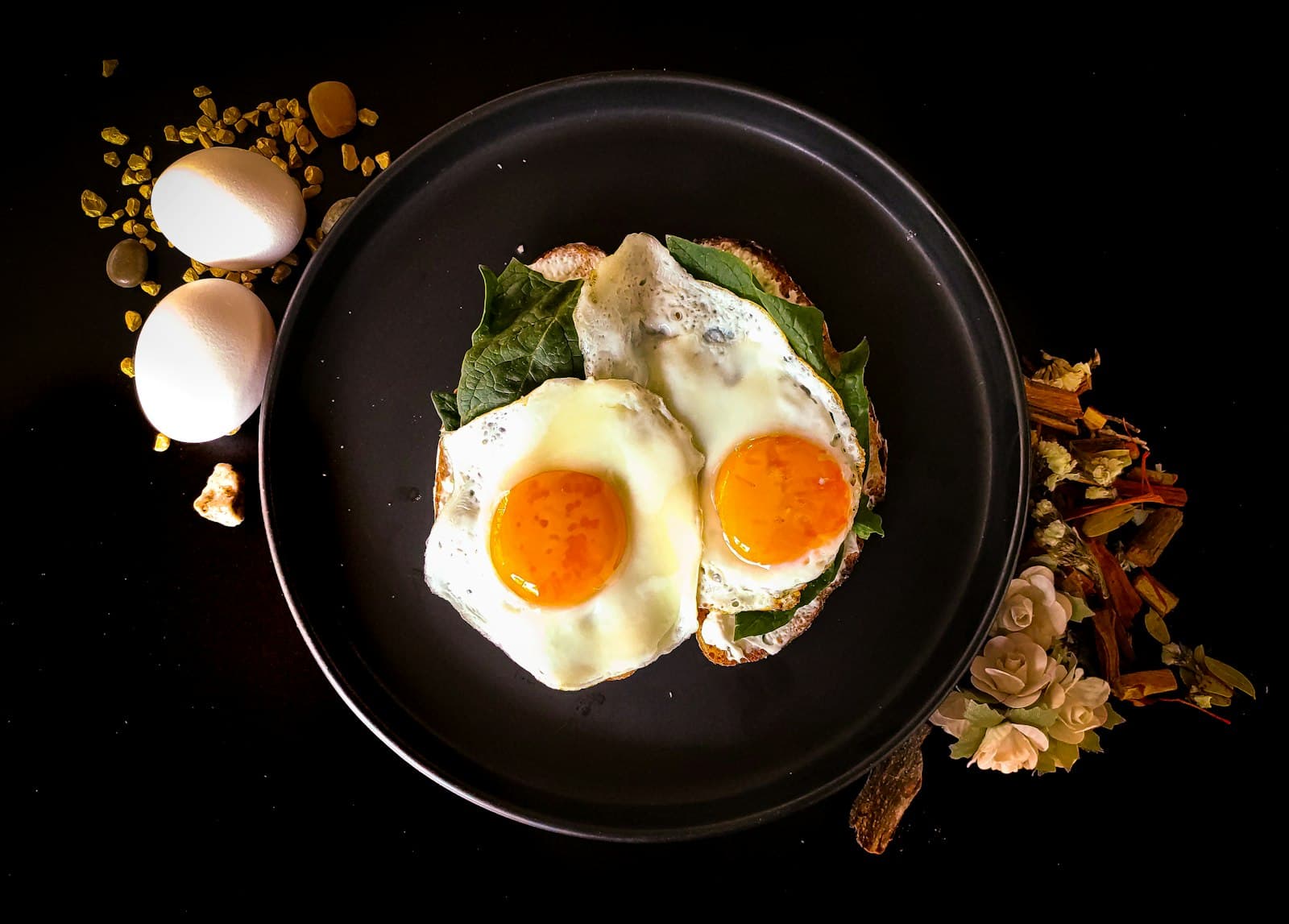
The best low FODMAP breakfasts are built from a short list of reliable bases, eggs, rice, potatoes, corn, lactose-free dairy, sourdough or spelt bread and modest portions of oats, topped with a small serving of fruit and some protein. What goes wrong at breakfast is rarely a "high FODMAP food". It is a bigger bowl than the tested portion, a cereal with chicory root on the label, a green banana chosen to dodge fructans, a fatty plate that sets off the gut in IBS-D, or three small low FODMAP servings stacked into one bowl.
The pages ranking for this search are mostly recipe round-ups. The two we were able to load and read carried no research citations, and one told readers that during the elimination phase the foods they eat "will not be the cause" of their symptoms, which the portion and stacking evidence below says is not true. This article is the other half: why each breakfast food behaves the way it does, what the research says about oats, bananas, bread, cereal, milk and sweeteners, which breakfasts suit IBS-D and which suit IBS-C, and twenty breakfasts sorted by the problem they solve.
The short answer: build from reliable bases, then control portion and fat
A low FODMAP breakfast needs three things: a base that carries very little fermentable carbohydrate, a portion of anything borderline that stays near the tested serving, and nothing on the plate that stacks with it. The bases that are reliable in almost any amount are eggs, plain meat and fish, rice, potatoes, corn and polenta, and lactose-free dairy. The foods that are fine in a modest serving and a problem in a large one are oats, most bread, bananas, many fruits, nuts and seeds.
That split is not an opinion. It follows from how low FODMAP cut-offs were built. The research group that developed the diet set its thresholds by looking at the FODMAP content of typical serving sizes of foods that commonly caused symptoms and foods that were usually tolerated, and noted that processing and ingredient choice change the values, including high-fructose corn syrup in US processed foods (Varney 2017). A cut-off is therefore a statement about a portion. Double the portion and you are outside what was tested. Our post on FODMAP data provenance explains why those values vary between labs, batches and brands.
Two framing points before the food. First, the low FODMAP diet is a second-line treatment. UK dietetic guidance puts ordinary healthy-eating advice first and the low FODMAP diet second, delivered by a dietitian (McKenzie 2016). Second, restriction is meant to be short. In a randomised trial, four weeks of FODMAP restriction improved symptom control (13 of 19 people versus 5 of 22 on their usual diet) but also lowered the gut's bifidobacteria (Staudacher 2012). That is one reason the diet ends in reintroduction rather than a permanent breakfast menu; our guide to how long to stay on the low FODMAP diet covers the timing.
Why breakfast is the meal people get stuck on
Breakfast is the meal where the diet takes away the most defaults at once. Toast, most cereal, milk, honey, apple juice, muesli and granola bars all come under suspicion in the same week, and people fall back on two things: oats and eggs. The top reply to one r/FODMAPS request for breakfast ideas came from someone who had eaten little but oats and eggs "for months" and was sick of both (r/FODMAPS thread). Others in the same community describe struggling to eat enough at all during elimination, and one person posted a deliberately large, protein-heavy breakfast because keeping calories up had been the hardest part of the diet for them (r/FODMAPS thread).
The second reason is timing. Your colon is at its most active in the first hour after waking, and eating adds a second push on top of that. If mornings are when your symptoms cluster whatever you eat, our article on why IBS flares in the morning explains the physiology, and why you have to poop right after eating covers the meal reflex in detail. For this article, the point is practical: breakfast lands on a gut that is already moving, so the size and fat content of the meal matter as much as the FODMAP list.
The third reason is that first-line advice is itself breakfast-heavy. NICE's general dietary advice for IBS reads almost like a breakfast brief: have regular meals and avoid long gaps, limit high-fibre bread and bran cereals, limit fresh fruit to three portions a day, and, for wind and bloating, try oats "such as oat-based breakfast cereal or porridge" and linseeds (NICE CG61). The BSG notes that this traditional advice rests on clinical experience and plausible mechanisms rather than randomised trials against a control (Vasant 2021), which matters when we get to the linseed evidence.
Oats: low in fructans, not low in everything
Plain oats are one of the lowest-fructan grains available, which is why they sit at the centre of most low FODMAP breakfasts. In an HPLC analysis of 55 commonly eaten grains, breakfast cereals, breads, pulses and biscuits, total fructan per portion ranged from 1.12 g in couscous to zero in rice, and from 0.96 g in a wheat-free muesli down to 0.11 g in oats (Biesiekierski 2011).
Read those two numbers together, because they carry the most useful breakfast lesson in the paper. A wheat-free muesli, which most shoppers would assume is the "safe" option, carried nearly nine times the fructan of plain oats in that analysis. The wheat was gone. Whatever else went into the mix, such as dried fruit, other grains or nuts, was not.
So why do so many people report that oats bother them? The threads on this are long. One r/FODMAPS post asking why so many people cannot tolerate oats "even though they are low FODMAP" drew 64 replies (r/FODMAPS thread), and another titled simply "Oats have betrayed me" described a food that had been safe for fifteen years suddenly misbehaving from one particular bag (r/FODMAPS thread). There are four plausible explanations, and they point to different responses.
Reason one: the portion grew
Oats are low FODMAP at a tested serving, not at any serving. A heaped bowl, a second helping, or overnight oats made in a large jar can double the dose without it feeling like a different breakfast. In the "betrayed" thread, one commenter pointed out that oats also contain galacto-oligosaccharides and that a large portion moves into a moderate category, citing app data. We could not confirm the oat GOS figure in a peer-reviewed paper, but the principle is exactly how cut-offs work (Varney 2017). If a bowl of oats troubles you, weigh a normal serving once. Many people are surprised by how far a "normal bowl" has drifted.
Reason two: the fibre ferments in its own right
Oats are a soluble fibre food, and soluble fibre is a mixed bag in IBS. The ACG guideline lists oat bran with psyllium, barley and beans as sources of soluble fibre, and it draws the distinction that matters: fibres that resist fermentation hold water and help stool form, while fibres that ferment in the colon lose that water-holding capacity and produce gas that can aggravate bloating and flatulence (Lacy 2021). Oat fibre is partly fermentable. That does not make oats a FODMAP problem, but it does mean a gas-sensitive gut can notice a large oat breakfast even when the FODMAP arithmetic looks fine.
Here is the tension worth naming: NICE suggests oats specifically for wind and bloating (NICE CG61), while a sizeable share of the people posting in r/FODMAPS say oats cause exactly those symptoms. Both can be true. A guideline recommendation describes what tends to help on average; a thread collects the people for whom it did not. Neither is a prediction for you, which is why the answer is a controlled test rather than a rule.
Reason three: the oats were not only oats
Commercial oats are frequently contaminated with wheat, barley or rye, because they are grown, transported and milled alongside them. A Canadian survey found that about 88% of 133 commercial oat samples were contaminated above 20 mg/kg of gluten, and the only gluten-free variety tested came back negative every time (Koerner 2011).
For a FODMAP question, that contamination is tiny: tens of milligrams of gluten-bearing grain per kilogram of oats is nowhere near a meaningful fructan dose. For coeliac disease it is a different matter entirely. A systematic review found that adding oats to a gluten-free diet did not affect symptoms, gut histology or blood tests in people with coeliac disease, but every randomised trial in it used pure, uncontaminated oats, and the overall quality of evidence was low (Pinto-Sánchez 2017). The "different brand, suddenly bad" story in the thread above is more consistent with a contamination or processing difference than with FODMAPs.
Reason four: the safe food changed status because something else changed
Sometimes nothing about the oats changed and your threshold did. An infection, a stressful month, a new medication or more fermentable food elsewhere in the day can all move how much your gut tolerates. We cover that in depth in why safe foods sometimes trigger IBS, including a worked example built around the same breakfast eaten for three weeks.
What about instant, rolled and steel-cut oats?
People in these threads report strong preferences in every direction: instant oats "like nuclear bombs" for one person, the only tolerable kind for another, steel-cut the only safe version for a third. We could find no study comparing oat forms in people with IBS, so we cannot tell you which is better, and any page that does so confidently is guessing. Processing does change composition in general (Varney 2017), which is a reason to test the form you actually eat rather than assume one oat equals another. Oat milk is a separate product with its own composition; our post on FODMAP stacking uses the oat-milk porridge as its lead example.
Bananas: the ripeness rule, and the trade nobody mentions
The advice to prefer firm, just-ripe bananas over spotty ones has some genuine chemistry behind it, and a catch that almost no breakfast page mentions.
The chemistry first. In a study of eight Brazilian banana cultivars, the short-chain fructan 1-kestose was present in every one at full ripeness, and in the five followed through ripening, its synthesis tracked a specific rise in sucrose: 1-kestose appeared once sucrose reached roughly 200 mg per gram of dry matter (Der Agopian 2008). A follow-up in one cultivar complicates the simple story, though. Total FOS was already detectable in the first days after harvest, and only 1-kestose waited for the sucrose rise; total FOS and sucrose were also higher in bananas stored at around 10°C than at around 19°C (Der Agopian 2009). So ripening does add at least one short-chain fructan, but an unripe banana is not fructan-free.
But notice the size. The same authors concluded that the amounts were low enough that banana "cannot be considered a good source of FOS" as a prebiotic (Der Agopian 2008). Those were Brazilian cultivars, measured for short-chain FOS only, so they do not settle how much fructan a ripe supermarket banana carries in total. They do suggest the ripe-banana effect is not simply a large fructan dose. A ripe banana is also a sugar-dense fruit, although its fructose and glucose are close to balanced on USDA data (about 4.9 g and 5.0 g per 100 g) (USDA FoodData Central, bananas), so excess fructose is not an obvious explanation either. The honest summary is that the ripe-banana complaint is common and the published chemistry only partly explains it.
Now the catch. A green banana is mostly starch. In a classic study, people with ileostomies ate bananas from six batches of different ripeness. Starch made up 37% of the dry weight in the least ripe bananas and 3% in the ripest, and up to 90% of the starch turned up undigested in the ileostomy output, meaning it would normally have reached the colon (Englyst 1986). The authors calculated that the starch reaching the colon from an unripe banana could be up to eight times the fibre in the same fruit.
Resistant starch is fermentable. NICE's general IBS advice already suggests reducing it (NICE CG61). So swapping to very green bananas to avoid fructans means swapping one fermentable carbohydrate for another. That fits what people describe: in one r/FODMAPS thread, some said ripe bananas were the problem, others said green ones gave them sharp cramps, and one said a banana with any green on it felt "like getting stabbed" while a fully yellow one was fine (r/FODMAPS thread).
A practical note from the same research: the second study found cooler storage pushed FOS higher, not lower (Der Agopian 2009). If you are putting bananas in the fridge to "keep them safe", that particular study points the other way, though it measured one cultivar under controlled storage rather than a home fridge.
Bread and toast: what the sourdough trials actually found
Bread is the breakfast staple people miss most, and sourdough is the usual workaround. The mechanism is sound: long fermentation lets the yeasts and bacteria in a sourdough starter break down fructans, and a review of low FODMAP baking describes how sourdough processes can markedly reduce FODMAP content while keeping slower-fermenting fibre (Loponen 2018). In the grain analysis, spelt bread had the lowest fructan of the breads measured, 0.07 g per portion, against 0.6 g in dark rye (Biesiekierski 2011).
The trials are less tidy than the mechanism.
- Sourdough wheat versus yeasted wheat. In a randomised double-blind 7-day trial of 26 people with IBS and self-reported wheat sensitivity, the sourdough bread really was lower in FODMAPs, and it was not better tolerated: no significant differences in gut symptoms (Laatikainen 2017). The sourdough period did bring more tiredness and joint symptoms, which the authors said to interpret cautiously.
- Low FODMAP rye versus regular rye. In a double-blind crossover trial of 87 people with IBS, the low FODMAP rye bread produced milder flatulence, pain, cramps and rumbling, and less breath hydrogen, but no difference on the IBS-SSS symptom score or quality of life (Laatikainen 2016).
Both trials were funded by a bakery group, Fazer. The review cited above was written by a Fazer Group employee and a university researcher, and it states that the authors declare no conflict of interest while also disclosing that employment in its funding section (Loponen 2018). We report both statements as printed. The bakery-funded wheat trial did not favour its sponsor's hypothesis, which, if anything, makes the null result more believable.
What this means for breakfast: sourdough toast is a reasonable base, and genuinely slow-fermented spelt sourdough is the usual first choice, but do not expect a sourdough switch to transform your mornings. "Sourdough-style" supermarket loaves may use commercial yeast and a flavouring shortcut, so the ingredient list and a long proving time are what you are looking for. Our cheap low FODMAP meals post covers the cost side of the bread question.
Cereal: the four things to find on the box
Plain cornflakes, puffed or crisped rice and plain oats are the usual low FODMAP cereals. Almost every problem cereal fails on one of four ingredients, and none of them is wheat.
1. Chicory root, inulin or "oligofructose". These are added fibres, and they are fructans. Manufacturers add them to raise fibre claims, often to cereals that are otherwise fine. The best evidence for why they matter comes from an MRI study: 29 people with IBS and bloating each drank 40 g of glucose, fructose or inulin on separate days, and 13 reached a clinically important symptom threshold after inulin against 6 after glucose. Healthy controls produced the same colonic gas but reported fewer symptoms, which is why the authors concluded the problem is a gut that is hypersensitive to stretch, not one that makes too much gas (Major 2017). Forty grams is far more inulin than a bowl of cereal contains, so treat this as mechanism, not a per-bowl prediction.
2. Honey, agave or high-fructose corn syrup. These carry fructose in excess of glucose. On USDA data, honey is about 40.9 g fructose to 35.8 g glucose per 100 g (USDA FoodData Central, honey), and the cut-off developers flag high-fructose corn syrup as a reason US processed foods test higher (Varney 2017). A "honey" flavour cereal may contain very little honey, so check where it sits in the ingredient list.
3. Dried fruit. Several fruits carry fructose in excess of glucose or sorbitol, and drying concentrates whatever the fruit contained. In an HPLC analysis of 41 fruits, apple, pear, mango, clingstone peach and watermelon had excess fructose, and sorbitol was measured in 15 fruits (Muir 2009).
4. Bran or wheat as a main ingredient. NICE suggests limiting cereals high in bran (NICE CG61), and both US and UK guidelines separate insoluble fibre like wheat bran, which showed no significant benefit and may worsen pain and bloating, from soluble fibre like psyllium, which helped (Lacy 2021; Vasant 2021).
Two smaller traps from the community. One person in the cornflake-and-egg thread noted that some cornflakes list malt flavouring, a barley product, as an ingredient, and reported reacting to it (r/FODMAPS thread). Another in the non-oatmeal thread traced bloating after a flavoured rice cereal to molasses in the ingredient list (r/FODMAPS thread). Both are individual observations, not tested findings, but they are the kind of detail worth checking on a box you eat every day.
Milk, yoghurt and the lactose dose
Most people doing low FODMAP switch to lactose-free milk at breakfast, and for many that is sensible. Dairy was the most commonly reported problem food in a Swedish survey of 197 people with IBS, named by 49% (Böhn 2013). But the dose matters more than the word "lactose" suggests.
A systematic review of randomised trials found that 12 to 15 g of lactose, roughly one cup of milk, is well tolerated by most adults with lactose intolerance or malabsorption (Shaukat 2010). That review studied people with lactose malabsorption, not IBS specifically, and IBS guts are more sensitive, so treat it as an upper bound rather than a promise. What it does tell you is that a splash of ordinary milk in tea is a much smaller dose than a pint-sized latte or a large bowl of cereal with milk.
Yoghurt behaves differently from milk. The bacteria in live yoghurt carry their own lactase, which survives the stomach and digests lactose in the small intestine, which is why lactose-intolerant people usually tolerate yoghurt better than the same lactose in milk; plain yoghurts showed more lactase activity than flavoured ones (Savaiano 2014). That review appeared in a journal supplement, and we could not find a conflict-of-interest statement for it in PubMed, so we cannot tell you who funded it. Lactose-free yoghurt removes the question entirely.
If lactose-free milk still upsets you, lactose may not have been the issue. Our post on why lactose-free milk still upsets your stomach walks through volume, fat, milk protein and carton additives.
Sweeteners: maple, honey, sugar and "sugar-free"
At breakfast, the sweetener matters more than people expect, because it goes on oats, pancakes, yoghurt and into coffee, sometimes all in one meal.
The relevant physiology is simple. Fructose on its own is absorbed through a limited-capacity route, and glucose helps it along. In ten healthy adults, 25 g of pure fructose caused malabsorption in five, yet no one malabsorbed 100 g of sucrose or a 50/50 mix of glucose and fructose (Rumessen 1986). A later review estimated that up to half of the general population cannot completely absorb a 25 g fructose load (Gibson 2007).
That is why the sweetener list looks the way it does:
- Maple syrup is almost all sucrose on USDA data (about 58 g sucrose, under 2 g each of free glucose and fructose per 100 g) (USDA FoodData Central, maple syrup), so its fructose arrives paired with glucose.
- Ordinary table sugar is sucrose, the same pairing.
- Honey has fructose in excess of glucose (USDA FoodData Central, honey), which is why it is restricted.
- "Sugar-free" syrups, protein bars and some yoghurts often use sorbitol, mannitol, xylitol or maltitol. These are polyols, the P in FODMAP, and NICE specifically advises people with diarrhoea to avoid sorbitol (NICE CG61). Our post on sorbitol as an IBS trigger covers where they hide.
One limit: a normal drizzle is a different thing from a generous pour. Sweetener sits on top of whatever else is in the bowl, which is why a heavily sweetened breakfast turns up so often in our stacking examples article.
Fruit at breakfast: portions, juice and the one fruit with a trial
Fruit is where breakfast portions drift fastest, and where juice quietly turns a small serving into several.
The fruits that most often cause trouble are the ones with excess fructose or polyols: in the Australian HPLC analysis, apple, pear, mango, clingstone peach and watermelon had fructose in excess of glucose (Muir 2009), and apple was a named trigger for 28% of people in the Swedish survey (Böhn 2013). A glass of apple juice concentrates several apples into one drink. Berries, citrus, kiwifruit, pineapple, grapes and firm bananas are the usual breakfast choices, each in a small portion. NICE's general advice to limit fresh fruit to three portions of about 80 g a day (NICE CG61) is a reasonable ceiling that many people exceed by lunchtime once smoothies are counted.
Kiwifruit deserves its own section, because it is the one breakfast fruit with trial evidence in IBS. That comes below, under constipation.
Clairop logs meals, symptoms and stool in seconds, then looks for the foods your gut reacts to, including reactions that land days later.
Protein without dairy or a sixth egg
Protein is where a low FODMAP breakfast is easiest. Plain eggs, meat and fish contain almost no carbohydrate, so they carry no FODMAPs: a raw whole egg has about 0.7 g of carbohydrate per 100 g on USDA data (USDA FoodData Central, egg). The risk is never the protein. It is the garlic in the sausage, the onion in the marinade, the "natural flavourings" in smoked meats and the breadcrumbs or fillers in anything processed.
Options people describe using, in the threads we read and beyond:
- Eggs any way, the default for good reason.
- Prosciutto, which in one r/FODMAPS thread several people noted is typically made from pork and salt alone, unlike salami, which often carries garlic (r/FODMAPS thread). Check the label rather than assuming.
- Smoked salmon, tinned tuna or sardines.
- Leftover chicken, steak or pork from dinner.
- Firm tofu, scrambled or pan-fried; our vegetarian protein post explains why firm tofu is low FODMAP when soft or silken versions are not.
- Peanut butter and a small handful of low FODMAP nuts or seeds.
- Lactose-free Greek-style yoghurt, if dairy protein itself is not a problem for you.
For people who cannot eat eggs either, a real group in these threads (a couple of commenters in the breakfast-taco thread said eggs do not agree with them, r/FODMAPS thread), the practical answer is to treat breakfast as a savoury meal: leftover meat or tofu with rice or potatoes. If that feels like too few options, that is a sign to speak to a dietitian rather than restrict further.
Breakfast by subtype: the same menu does not suit IBS-D and IBS-C
The low FODMAP list is the same for everyone. What differs by subtype is what else on the breakfast plate helps or hurts. If you are not sure which subtype you are, our explainer on the difference between IBS-D and IBS-C covers the Rome IV rule.
IBS-D: keep fat modest and treat the fry-up as a test, not a default
A cooked breakfast of eggs, bacon, hash browns and fried tomatoes can be low FODMAP from end to end and still send someone with IBS-D running. The reason is fat. In a laboratory study, fat infused directly into the small intestine lowered the thresholds at which people with IBS felt colonic stretch, gas, discomfort and pain; compared with healthy controls, the extra sensitisation for gas and pain showed up in the eight people with IBS-D but not in the eight with IBS-C (Simrén 2001). That was 16 patients and a tube infusion rather than a plate of food, so it is mechanism rather than proof. It lines up with survey data: fried and fatty foods were reported as symptom triggers by 52% of the 197 people in the Swedish survey (Böhn 2013).
Practical IBS-D breakfasts: poached or scrambled eggs rather than fried in plenty of oil, lean ham rather than sausages and bacon together, toast with a thin spread, rice or potatoes cooked without much fat. Coffee is a separate push on the same morning; our post on coffee and IBS-D covers it. If fatty food causes urgent, watery diarrhoea specifically, bile acid malabsorption is worth raising with your doctor; see bile acid malabsorption vs IBS.
IBS-C: kiwifruit, soluble fibre and the linseed question
For IBS with constipation, breakfast is where most people add fibre, and there is more evidence here than for any other breakfast question.
Kiwifruit. An international multicentre trial randomised people with functional constipation (60), IBS-C (61) and healthy controls (63) to two green kiwifruit a day or 7.5 g of psyllium for four weeks, then switched them over after a washout. In the IBS-C group, kiwifruit increased complete spontaneous bowel movements by 1.73 per week compared with baseline, and improved a validated gut-comfort score (Gearry 2023).
Three details that the headline leaves out, all from the paper's full text:
- Kiwifruit matched psyllium rather than beating it on the primary outcome. Both raised bowel movement frequency, and there were no significant differences between them in any week. Kiwifruit did better than psyllium on gut-symptom scores in the functional constipation and combined groups; the full text does not report that head-to-head advantage for the IBS-C group alone.
- It was unblinded. Participants knew whether they were eating fruit or taking a fibre powder, and the outcomes were self-reported.
- It was funded by Zespri, a kiwifruit company. Two authors were Zespri employees. The funding statement says Zespri "reviewed, approved, and funded the study design", and the next sentence says the funder "did not contribute to the study design or data analysis". We cannot reconcile those two sentences from the paper. The benign reading is that the company signed off on a design the investigators wrote; the paper does not say.
A second, smaller US trial in chronic constipation (not IBS-C specifically) partially randomised 79 people to kiwifruit, prunes or psyllium. Response rates on the primary outcome were similar across all three; kiwifruit had the fewest side effects, improved bloating scores, and left fewer people dissatisfied (Chey 2021). We could not find a conflict-of-interest statement for it in PubMed, so we cannot say how it was funded. Prunes are less straightforward on a low FODMAP diet: they are dried plums, plum was named as a trigger by 23% of people in the Swedish survey (Böhn 2013), and sorbitol turned up in 15 of the 41 fruits in the Australian analysis (Muir 2009). That is one reason kiwifruit tends to be the fruit people try first.
Soluble fibre. Both the ACG and the BSG recommend soluble fibre such as psyllium (ispaghula) for IBS, and advise against insoluble wheat bran (Lacy 2021; Vasant 2021). The BSG adds that it should be started low and increased gradually, because it increases colonic water and volume, which can aggravate pain and bloating at first. How to take a fibre supplement is a question for your GP or dietitian; it can fit naturally into a breakfast routine.
Linseed (flaxseed). This is where guidance and trial disagree. NICE suggests linseeds for wind and bloating (NICE CG61). The only randomised trial we found, an open pilot of 40 people with IBS comparing whole linseeds, ground linseeds and none for four weeks, found no statistically significant difference between any of the groups on symptom severity (P = 0.12 and P = 0.10 against no linseeds), and no change in stool frequency or consistency; 31 people completed it (Cockerell 2012). The authors concluded linseeds "may be useful". That is a fair description of a pilot too small to detect an effect, not evidence that they work. Plenty of people like linseed on their porridge; just know the evidence behind it is thin.
Twenty low FODMAP breakfast ideas, grouped by the problem they solve
These are starting points rather than a plan, and every "small portion" below means close to the tested serving for that food. If you are working with a dietitian, their portion guidance overrides anything here.
When you are sick of oats and eggs
- Rice with a fried or soft-boiled egg, soy sauce and the green tops of spring onions. One r/FODMAPS commenter's version of this, the Japanese tamago kake gohan, was among the most upvoted suggestions in the non-oatmeal thread (r/FODMAPS thread).
- Congee (rice porridge) with ginger, sesame oil and shredded leftover chicken.
- Cream of rice or rice porridge with maple syrup, cinnamon and a few blueberries.
- Polenta or grits, sweet with maple syrup or savoury with cheddar and a fried egg.
- Quinoa or buckwheat flakes cooked like porridge, a common oat substitute in the threads we read.
- Leftover dinner. Nothing about breakfast needs to be breakfast food.
Savoury and high-protein
- Breakfast tacos: corn tortillas, scrambled egg, tomato, a little hard cheese and smoked paprika (r/FODMAPS thread).
- Hash browns or diced potato with a poached egg.
- Smoked salmon on sourdough toast with cucumber and a squeeze of lemon.
- Rice cakes with prosciutto, cucumber and a spoon of lactose-free cream cheese.
- Firm tofu scramble in garlic-infused oil with spinach and red pepper.
- A small frittata with courgette, spinach and chives, made in a batch and reheated.
Sweet and quick
- Overnight oats in a tested portion with lactose-free milk, chia seeds and a few raspberries. Keep the bowl's other additions small.
- Lactose-free yoghurt with kiwifruit and a sprinkle of pumpkin seeds.
- Sourdough or spelt sourdough toast with peanut butter and a few slices of just-yellow banana.
- Gluten-free pancakes or waffles, made in a batch and frozen, with maple syrup and strawberries.
- Cornflakes or crisped rice with lactose-free milk, after checking the box for malt, honey and inulin.
Out of the door
- Hard-boiled eggs with rice cakes and a clementine.
- A peanut butter sourdough sandwich, wrapped the night before.
- Egg muffins from a weekend batch, eaten cold or reheated.
What to check, food by food
| Breakfast food | The usual problem | What the evidence says | What to do |
|---|---|---|---|
| Oats | Portion creep, fermentable fibre, contamination | 0.11 g fructan per portion; 88% of Canadian oat samples contaminated with gluten | Weigh a serving once; ask about coeliac testing if oats cause marked symptoms |
| Muesli and granola | Dried fruit, honey, mixed grains | Wheat-free muesli carried 0.96 g fructan per portion | Treat "wheat-free" as unrelated to FODMAP status |
| Banana | Ripe: 1-kestose forms; green: resistant starch | 1-kestose appeared as sucrose rose; up to 90% of unripe-banana starch escaped digestion | Just-yellow, modest portion |
| Sourdough | Not all "sourdough" is long-fermented | Lower FODMAPs, but not better tolerated in a 26-person trial | Look for slow proving and simple ingredients |
| Cereal | Chicory root, honey, dried fruit, bran | Inulin triggered symptoms in 13 of 29 with IBS in a 40 g challenge | Read the ingredient list, not the front of the box |
| Milk | Lactose dose | 12 to 15 g lactose tolerated by most lactose malabsorbers | Lactose-free, or a small splash if tolerated |
| Yoghurt | Lactose, flavourings, polyols | Live cultures digest much of the lactose | Plain or lactose-free; check for sugar alcohols |
| Sweeteners | Excess fructose, polyols | Glucose improves fructose absorption; sucrose rarely malabsorbed | Maple or sugar in small amounts; avoid honey and "sugar-free" syrups during restriction |
| Fry-up | Fat, not FODMAPs | Fat heightened colonic sensitivity in IBS-D | Poached or scrambled, one fatty item rather than three |
| Fruit juice | Concentrated fruit sugar | Apple, pear and mango carry excess fructose | Whole fruit in a small portion |
Stacking: the breakfast problem with no single culprit
A breakfast built from individually "safe" portions can still add up to too much. The classic example, and the lead one in our FODMAP stacking examples article, is a bowl of oats made with oat milk, maple syrup, berries and a handful of nuts: each item tolerable alone, several fermentable sources together. That article covers the idea in detail, including the point that stacking is an extrapolation from dose-response trials rather than a directly tested phenomenon.
The breakfast-specific version of that advice: pick one "borderline" item per bowl and keep everything else in the reliable category. Oats with lactose-free milk and a few strawberries is one borderline item. Oats with oat milk, banana, honey, almonds and chia is five.
Grab-and-go, and the packet problem
Pre-packed breakfast bars, muffins and drinks are where breakfast is most likely to fail, because they are designed around fibre and sugar claims. The three ingredients to find on the label are the same ones that sink cereal: honey or high-fructose corn syrup, chicory root or inulin, and sugar alcohols. Protein bars and shakes deserve the same label check: at least two r/FODMAPS threads are about people tracing their symptoms to a protein powder, one of them pointing at whey and sugar alcohols (r/FODMAPS thread; r/FODMAPS thread).
A certified low FODMAP product has been tested, which is useful, but it is also usually more expensive than making the same thing yourself. Egg muffins, overnight oats and a peanut butter sandwich all travel, cost little and take five minutes the night before.
A worked example: one breakfast, changed one variable at a time
The situation. Priya, a composite rather than a real person, has IBS-C and has been on a dietitian-guided low FODMAP diet for three weeks. Most of the day is better than it was, but by mid-morning she is bloated almost every day. Breakfast is the same every weekday: a large bowl of overnight oats made with oat milk, a sliced banana that has usually gone spotty by Thursday, a drizzle of honey and a spoon of ground linseed.
Step 1: list the borderline items. Oats in an unmeasured portion, oat milk, a ripe banana, honey, linseed. That is five candidates in one bowl, and at least three of them (oats, oat milk, ripe banana) add fermentable carbohydrate from different directions.
Step 2: remove the clear off-list items first. Honey goes, because it has excess fructose and is restricted during elimination. Oat milk goes, because it is a separate product with its own FODMAP content. Lactose-free milk and maple syrup replace them.
Step 3: weigh the oats once. Her "bowl" turns out to be well over a single tested serving. She cuts back to one serving and adds a boiled egg for staying power.
Step 4: change the banana, not the fruit habit. She swaps the banana for a kiwifruit, partly for the constipation evidence and partly to take the ripeness variable out entirely.
Step 5: hold everything for a week, then decide on linseed. Mid-morning bloating eases. She adds the linseed back after a week with nothing else changed, and notices no difference either way, which matches the pilot trial. She keeps it because she likes it.
Notice what made the answer readable: one change at a time, a stable rest-of-diet, and a symptom score written down at the same time each day. That is also the logic behind Clairop, which compares how you felt after meals containing a food with meals that did not, across delayed windows, and shows how many meals each result rests on. It does not make the dietitian's portion calls for you, and it will not tell you whether you have coeliac disease.
When breakfast is not the problem
If symptoms arrive every morning regardless of what you eat, or before you eat, breakfast is probably not the cause. Waking itself switches on colonic activity, and our morning IBS article explains why the first hour is the hardest for many people whatever is on the plate. Try a week of the same plain breakfast, eaten a little later, and see whether the pattern moves.
If the low FODMAP diet has made little difference after a structured trial, the breakfast is also unlikely to be the lever. Our post on what to do if low FODMAP does not work covers the alternatives, including gut-directed psychological therapies that the ACG suggests for global IBS symptoms (Lacy 2021).
And if the breakfast menu keeps shrinking, if you find yourself eating less to feel better, or if meals have become a source of dread, that is a signal worth taking seriously. Our article on whether the low FODMAP diet can cause an eating disorder describes the warning signs and what help looks like.
Myths about low FODMAP breakfasts
"If everything in my breakfast is low FODMAP, the breakfast can't cause symptoms." Portion, stacking and fat all still apply. A fatty fry-up affected colonic sensitivity in IBS-D in the lab (Simrén 2001), and low FODMAP cut-offs describe tested servings, not any amount (Varney 2017).
"Gluten-free cereal is low FODMAP." Gluten is a protein; FODMAPs are carbohydrates. A wheat-free muesli carried about nine times the fructan of plain oats (Biesiekierski 2011).
"Green bananas are the safe bananas." They may carry less of one short-chain fructan, but they carry far more starch, most of which can reach the colon (Englyst 1986).
"Sourdough solves the bread problem." It lowers FODMAP content, but in the one double-blind comparison of sourdough and ordinary wheat bread in people with IBS, it was not better tolerated (Laatikainen 2017).
"Linseeds are proven for IBS bloating." They are recommended by NICE, but the one pilot trial found no significant difference against no linseeds (Cockerell 2012).
"Kiwifruit beats fibre supplements for IBS-C." In the main trial it matched psyllium on bowel movement frequency and was funded by a kiwifruit company (Gearry 2023).
"You should eat this way for good." The diet is a short elimination followed by reintroduction; restriction lowered gut bifidobacteria in a randomised trial (Staudacher 2012). Our guide to reintroducing foods is where breakfast widens again.
If you have Crohn's disease or ulcerative colitis
Most of this article is written for IBS, where there is no inflammation and the question is gut sensitivity. With inflammatory bowel disease, the priorities differ: some people with Crohn's disease have strictures that change the advice on fibrous and hard-to-chew foods, and flares bring nutritional risks of their own. Talk to your IBD team or dietitian before restricting. Our ulcerative colitis breakfast ideas article covers the UC-specific questions, including medication timing at breakfast.
When to see a doctor promptly
Diet is for managing a diagnosed condition, not for investigating new symptoms. See a doctor promptly if you have any of the following, whatever you had for breakfast:
- Blood in your stool, or black, tarry stool.
- Unintentional weight loss.
- Fever, or symptoms that wake you at night.
- Signs of anaemia, such as unusual tiredness, breathlessness or pale skin.
- A change in bowel habit that started after the age of 50.
- A family history of bowel cancer, inflammatory bowel disease or coeliac disease.
- Persistent vomiting, or pain that is severe and does not settle.
Also see your doctor if you have not had coeliac disease excluded and a food like oats or bread reliably causes marked symptoms, because the test depends on still eating gluten (Lacy 2021).
The short version
Build breakfast from reliable bases: eggs, meat or fish, rice, potatoes, corn, lactose-free dairy, and sourdough or spelt sourdough. Treat oats, bread, bananas, fruit, nuts and seeds as portion foods and keep one borderline item per bowl. Read cereal boxes for chicory root, honey, dried fruit and bran rather than for "gluten-free". Choose a just-yellow banana rather than a green one. In IBS-D, keep breakfast fat modest; in IBS-C, kiwifruit and soluble fibre have the best evidence, with the caveats above. And keep the restriction short: reintroduction is when breakfast gets interesting again.