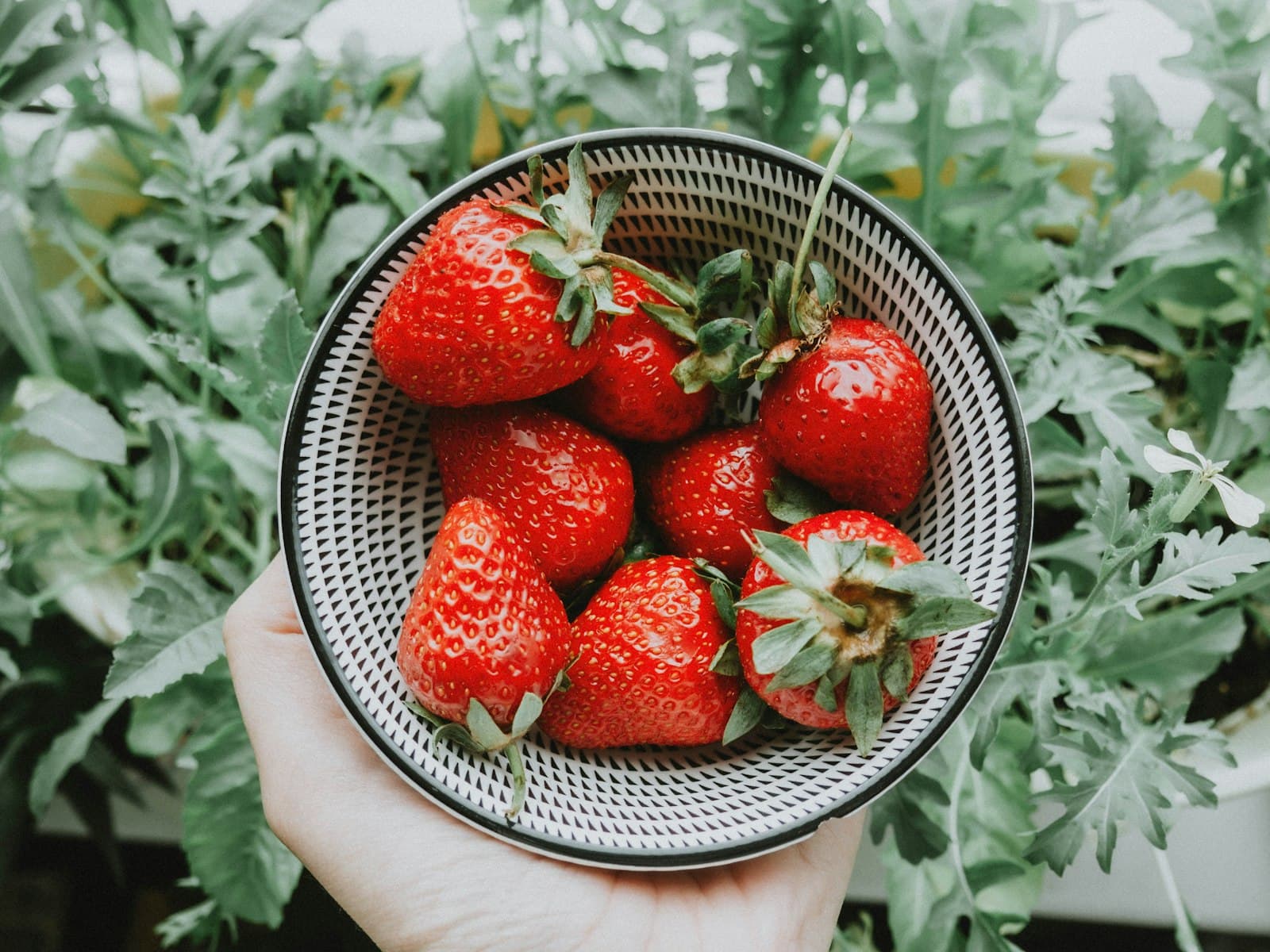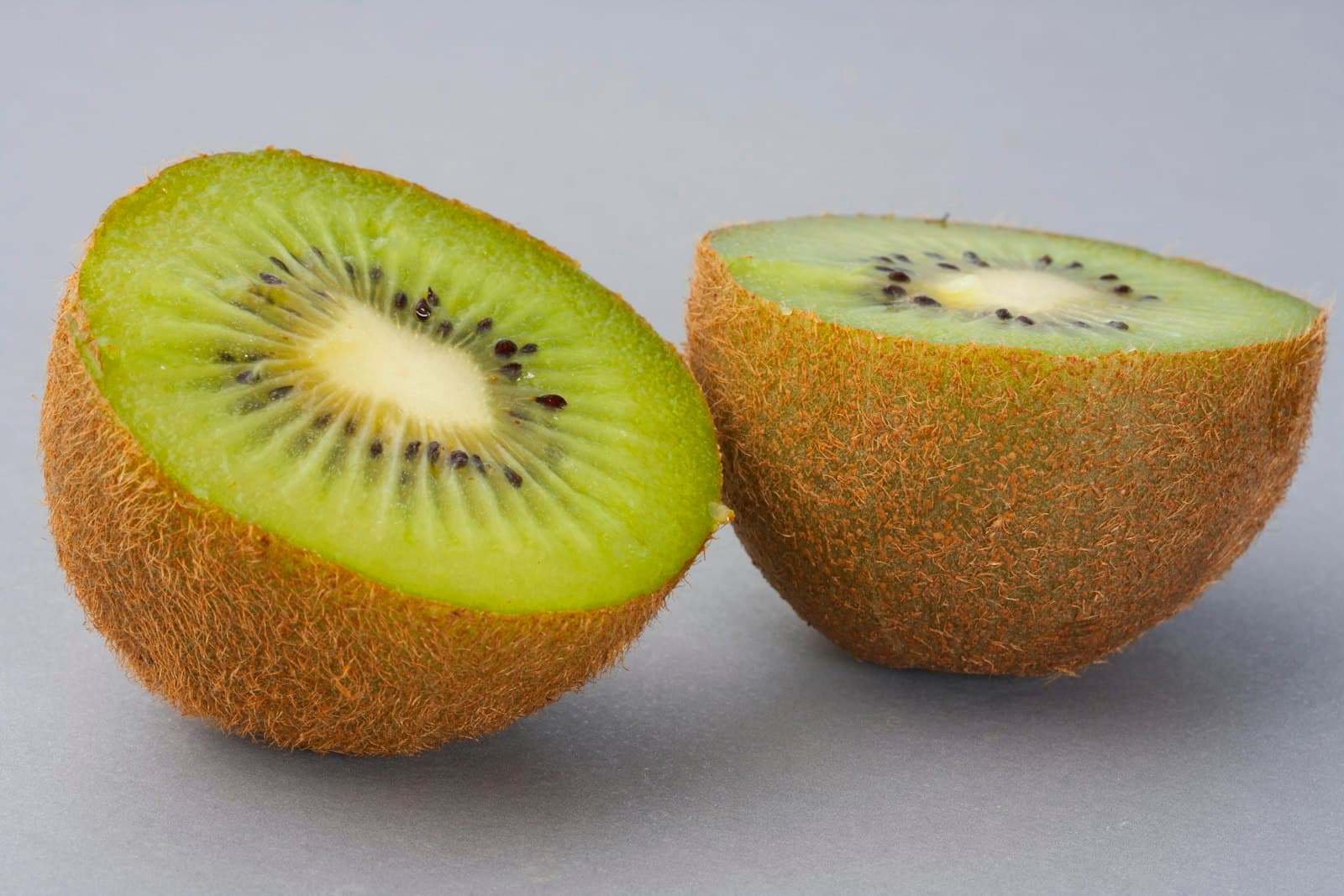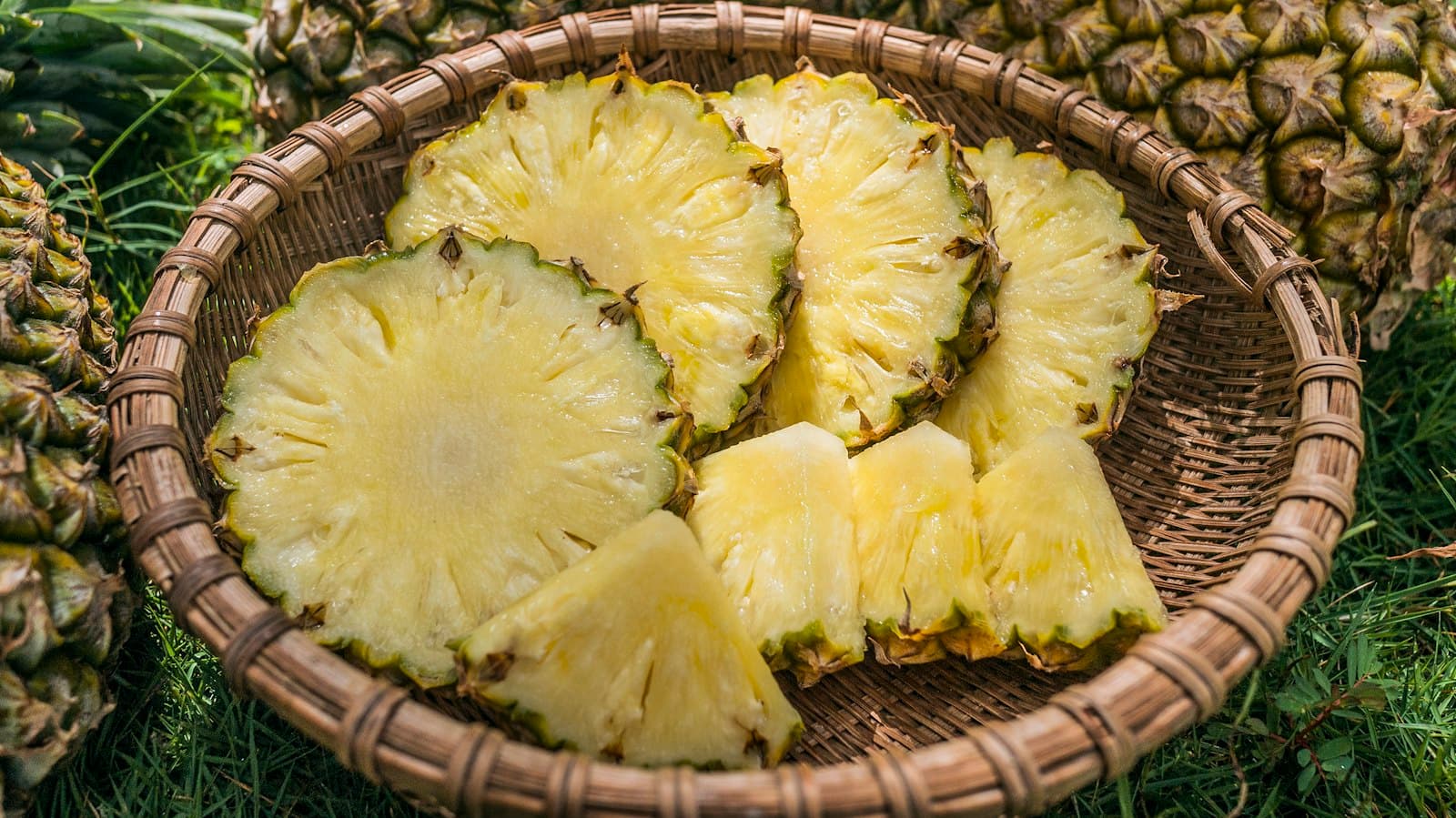
Low FODMAP fruits, at one normal portion, include blueberries, strawberries, kiwifruit, oranges, mandarins, lemons and limes, pineapple, cantaloupe, papaya and firm (just-yellow) bananas. High FODMAP fruits include apples, pears, mango and watermelon, which carry fructose in excess of glucose, and cherries, peaches, nectarines, plums and apricots, which are listed high mainly for sorbitol. Dried fruit and apple or pear juice concentrate both problems.
That is the list most pages give you, and it is broadly right. What they usually leave out is the part that decides whether the list works for you: every rating is a portion, not a fruit; the lists published by reputable sources disagree with each other more often than you would expect; and the numbers behind them come from a small number of laboratories testing a small number of samples. This guide gives you the list, then shows you the measurements underneath it, using published laboratory papers and USDA food composition data rather than any app's proprietary database.
What fruits are low FODMAP?
The fruits most consistently rated low FODMAP at a single normal portion are blueberries, strawberries, kiwifruit, oranges, mandarins and clementines, lemons and limes, pineapple, cantaloupe, papaya and firm bananas. Grapes, raspberries and honeydew melon are usually allowed in a smaller portion. Each of these is low because its fructose is matched by glucose and it carries little or no sorbitol.
Some of those ratings rest on direct laboratory testing you can read. A US analysis of fresh fruit found that firm banana, red grapes, navel orange, pineapple and strawberry all contained more glucose than fructose, with only a small amount of fructo-oligosaccharide in the banana and no sorbitol or mannitol detected in any of them (Chumpitazi 2018). The Australian laboratory work that underpins most low FODMAP lists measured 41 fruits and found fructose in excess of glucose in only five (Muir 2009).
Here is the list, grouped the way people actually use it:
Low FODMAP at one normal portion
- Blueberries
- Strawberries
- Kiwifruit (green or gold)
- Oranges, mandarins, clementines and tangerines
- Lemons and limes, including the juice used in cooking
- Pineapple
- Cantaloupe (rockmelon)
- Papaya (pawpaw)
- Banana, firm or just yellow
- Passion fruit and dragon fruit, which appear on several published low lists
Low only in a smaller portion
- Grapes
- Raspberries
- Honeydew melon
- Grapefruit (lists disagree, see below)
- Avocado, which lists variously rate as high or as a small-portion food
What "one portion" means. NICE's general advice for IBS is to limit fresh fruit to three portions a day, each about 80 g (NICE CG61). That is roughly a small orange, two kiwifruit, a large handful of berries or a slice of melon. It is general IBS advice rather than a FODMAP threshold, but it is a sensible yardstick for the elimination phase. We deliberately do not give gram cut-offs for each fruit: those values come from proprietary testing, they change when foods are re-tested, and a dietitian can give you current ones.
Which fruits are high FODMAP and should be avoided?
During the elimination phase, the fruits to avoid are apples, pears and nashi (Asian) pears, mango, watermelon, cherries, peaches, nectarines, plums, apricots, figs, persimmon, ripe bananas in larger amounts, dried fruit, and apple or pear juice. They fall into two groups: fruits with too much fructose relative to glucose, and fruits rich in the sugar alcohol sorbitol.
High in excess fructose
- Apples
- Pears and nashi pears
- Mango
- Watermelon
- Apple juice, pear juice, and fruit canned in either
High in sorbitol (a polyol)
- Cherries
- Peaches and nectarines
- Plums and prunes
- Apricots
- Apples and pears again, which carry both
Concentrated or mixed
- Dried fruit: raisins, sultanas, dried apricots, figs, prunes, dates in quantity
- Fruit bars and leathers made from apple or pear purée
- Smoothies built on several fruits at once
The excess fructose group is confirmed in the published Australian analysis, which named apple, pear, mango, clingstone peach and watermelon as the fruits where fructose outweighed glucose, and found sorbitol in 15 of the 41 fruits tested at 0.53 to 5.99 g per 100 g (Muir 2009). The public food list on the Monash FODMAP website names apples, cherries, nashi pears, peaches and plums as the fruits particularly rich in sorbitol (Monash FODMAP food list). A few fruits also carry small amounts of fructans: an earlier analysis found low but detectable fructans in white peach, persimmon, longan and melon (Muir 2007).
These fruits are not "bad" foods. They are the ones most likely to muddy the elimination phase, and several of them, especially the stone fruits, are exactly what you use later to test whether sorbitol is a problem for you at all.
Why are some fruits high FODMAP and others not?
Fruit becomes high FODMAP for one of two reasons. Either it contains more fructose than glucose, and the unmatched fructose is absorbed less efficiently, or it contains sorbitol, a sugar alcohol that is only partly absorbed. Both draw water into the bowel and reach the colon, where bacteria ferment them into gas.
Our post on what FODMAP stands for walks through the transporters and why "excess" is the key word, so here is only the fruit-specific part.
Excess fructose. Glucose helps the gut absorb fructose. In healthy adults, nobody malabsorbed an equal mix of 50 g glucose and 50 g fructose, while the same group malabsorbed fructose given alone at far lower doses (Rumessen 1986). So a fruit with roughly equal fructose and glucose, like a kiwifruit or an orange, behaves very differently from an apple or a pear, where fructose is more than double the glucose.
Sorbitol. Many trees in the rose family, including apple, pear and peach, make sorbitol rather than sucrose as their main product of photosynthesis and transport it around the plant (Li 2022). That botanical quirk is why the stone fruits and the apple and pear family keep turning up on high lists together. In a blinded trial, 10 g of sorbitol increased gastrointestinal symptoms in people with IBS but not in healthy volunteers, and the symptoms did not depend on whether the sorbitol was fully absorbed (Yao 2014). That is worth knowing: a negative breath test does not mean sorbitol cannot bother you.
Does it actually cause symptoms? In a blinded rechallenge trial in 25 people with IBS and fructose malabsorption who had improved on the diet, 70% of those given fructose, 77% given fructans and 79% given both reported inadequately controlled symptoms, against 14% given glucose, and symptoms rose with dose (Shepherd 2008). That trial deliberately selected people who had already responded, so it shows the sugars can drive symptoms in responders, not how many people with IBS will react to fruit.
What a sugar table can and cannot tell you about fruit
You can estimate a fruit's excess fructose from public food composition data by subtracting its glucose from its fructose. That works well for the fructose fruits, but it cannot see sorbitol at all, which is why cherries, peaches and plums look "safe" on a sugar table and still sit on every high FODMAP list.
We did that subtraction for common fruits using USDA's SR Legacy data (USDA FoodData Central). The table below shows excess fructose per 100 g and for an 80 g portion. For scale, the landmark low FODMAP trial aimed for less than 0.5 g of total FODMAPs per meal (Halmos 2014). That is a whole-meal research target, not a per-food cut-off, but it shows how much room a single piece of fruit can use up.
| Fruit (raw unless stated) | Excess fructose per 100 g | Per 80 g portion | What the sugar table misses |
|---|---|---|---|
| Pear | 3.8 g | 3.1 g | Also sorbitol |
| Apple, with skin | 3.5 g | 2.8 g | Also sorbitol |
| Apple juice, unsweetened | 3.1 g | 2.5 g | Easy to drink 250 ml or more |
| Mango | 2.7 g | 2.1 g | |
| Watermelon | 1.8 g | 1.4 g | Melon also has some fructans |
| Grapes | 0.9 g | 0.7 g | A US lab sample found none |
| Raspberries | 0.5 g | 0.4 g | |
| Strawberries | 0.5 g | 0.4 g | |
| Pineapple | 0.4 g | 0.3 g | |
| Cantaloupe | 0.3 g | 0.3 g | |
| Navel orange | 0.3 g | 0.2 g | |
| Kiwifruit, green | 0.2 g | 0.2 g | |
| Blueberries | 0.1 g | 0.1 g | |
| Blackberries | 0.1 g | 0.1 g | Often listed high anyway |
| Banana | none | none | Ripeness changes it |
| Cherries, sweet | none | none | Sorbitol |
| Peach, plum, apricot, nectarine | none | none | Sorbitol |
Three things stand out.
First, the fructose fruits are not close calls. An 80 g portion of apple or pear carries more than five times the whole-meal target of that trial in excess fructose alone, before any sorbitol is counted.
Second, the sorbitol fruits are invisible here. USDA does not report sorbitol for these foods, and in its figures sweet cherries, peaches, plums and apricots all have more glucose than fructose. If you built your own list from a sugar table, you would wrongly clear them. Interestingly, the Monash public page lists cherries among the excess-fructose fruits as well as the sorbitol ones, while the USDA cherry sample shows more glucose than fructose; varieties and samples differ, and we cannot reconcile the two from what is published.
Third, samples disagree even for the safe fruits. The USDA grape figures show a little more fructose than glucose, while the US laboratory sample of red grapes found clearly more glucose than fructose (Chumpitazi 2018). Grape variety, ripeness and where the sample was bought all move these numbers, which is one reason grapes sit on most lists with a portion limit rather than as a free food.
Blackberries are the honest gap in this table. Their sugars barely differ, yet several lists class them as high. A polyol measurement is the likely explanation, but we could not find it in a published paper we were able to read, so we are flagging it rather than guessing.
Why do low FODMAP fruit lists disagree?
Low FODMAP fruit lists disagree because they are built from different measurements, different countries' produce, different portion assumptions and different publication dates. A published audit of three US academic lists found that, of foods appearing on more than one list, about one in five were fully restricted by one list and allowed by another.
The audit compared three low FODMAP lists from US academic institutions, each covering more than 150 foods. Together they gave advice on 332 foods, but 170 of those appeared on only one list. Of the 162 foods that could be compared, 35 were in outright disagreement, and five of those were fruits: cherries, dried fruit, grapefruit, pomegranate and raspberries (McMeans 2017). None of the lists explained how to combine foods.
You can see the same disagreement on the first page of search results today. Of the ranking fruit lists we read in full, two put grapefruit on the high list and a third allows it up to a portion limit, while search snippets from two other ranking pages show it on their low lists. One list rates raisins as high, another names them among its low FODMAP dried fruits, and a third allows a teaspoon. Neither is necessarily wrong. A food rated at a small portion can appear as "low" on one list and "high" on another, depending on whether the author lists the portion or simplifies.
Other reasons the lists move:
- Country and processing. The researchers who set the low FODMAP cut-offs note that food processing and ingredient choice change FODMAP content, and that high-fructose corn syrup may explain higher excess fructose in some US processed foods (Varney 2017). In the US laboratory study, a lemonade and a cranberry juice drink both carried substantial excess fructose, roughly 3 g per 100 g each (Chumpitazi 2018), even though some lists treat cranberry juice as a safe choice. Check what is actually in the bottle.
- Borrowed data. When Swedish researchers built a FODMAP database, they used Australian polyol figures for fruit and vegetables because no European data were available (Liljebo 2020). Much of the world's fruit sorbitol information traces back to a few Australian samples.
- Re-testing. Community members regularly report that a fruit's rating changed after the database owner re-tested it, with navel oranges and grapes both mentioned in one r/FODMAPS thread. Our Monash FODMAP app alternative post covers why FODMAP data shift between tests and labs.
The practical answer is to treat any list, including this one, as a starting point and to let your reintroduction results overrule it.
How much fruit can you eat on a low FODMAP diet?
During elimination, most people can eat one portion of a low FODMAP fruit at a time, up to about three portions across the day. The limit exists because fruit sugars are dose dependent: a low FODMAP fruit in a normal portion can become a meaningful dose of fructose when you eat several portions together.
This is the most common confusion in patient forums. One person on the diet asked why grapes and strawberries carried a portion limit when some vegetables are marked "eat freely", after eating about 200 g of grapes in one go (r/FODMAPS). The answer is dose. In healthy volunteers, no one malabsorbed 15 g of fructose, 10% did at 25 g, and 80% did at 50 g (Rao 2007). Individual capacity varies enormously: in an older study it ranged from under 5 g to over 50 g in ten healthy adults (Rumessen 1986). Those studies used fructose solutions, not fruit, and healthy people, not IBS, but they show why "low" always comes with "in this amount".
A few practical rules follow:
- One fruit portion per sitting. Two different low FODMAP fruits in the same bowl can add up, which is the idea behind FODMAP stacking.
- Spread portions through the day. Many guides suggest a gap of a few hours. We could not find a trial that tested a specific interval, so this is reasonable practice rather than a proven number.
- Watch the "healthy" add-ons. Fruit in yoghurt, fruit in cereal and a glass of juice at breakfast are each portions.
- Do not undershoot either. Removing fruit entirely is not the goal, and nobody needs to go fruit-free to do the diet properly.
Does eating fruit with glucose or a meal make it easier to tolerate?
Adding glucose does not appear to help. In a blinded trial in people with functional bowel disorders and fructose malabsorption, adding glucose to whole foods high in excess fructose made no significant difference to breath hydrogen or symptoms, and adding glucose to a fructose drink reduced hydrogen but did not reduce symptoms.
This matters because older advice said otherwise. A 2006 dietary guide for IBS with fructose malabsorption recommended eating free glucose alongside foods with excess fructose, and reported that 74% of 62 patients responded to the overall diet (Shepherd 2006). That was a retrospective telephone follow-up with no control group, and the glucose tip was one part of a wider diet. When the same research group tested the glucose idea directly in randomised, blinded studies, it did not hold up for symptoms (Tuck 2017). So eating a spoonful of sugar with your apple is not a workaround, and it adds sugar for no clear gain. The fructose malabsorption post covers what a fructose breath test does and does not tell you.
Eating fruit with a meal rather than alone is a different question, and we could not find a trial that tested it for fruit in IBS.
Clairop logs meals, symptoms and stool in seconds, then looks for the foods your gut reacts to, including reactions that land days later.
Are dried fruits low FODMAP?
Most dried fruits are high FODMAP at the amount people actually eat, because drying removes water and concentrates the same sugars into a few mouthfuls. Raisins, sultanas, dried figs, dried apricots and prunes are best treated as reintroduction foods. Sugar-sweetened dried cranberries are the usual exception, in a small amount.
The concentration is easy to see in the USDA data. Fresh grapes carry about 0.9 g of excess fructose per 100 g; dark seedless raisins carry about 4.2 g (USDA FoodData Central). A small 30 g handful of raisins therefore carries about 1.25 g of excess fructose, more than a full 80 g portion of fresh grapes. Prunes are a sorbitol food: a review of their composition put sorbitol at about 14.7 g per 100 g in dried prunes and 6.1 g per 100 g in prune juice, and attributed their laxative effect to it (Stacewicz-Sapuntzakis 2001).
Dried cranberries look odd on a low list until you read the label: fresh cranberries are tart, so they are usually dried with added sugar, and USDA's sweetened dried cranberries show more glucose than fructose. One person in r/FODMAPS, looking for a fruit snack not built on apple or pear, got several replies recommending sugar-sweetened dried cranberries and homemade fruit leather from banana, kiwi and blueberries. Note the trap in the same thread: many commercial fruit snacks use apple or pear purée as the base, or high-fructose corn syrup.
Is fruit juice or a smoothie low FODMAP?
Apple and pear juice are high FODMAP, and most fruit smoothies are several portions blended into one drink. USDA figures put unsweetened apple juice at about 3.1 g of excess fructose per 100 g, so a 250 ml glass carries roughly 8 g, more than a medium apple. Small amounts of juice from low FODMAP fruits are a different matter, but check the base.
Liquids also bypass the brake that whole fruit puts on how much you eat. In a laboratory study in 58 adults, a whole apple eaten before lunch increased fullness more than the same amount of apple as purée or juice, and adding fibre to the juice did not close the gap (Flood-Obbagy 2009). That study measured fullness and calories, not gut symptoms, but it explains a common experience: you would not eat four oranges at breakfast, yet you can drink their juice in a minute. (The abstract of that paper opens by saying whole fruit "reduces ratings of satiety" more than juice, which contradicts its own results; it appears to mean hunger.)
For smoothies:
- Use one fruit portion per glass, not a banana plus berries plus juice.
- Pick the liquid deliberately. Lactose-free milk or a plant milk listed as low FODMAP adds no fruit sugar; juice does.
- Avoid "no added sugar" blends that use apple or grape juice concentrate as the sweetener.
Which low FODMAP fruits help with constipation?
Kiwifruit is the low FODMAP fruit with the best direct evidence for constipation. In a US trial in chronic constipation, two green kiwifruit a day increased complete bowel movements about as well as prunes or psyllium and had the fewest side effects. That trial was not in IBS, and prunes, the classic alternative, are high in sorbitol.
The US trial partially randomised 79 adults with chronic constipation to kiwifruit, prunes or psyllium for four weeks; 75 completed. Responder rates were similar across all three, stool consistency and straining improved with kiwifruit, and kiwifruit had the lowest rates of adverse events and dissatisfaction (Chey 2021). The participants had chronic constipation rather than IBS with constipation, so it supports kiwifruit as a reasonable option rather than a proven IBS-C treatment. Our what to eat with IBS-C post covers the IBS-C kiwifruit trials and the prune trade-off in detail.
Fibre content also varies a lot between low FODMAP fruits. USDA figures give raspberries about 6.5 g of fibre per 100 g, kiwifruit about 3 g, and pineapple and cantaloupe 1.4 g and 0.9 g. If constipation is your main problem, the fibre type matters as much as the amount; our post on whether fibre makes IBS worse explains why.
A practical note from the forums: people with constipation often find the fruit they relied on during diarrhoea, especially firm bananas, works against them. One commenter in an r/ibs thread on which fruits people tolerate described choosing green bananas during diarrhoea and riper ones during constipation. That is lived experience, not evidence, but it matches how ripeness changes a banana's starch and sugar, which our low FODMAP breakfast guide covers.
Which fruits are best for IBS with diarrhoea?
For IBS with diarrhoea, the fruits least likely to add to the problem are those low in both excess fructose and sorbitol, in one portion at a time: blueberries, strawberries, oranges, kiwifruit, pineapple, cantaloupe and firm banana. We could not find a trial comparing fruits in IBS-D, so this is reasoning from the sugars, not tested advice.
Both FODMAP fruit sugars draw water into the bowel, which is why they matter more when stools are already loose. NICE's general advice says people with diarrhoea should avoid sorbitol, naming sugar-free sweets, gum and drinks (NICE CG61). Stone fruits and prunes are natural sources of the same compound. If you have diarrhoea, also look at the drinks list: juices, fruit "waters" and smoothies deliver fruit sugar quickly and in volume.
Why does a "safe" fruit still bother me?
A low FODMAP fruit can still cause symptoms because of the dose you ate, stacking with other foods, a FODMAP the list does not flag strongly, or something that is not a FODMAP at all, such as a pollen-related reaction, acidity or simply a large volume of food. Individual sensitivity also varies widely.
In community threads the variation is striking. One person could eat mango freely while reacting to almost every "low" fruit; another found blueberries bloated them every time (r/FODMAPS). Another, missing summer fruit, wrote that a listed-safe portion of cantaloupe put them to bed (r/FODMAPS). Lists describe averages; you are one person.
Things worth checking, in order:
- Dose and stacking. Count everything fruit-derived in that meal, including juice, jam, dried fruit in cereal and fruit in yoghurt.
- Delay. Fruit eaten at breakfast can show up as symptoms that afternoon or the next day, so the obvious culprit is not always the right one. Our post on why a food diary can show no pattern covers delayed effects.
- Mouth and throat symptoms. Itching or tingling of the mouth or throat soon after raw fruit points away from FODMAPs and toward pollen food allergy syndrome, a cross-reaction between pollen and fruit proteins. A review put its prevalence at 13% to 58% of adults in different studies, varying by region, and noted that severe reactions are possible though uncommon (Carlson 2019). That needs an allergist, not a diet.
- Burning rather than bloating. Several people in the threads describe citrus, pineapple or kiwifruit causing burning or heartburn. That is a different mechanism from FODMAP fermentation and is worth raising with your doctor if it is frequent.
- The belief effect. People with IBS name fruit as a trigger often: in a survey of 197 people with IBS, apple was blamed by 28% and plum by 23% (Böhn 2013). Self-report is not the same as a blinded test, which is why reintroduction is done one food at a time.
In the r/FODMAPS thread about summer fruit, the most useful replies did not offer another list. They asked which FODMAP the poster reacted to, because cherries, watermelon and blackberries fail for different reasons. That is the right question, and reintroduction is how you answer it.
A worked example: rebuilding a fruit bowl after elimination
Here is how a typical fruit reintroduction might run, using one person's notes as an illustration rather than a prescription. Plan it with your dietitian, who can set the portions; the order below is a common pattern, not a proven sequence.
Weeks 1 to 4 (elimination). Breakfast includes one portion of a low FODMAP fruit, usually a kiwifruit or a handful of strawberries. An orange in the afternoon. No juice, no dried fruit. Symptoms settle to a stable baseline, which is the point of this phase.
Sorbitol test. Over three days, a small, then medium, then usual portion of a stone fruit such as peach or plum, with everything else held the same. Then a few days back on the elimination diet. In this example, the person notices loose stools by day three. Sorbitol is a likely sensitivity at a usual portion.
Excess fructose test. The same escalation with mango, then washout. No change from baseline. Fructose, at least at this dose, is tolerated.
What changes. Apples and pears carry both sugars, so they stay limited for now and get tested later on their own. Mango, watermelon and a little honey come back. Stone fruit, prunes and sugar-free products stay as occasional, small-portion foods.
The planner above lays out dated challenge and washout blocks for each FODMAP group, using a stone fruit for sorbitol and mango for excess fructose. For the method itself, see how to reintroduce foods after the low FODMAP diet and the reintroduction order post. If you log meals in Clairop, each meal's FODMAP load is broken down by subgroup, which makes it easier to notice when a stone fruit and a sugar-free mint added two sorbitol sources to the same day.
Should you cut fruit out completely?
No. The low FODMAP diet restricts high FODMAP fruits for a few weeks, then brings them back in to find your personal limits. Cutting out fruit long term is not part of the method, and the restriction phase itself changes gut bacteria in ways nobody has shown to be harmless over years.
The AGA's practice update describes three phases: restriction for no more than 4 to 6 weeks, reintroduction, then personalisation (Chey 2022). In a randomised trial, four weeks of FODMAP restriction improved symptoms, with 68% reporting adequate relief against 23% on their usual diet, but it also lowered luminal bifidobacteria, a group of bacteria usually considered beneficial (Staudacher 2012). The authors said the implications were still to be determined; that uncertainty is a reason to keep restriction short.
The diet's track record is real. A network meta-analysis of 13 randomised trials ranked the low FODMAP diet first for global IBS symptoms, while noting that most trials were in specialist care and did not study reintroduction (Black 2022). The ACG guideline recommends a limited trial (Lacy 2021), and NICE says advice on exclusion diets should come from a healthcare professional with dietary expertise (NICE CG61). The AGA update adds that restrictive diets suit some people poorly, including those at risk of malnutrition or with disordered eating; our post on whether the low FODMAP diet can cause an eating disorder covers warning signs. If you are unsure how long you have been restricting, see how long to do low FODMAP.
Myths about low FODMAP fruits
"Low FODMAP fruit is unlimited." Every rating is a portion. Fructose absorption has a dose ceiling, and two or three portions together are a different test.
"Fruit is sugar, so all fruit is bad for IBS." Table sugar and fruits with balanced fructose and glucose are absorbed well. The problem is the specific mix, not sugar as such. When Swedish researchers estimated excess fructose from whole days of food records, total glucose outweighed total fructose and the estimate came out at zero (Liljebo 2020). That is a crude whole-day estimate, but it fits the idea that the issue is the single high-fructose food or drink in a sitting, not fruit sugar in general.
"Peeling or cooking an apple makes it low FODMAP." USDA data put a peeled raw apple at about 2.8 g of excess fructose per 100 g, close to the 3.5 g of an unpeeled one. The sugars are in the flesh.
"Eat sugar with high-fructose fruit to balance it." The blinded trials did not support this for symptoms (Tuck 2017).
"If a fruit is not on my list, it must be high." Most lists omit far more foods than they include; in the US audit, half of all listed foods appeared on only one of three lists (McMeans 2017). Missing is not the same as high.
"Organic or homegrown fruit is lower in FODMAPs." We found no evidence for this. Variety and ripeness change sugar content; growing method has not been shown to.
When to see a doctor
See a doctor promptly if you have blood in your stool, unexplained weight loss, a fever, symptoms that wake you at night, anaemia, a change in bowel habit that starts after 50, or a family history of bowel cancer or inflammatory bowel disease. Those are not explained by fruit, and changing your diet can hide them.
Also talk to your doctor or dietitian if:
- You are cutting more and more fruit and the list of safe foods keeps shrinking.
- You are losing weight without trying, or eating noticeably less overall.
- Fruit causes mouth or throat itching, swelling, hives or breathing problems, which point to an allergy.
- You have diabetes, kidney disease or another condition with its own dietary rules, since fruit advice needs to fit both.
If you have Crohn's disease or ulcerative colitis, fruit tolerance during a flare is a separate question from IBS-style FODMAP sensitivity. Our posts on low FODMAP in ulcerative colitis and low FODMAP in Crohn's cover where the evidence stands, and anyone with a known stricture should get fruit advice from their IBD team.
The short version
- Low at one portion: blueberries, strawberries, kiwifruit, oranges, mandarins, lemons and limes, pineapple, cantaloupe, papaya, firm banana. Smaller portions of grapes, raspberries and honeydew.
- High during elimination: apples, pears, mango and watermelon (excess fructose); cherries, peaches, nectarines, plums and apricots (sorbitol); dried fruit, apple and pear juice.
- Portions matter more than the list. One portion at a time, about three a day.
- Lists disagree. Use any list as a starting point and let your reintroduction results decide.
- Fruit is meant to come back. Restrict for a few weeks, then test each fruit sugar on its own, ideally with a dietitian.