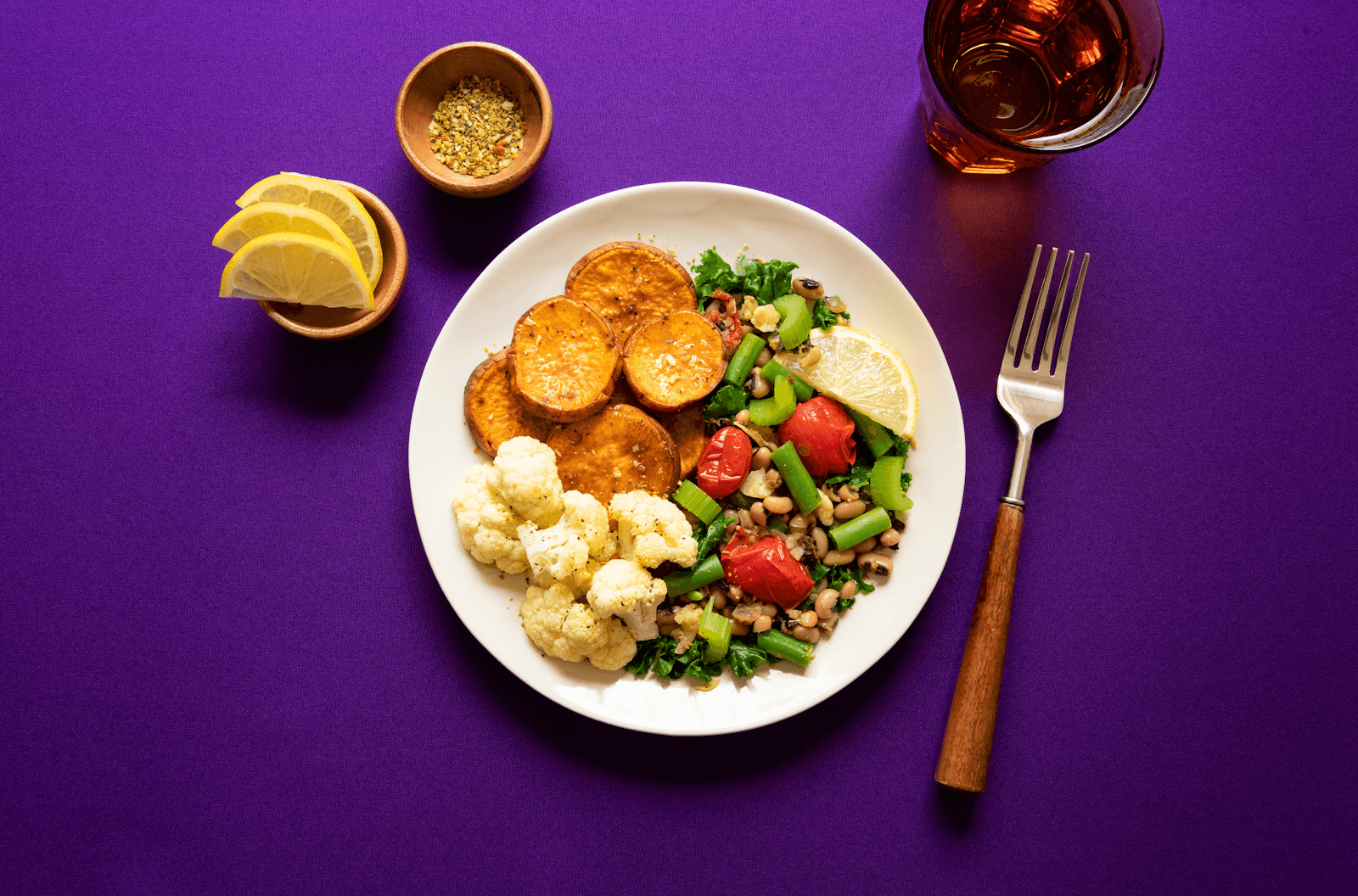
If you are vegetarian or vegan and you have been told to try a low FODMAP diet, you have been handed two sets of rules that pull against each other. The foods that carry protein in a plant-based diet are, with a few exceptions, the same foods that carry galacto-oligosaccharides. The short answer is that pressed and fermented soy foods and wheat gluten do most of the heavy lifting, nuts, seeds and grains top it up, and legumes stay in the diet in small well-rinsed canned portions rather than as the centre of a plate.
That is the answer nearly every page gives. What almost none of them mention is that there is a peer-reviewed laboratory analysis of exactly this problem, published in 2018, which measured the FODMAP content of 35 plant-based foods common in vegetarian and vegan eating and tested what cooking, sprouting, pickling, fermentation and canning do to those numbers (Tuck 2018). This article is built on that paper and on the trials around it, rather than on numbers copied from one app into a hundred blog posts.
This article is written for people who already have a diagnosis and a reason to be trying this diet. If your symptoms are new, changing, or have never been assessed, see a doctor before you start restricting food. Restriction can mask the thing that needed looking at.
The short answer: soy and gluten carry it, legumes come back small
In practical terms the vegetarian low FODMAP protein problem has four tiers. Pressed and fermented soy and wheat gluten are the only plant foods that are both protein-dense and consistently low in FODMAPs. Grains, nuts and seeds contribute real protein but in small amounts per serving. Legumes stay in the diet in small canned and rinsed portions. And most processed meat substitutes are out, almost always because of what has been added to them rather than what they are made of.
The reason the problem exists at all is chemical rather than bad luck. Galacto-oligosaccharides, mainly raffinose and stachyose, are the storage sugars of the legume family, and legumes are where plant protein is concentrated. Analytical work quantifying short-chain carbohydrates across grains, cereals and pulses found raffinose and stachyose to be most common in pulses specifically (Biesiekierski 2011). A meat eater doing this diet loses onion, garlic, wheat, some fruit and some dairy, and keeps their entire protein supply. A vegetarian loses onion, garlic, wheat, some fruit, some dairy and most of their protein supply at the same time.
Why this is harder than any other version of the diet
Running two dietary therapies at once has a name in the gastroenterology literature now. A 2025 review defines "diet stacking" as following two or more dietary therapies simultaneously, whether for symptom control, for a second medical condition, or for social or religious reasons, and it argues that nutritional risk rises with each layer mainly because food variety falls (Melton 2025).
That review is unusually direct about this specific combination. In its table of stacking combinations, it lists the micronutrients of concern for a vegetarian or vegan pattern as iron, calcium, vitamin D, B12, zinc, protein, iodine and omega-3 fatty acids, and for a low FODMAP diet as B vitamins, fibre, vitamin C, calcium and iron. Stack them and the overlaps compound. Its entry for the vegetarian plus low FODMAP cell reads: considerations required to ensure adequate protein intake, with a suggestion to increase intake of lower FODMAP legume varieties such as lentils and chickpeas. It also names soaking and rinsing legumes as a feasibility strategy, and flags that vegetarian Indian cuisine in particular is hard to align with the diet because of how central pulses are to it (Melton 2025).
Cost is the obvious barrier, and the r/FODMAPS threads on this are full of people doing the diet alone because they cannot afford a dietitian. That is a real constraint and this article is written in awareness of it, but it does not change what the evidence says about who should be supervising a two-layer restriction.
The paper the vegetarian FODMAP pages almost never cite
Here is the odd thing about this query. Three of the pages currently ranking for vegetarian and vegan low FODMAP protein are written by registered dietitians, and all three source their portion numbers to the same proprietary app or to blog posts published by the university behind it. None of the three cites the peer-reviewed analysis published in the Journal of Human Nutrition and Dietetics that measured these exact foods.
That paper quantified total FODMAP content in 35 plant-based foods, including fructose in excess of glucose, lactose, sorbitol, mannitol, galacto-oligosaccharides and total fructan, using high-performance liquid chromatography and enzymatic assays. Twenty of the 35 were classified as low FODMAP. Among the ones named in its results were canned coconut milk at 0.24 g per serving, dulse at 0.02 g, nutritional yeast at 0.01 g, soy cheese at 0.03 g, tempeh at 0.26 g and wheat gluten at 0.13 g. No FODMAPs at all were detected in agar-agar, egg replacer, vegan egg yolk, kelp noodles or spirulina. The processing techniques that produced the greatest reductions were pickling and canning (Tuck 2018).
Two honest caveats, because they matter more than the numbers.
First, the study applied one research group's published criteria to decide what counts as "low". A cutoff is a judgement laid on top of a measurement, not a measurement itself. Our post on FODMAP data provenance and why the values cannot simply be copied covers that problem in full, including inter-lab variation and how much ripeness, batch and processing move a single food's value.
Second, I could not read the paper's full per-food table, only its published abstract and results summary, because the full text sits behind a paywall. So the specific figures quoted above are the ones the paper itself highlights. I am not going to invent a value for firm tofu or canned lentils that I did not read, and you should be suspicious of any page that gives you one without saying where it came from.
There is one more sourcing problem worth naming, in the spirit of checking rather than accusing. A widely shared table of low FODMAP vegan protein figures attributes its protein-per-serving numbers to Self Nutrition Data. As of September 2026 that domain no longer resolves. The benign explanation is the likely one: the figures were drawn from a USDA-derived database years ago, they were probably broadly right when they were taken, and nobody went back. But a protein table whose source has gone offline is a table nobody can check, and at least one of its entries looks high against current USDA composition data, which is covered below.
Fourteen vegetarian protein options, grouped by how much you can rely on them
The table below groups plant proteins by how confident you can be about them, not alphabetically. Protein figures are per 100 g from USDA FoodData Central, which is a live public database you can check yourself. I have deliberately not given FODMAP portion ceilings, for the reasons above.
| # | Food | Protein per 100 g | FODMAP status | What actually decides it |
|---|---|---|---|---|
| 1 | Wheat gluten (seitan) | 75.2 g | Measured 0.13 g total FODMAPs per serving, classified low | Fructan lives in the starch, which is washed away. Not for coeliac disease. |
| 2 | Tempeh | 20.3 g | Measured 0.26 g per serving, classified low | Fermentation degrades the oligosaccharides |
| 3 | Firm tofu | around 11 g in one USDA entry | Widely treated as suitable in modest portions | Pressing drains the water-soluble oligosaccharides out with the whey |
| 4 | Silken tofu | around 7 g | Not suitable during restriction | Never pressed, so it keeps them |
| 5 | Soy protein isolate powder | Very high, varies by product | Depends entirely on the product | Isolation strips most carbohydrate; added sweeteners and fibres put it back |
| 6 | Pea protein isolate powder | Very high, varies by product | Depends entirely on the product | Same logic as soy isolate. Not the same as whole peas. |
| 7 | Rice protein powder | High, varies by product | Depends on additives | Rice itself is among the lowest-FODMAP grains |
| 8 | Peanuts and peanut butter | 24.0 g for creamy peanut butter | Generally suitable in small portions | Check for added honey or fruit concentrates |
| 9 | Pumpkin, hemp and chia seeds | Moderate to high | Generally suitable in small portions | Portion size, and whether you are stacking them with other sources |
| 10 | Almonds and other tree nuts | 21.2 g for almonds | Small portions only | Around half the calories are fat, so protein per handful is small |
| 11 | Quinoa (cooked) | 4.4 g | Among the better-tolerated grains | Volume needed for meaningful protein is large |
| 12 | Canned drained lentils | Lower than dried, and portion-limited | Suitable in small rinsed portions | Canning leaches GOS into the brine |
| 13 | Canned drained chickpeas | Lower than dried, and portion-limited | Suitable in small rinsed portions | Same mechanism, smaller usual portion |
| 14 | Commercial meat substitutes | Varies widely | Usually not suitable during restriction | Onion, garlic and whole-soybean protein, not the protein source itself |
Two things stand out from that table that the recipe round-ups tend to bury.
Seitan is not in the same league as anything else. USDA FoodData Central lists vital wheat gluten at 75.2 g of protein per 100 g, which is roughly seven times the density of firm tofu in the entry above and more than three times tempeh. If you are vegan, doing a low FODMAP restriction and struggling to hit a protein target, this is the single most useful food available to you, and the laboratory measurement supports it. It is also cheap, which matters if a dietitian is out of reach.
Nuts are a fat food with protein in it. At 21.2 g per 100 g, a 28 g handful of almonds contributes around 6 g of protein. Someone in the r/FODMAPS thread on plant-based protein put it more bluntly to a newcomer, pointing out that the immense majority of the calories in nuts and nut butters come from fat rather than protein (r/FODMAPS thread). They are right. Nuts and seeds are a top-up, not a foundation.
Why most meat substitutes are out, and it is rarely the protein
Take a photograph of the ingredient list before you look up the product. In the overwhelming majority of cases the problem is onion powder, garlic powder or both, and occasionally textured vegetable protein made from whole soybeans rather than from an isolate.
This is one of the most consistent experiences in the community. One r/FODMAPS post titled "Seitan, denied!" describes going to a shop, finding three brands and multiple varieties of each, and every single one containing ingredients the poster could not eat, mainly garlic and onion, with not a single plain option on the shelf (r/FODMAPS thread). In the "Vegan FODMAP proteins?" thread, someone who had been avoiding all wheat-protein products was told, correctly, that the fructan in their sausages was more likely coming from the textured soy protein and the onion and garlic than from the wheat gluten (r/FODMAPS thread).
The dose point matters here. Garlic and onion powder are dehydrated, which means the fructan is concentrated relative to the fresh vegetable, and they appear far down ingredient lists where people assume the amount must be trivial. Our post on why garlic and onion affect IBS covers the concentration problem and infused oils in detail. For the purposes of this article the practical rule is simple: if a meat substitute has an ingredient list longer than four items, read it before you look anything else up, and expect to be making your own if you want variety.
Seitan: wheat, but not the wheat problem
Seitan is made by mixing wheat flour or vital wheat gluten with water and washing the starch away. What is left is essentially pure protein. The FODMAP in wheat is fructan, and fructan sits in the starchy endosperm and bran, so washing the starch out takes the fructan with it. That is the mechanism, and the measurement supports it: wheat gluten came in at 0.13 g of total FODMAPs per serving in the plant-based food analysis (Tuck 2018).
The separation of gluten from fructan is not a theoretical distinction. In a double-blind crossover challenge, 59 people on a self-instituted gluten-free diet who did not have coeliac disease ate muesli bars containing gluten, fructan or placebo for seven days each. Overall symptom scores differed significantly across the three challenges, and it was the fructan arm, not the gluten arm, that produced the higher scores (Skodje 2018). Our post on why bread makes IBS worse unpacks that trial and the bran and portion dials alongside it.
Three cautions, all of them real.
Coeliac disease is an absolute stop. Seitan is concentrated gluten. If coeliac disease has not been excluded, it must be excluded before you restrict wheat, because coeliac serology is unreliable once gluten is out of the diet. The ACG guideline recommends serologic testing to rule out coeliac disease in people with IBS and diarrhoea (Lacy 2021). Ask for the test first.
Some people react anyway. In an r/FODMAPS post from someone who went plant-based and then became highly FODMAP-sensitive, seitan was listed alongside beans, onions and garlic as a current problem (r/FODMAPS thread). Shop-bought seitan is almost always seasoned, so that is the first suspect, but a measurement of low FODMAP content is not a promise that a food will suit you. Non-coeliac reactions to wheat are common: a population survey of 4,002 adults across the US and UK found self-reported non-coeliac gluten sensitivity in 14.2%, and nearly 70% of those people also met criteria for a disorder of gut-brain interaction or for avoidant/restrictive food intake disorder symptoms (Shiha 2026).
Making it at home is the only reliable route to unseasoned seitan. Several people in the threads keep a batch in the fridge for exactly this reason. Others use vital wheat gluten as an additive rather than a food in its own right, and there are active r/FODMAPS threads on adding gluten powder to gluten-free flour blends to get structure back into baking (r/FODMAPS thread). That is lived experience, not a tested technique.
Tofu: the pressing does the work
The mechanism that makes firm tofu workable and silken tofu not is straightforward, and it is the same mechanism that makes canned pulses workable. Galacto-oligosaccharides and fructans are water soluble. When soy curd is pressed into a block, water is forced out and the soluble sugars leave with it. Silken tofu is set in its container and never pressed, so nothing leaves.
That explanation is consistent with the broader finding that processing lowers FODMAP content, with pickling and canning producing the biggest reductions in the plant-based food analysis (Tuck 2018). It is worth being precise about what is established and what is inference: that water-soluble oligosaccharides leave with pressed water is well supported, and the firmer-is-lower expectation follows from it, but the popular pages source that chain of reasoning to a blog post rather than to a measurement, and so does most of the internet.
Practically, this leads somewhere useful. Draining and pressing your own tofu further before cooking is a free intervention with a plausible mechanism behind it. Several people in the threads describe squeezing liquid out of plant-based products before cooking and tolerating them better afterwards (r/FODMAPS thread). That is anecdote, but it is anecdote pointing the same way as the chemistry.
Tolerance is individual and it moves. One person in the same thread described having to run their own small experiment to land on a workable amount of extra-firm tofu, settling on roughly a third of a block, eaten every other day, after half a block proved too much. That is a reasonable way to think about it: the published ceiling is a starting hypothesis, and your own ceiling is the number that matters.
Clairop logs meals, symptoms and stool in seconds, then looks for the foods your gut reacts to, including reactions that land days later.
The legume question, and the three things that lower GOS
You do not have to give up legumes, and you should not want to. The three processes with the best evidence behind them all work by the same route.
Canning. The galacto-oligosaccharides leach out of the bean and into the brine, so a drained, well-rinsed canned pulse carries less than the same weight of the dried version cooked at home. Canning was one of the two processes producing the greatest FODMAP reductions in the measurement study (Tuck 2018). This is why "canned, drained and rinsed" appears in every piece of advice on this: it is doing real chemical work, not just making things convenient.
Soaking and discarding the water. A commenter in the plant-based protein thread described soaking beans overnight, throwing the soaking water away and only then cooking, and finding that skipping that step reliably caused bloating (r/FODMAPS thread). The mechanism is the same as canning. The 2025 diet stacking review lists soaking and rinsing legumes as one of its named feasibility strategies for exactly this diet combination (Melton 2025).
Fermentation. This is why tempeh behaves so differently from the soybeans it is made from. A 2026 scoping review of legume fermentation reports that microbial organic acid production and fungal hyphal penetration eliminate non-digestible galacto-oligosaccharides while also degrading phytates and tannins, and that this roughly doubles the bioaccessibility of iron, zinc and calcium (Noma 2026). That last point is a genuine bonus for a vegetarian, and it is covered below.
One consistent thread in the community is people reacting to foods that the charts say should be fine. In the "Vegan FODMAP proteins?" thread, one long reply lists extra-firm tofu, canned lentils and canned chickpeas each with the word "allegedly" in front, followed by an account of having tried them repeatedly without success (r/FODMAPS thread). That is not a failure of the diet or of the person. A published threshold is a population-level figure derived from a measurement and a cutoff, and it says nothing about where your own threshold sits. Chickpea pasta comes up repeatedly in the same threads for the same reason: it can be within a low FODMAP serving size and still cause trouble, and at least one commenter said their dietitian had told them exactly that.
Enzymes: what the one trial actually showed
This comes up constantly, so it is worth getting precise. There is one good randomised trial of alpha-galactosidase, the enzyme that breaks down GOS, in people with IBS.
It was a randomised, double-blind, placebo-controlled crossover trial in people meeting Rome III criteria for IBS who were hydrogen producers on breath testing. After a three-day low FODMAP run-in, participants ate provided diets high in GOS and low in other FODMAPs for three days, alongside a full dose of enzyme, a half dose, or placebo, in random order. Thirty-one people completed it. Adding the high-GOS foods significantly increased overall symptoms, and 21 of the 31 were classified as GOS-sensitive. In that subset, the full dose reduced overall symptoms, with median scores falling from 24.5 mm to 5.5 mm on a 100 mm scale, and reduced bloating (Tuck 2018).
That is a real, well-designed result. It is also 31 people, over three days, with a provided diet, in hydrogen producers, and the benefit appeared in the full dose rather than the half. It does not establish that an over-the-counter enzyme lets you eat a bowl of chilli. Anything you take alongside food is a conversation with your doctor or dietitian, and this article does not give doses or brands.
Worth noting on funding: the trial was conducted at a university department that has developed and commercialised FODMAP-related intellectual property, which is standard in this field and standard to disclose. I read the abstract and the trial design rather than the full disclosure statement, so I am not claiming anything about this particular study's funding either way.
How much protein do you actually need?
This is where the vegetarian low FODMAP panic is usually worst and least justified. The adult reference intake is 0.8 g of protein per kg of body weight per day, a figure set to avoid inadequacy rather than to optimise anything (Phillips 2020).
For a plant-based diet specifically, a review of protein and amino acids in vegetarian diets reached a clear conclusion: protein-rich plant foods such as traditional legumes, nuts and seeds are sufficient to achieve full protein adequacy in adults eating vegetarian or vegan diets, and the question of amino acid deficiency has been substantially overstated (Mariotti 2019). The review flags older adults as the group where the picture is genuinely more complex, and notes there is no particular concern in children because their energy requirements are so high relative to protein.
Two groups have a real case for more.
Older adults. A perspective review argues for at least 1.2 g per kg per day in older people, on the basis that the RDA may be inadequate for maintaining muscle with age, and that the commonly cited kidney and bone risks of higher protein intakes lack a scientific foundation in humans (Traylor 2018).
People training seriously. The International Society of Sports Nutrition position stand puts 1.4 to 2.0 g per kg per day as sufficient for most exercising individuals building or maintaining muscle, with 2.3 to 3.1 g per kg possible during a calorie deficit in resistance-trained people (Jager 2017). If you are in that group and also vegetarian and also restricting FODMAPs, you have the hardest version of this problem, and you are the person most likely to need seitan and an isolate powder rather than whole foods alone. Our post on exercise and IBS flare-ups covers the separate question of the FODMAP load in sports nutrition products around training.
On protein quality, the honest position is that it is a real consideration and a manageable one. A 2026 analysis assessed 3,623 vegan meals from four-day food diaries kept by 193 vegans and found their digestible indispensable amino acid scores below 100%, then showed that systematically pairing meals raised more than 99% of them to a score of at least 75%, with 41% reaching 100% (Soh 2026). Note the population and the method: New Zealand vegans, meals modelled on paper, not a clinical outcome. It supports variety across the day. It does not support the old protein-combining rule that you must pair specific foods within a single meal.
A worked example: finding your own tofu ceiling in three weeks
The published portion figure is a starting hypothesis. Here is how to turn it into a number that applies to you, without turning your diet into a science project. This is a testing structure, not a meal plan, and it assumes you are already through the restriction phase with a stable baseline.
Week one, establish the baseline. Eat your usual restricted diet with no tofu at all. Log symptoms daily, at the same time each day, using the same scale. You are not trying to feel good, you are trying to know what your normal noise level looks like. Without this week, every result afterwards is unreadable.
Week two, test one thing. Introduce firm tofu on three non-consecutive days, at the same small starting portion each time, in a meal that changes as little as possible otherwise. Same rice, same vegetables, same time of day. Do not also try tempeh, and do not also introduce a protein powder. One variable.
Week three, move the dial. If week two was clean, increase the portion and repeat on three non-consecutive days. If week two produced symptoms, hold the portion and repeat rather than concluding immediately, because a single bad day is not a result. Our post on challenge and rechallenge design explains why one exposure is not enough and how blinding changes what you find.
What will ruin this. Three things, in order of how often they do it. Stacking, where the tofu is fine but you also had peanut butter at breakfast and a handful of almonds at four o'clock. A stressful week, which raises symptom scores independently of food and is covered in our post on stress and IBS flare-ups. And changing two things at once, which is the most common and the most frustrating, because it produces a result you cannot use.
Keeping the log is the part people abandon. Whatever you use, the point is that it captures the portion and the time as well as the symptom, because for a vegetarian doing this diet the answer is almost always about dose and spacing rather than about whether a food is "allowed". Clairop was built around that: you log a meal by speaking it, and the app looks for patterns across days rather than blaming the last thing you ate. You can see how that works on the how it works page.
Protein powders and bars: where the hidden FODMAPs are
Powders and bars are where people get caught, because the FODMAP is usually not in the protein at all. It is in what was added around it.
The three things to look for on a label are polyols, added prebiotic fibre, and fruit concentrates. Sorbitol, maltitol, xylitol and isomalt are polyols and are FODMAPs by definition; they are also what makes a low-sugar bar taste sweet. Chicory root fibre, inulin and fructo-oligosaccharide are marketed as gut-friendly prebiotics and are fructans. Date paste, apple juice concentrate and dried fruit bring fructose and sorbitol.
There is laboratory evidence on how common this is. When sixteen of the most commonly used sports nutrition products were analysed for FODMAP content using standardised analytical methods, seven were high FODMAP in a single serving, and all but one of the remaining nine became high FODMAP when consumed in multiple servings (Killian 2021). Name the population honestly: that study recruited 430 endurance athletes, not people with IBS, and the products were gels, chews, bars and drinks rather than vegan protein powders specifically. But the chemistry of a sweetened, fibre-fortified bar does not change with who is eating it, and the multiple-servings finding is the one that generalises: a single scoop clearing a threshold says nothing about two.
On isolates versus concentrates, the reasoning is sound and the direct evidence is thin. Producing a protein isolate strips out most of the non-protein fraction, including the soluble oligosaccharides, which is why an isolate should carry less GOS than a concentrate from the same crop. Several people in the r/FODMAPS threads have independently arrived at the same conclusion, recommending pea or soy isolate specifically because the isolation step removes most of the fermentable carbohydrate (r/FODMAPS thread). I could not find a published FODMAP analysis of isolate versus concentrate powders to confirm it, so treat it as a well-reasoned expectation rather than a measured fact, and test the product rather than the category.
A barcode scan will not settle any of this, because ingredient lists under US and EU labelling law are ordered by weight and carry no amounts. Our post on why a barcode cannot decide FODMAP content covers the four ways scanners fail and what to do when a scan returns nothing.
The counterpoint: what a vegetarian loses during restriction
This section exists because the rest of the article makes restriction sound manageable, and for a vegetarian the costs are higher than for most people. This is the argument for keeping restriction short.
Bifidobacteria fall. In a randomised controlled trial of 41 people with IBS, four weeks of fermentable carbohydrate restriction produced lower concentrations and proportions of bifidobacteria than controls, while more people in the intervention group reported adequate symptom control, 68% versus 23% (Staudacher 2012). A separate crossover feeding trial found a low FODMAP diet was associated with higher faecal pH and reduced total bacterial abundance compared with a typical diet (Halmos 2015). A more recent controlled crossover feeding study in 25 healthy adults found that a moderate FODMAP intake, compared with a low one, expanded Bifidobacterium and shortened colonic transit time from 34 hours to 23 (Murtaza 2025). That last study was in healthy adults, not people with IBS. Together they say the same thing: the fermentable carbohydrates you are removing were feeding something.
Diet quality falls, even when nutrient intake holds. This is the most useful finding for keeping perspective. In a secondary analysis of two randomised trials involving 130 people with IBS, four weeks of low FODMAP advice delivered by a specialist dietitian produced no difference in intake of most nutrients compared with controls. Starch intake was lower and B12 intake was higher. But overall diet quality scores were lower after low FODMAP advice than on a habitual control diet, and at baseline only 6 of 130 participants were meeting the 30 g fibre target (Staudacher 2020). Two things follow. The nutritional alarm about this diet is somewhat overstated when a dietitian is running it. And most people with IBS were already short on fibre before they started restricting.
Iron is the specific vegetarian risk. A systematic review and meta-analysis pooling data from 24 cross-sectional studies found adult vegetarians had serum ferritin about 29.7 micrograms per litre lower than non-vegetarian controls (Haider 2018). Legumes and wholegrains are major non-haem iron sources in a vegetarian diet, and those are exactly what restriction cuts. The diet stacking review lists iron as a micronutrient of concern for both diets independently (Melton 2025). If you have been restricted for months, iron studies are a reasonable thing to raise with your doctor.
Restriction has a way of persisting. In the broader cohort data, vegans in the EPIC-Oxford study had the highest intakes of fibre, folate, magnesium, iron and several vitamins of any diet group, and the lowest energy intake (Sobiecki 2016). A well-constructed vegetarian diet is nutritionally strong. A vegetarian diet with the legumes and wholegrains taken out is a different object, and it stops being nutritionally strong quite quickly. Our post on how long to stay on a low FODMAP diet covers what changes at three, four and six weeks and why so many people are still restricted a year later.
Reintroduction matters more for you than for almost anyone
For a meat eater, finishing reintroduction gets variety back. For a vegetarian, it gets protein, iron, folate and fibre back at the same time, from the same foods. It is the phase with the highest return and the one most often abandoned.
The three-phase structure, restriction then rechallenge then personalisation, is how the diet is described in the clinical literature and in guidelines, not as a permanent way of eating (Sultan 2022). The ACG guideline recommends a limited trial (Lacy 2021), and the British Dietetic Association guidelines set the diet within a wider dietary algorithm rather than as a standalone intervention (McKenzie 2016).
A service evaluation of 184 patients through a dietetic clinic found satisfactory relief of global symptoms in 14% at baseline, 69% after restriction and 57% after reintroduction and long-term follow-up. High adherence during restriction was not associated with long-term symptom improvement, but long-term adherence was associated with global symptom severity, and completing reintroduction as per protocol mattered (Foulkes 2025). Holding the strictest version of the diet for longest is not what predicts doing well.
For a vegetarian there is a practical ordering question too, because GOS is the subgroup that unlocks your protein supply. Our post on reintroduction order explains why no evidence-based order exists and how to choose by purpose instead, and our guide to running the challenges covers the three-day structure and what actually counts as a reaction. If protein is your bottleneck, there is a reasonable argument for testing GOS early.
Myths about vegetarian protein on a low FODMAP diet
"Seitan is wheat, so it is high FODMAP." One of the top-ranking pages for this query says exactly this. The measurement says otherwise: wheat gluten came in at 0.13 g of total FODMAPs per serving (Tuck 2018), and a blinded crossover trial found fructan rather than gluten drove symptoms in people who believed they were gluten sensitive (Skodje 2018). Seitan is still absolutely off the table in coeliac disease.
"You have to combine proteins at every meal." The complementary-protein rule has not survived scrutiny. The vegetarian protein review concludes that the amino acid deficiency question has been substantially overstated and that plant protein foods are sufficient for adequacy in adults (Mariotti 2019). Variety across a day is the sensible version of that advice (Soh 2026).
"All legumes are banned." They are not, and the diet stacking review explicitly recommends increasing intake of lower-FODMAP legume varieties for people in this exact situation (Melton 2025). Canning and rinsing are doing measurable chemical work, not just making life easier (Tuck 2018).
"Nuts and nut butters will cover your protein." At roughly 21 g per 100 g for almonds and with about half the calories coming from fat, a handful contributes around 6 g. They are a top-up.
"Protein powder is safe because it is just protein." Seven of sixteen tested sports nutrition products were high FODMAP in a single serving, and all but one of the rest became high FODMAP across multiple servings (Killian 2021). The polyols and the added inulin are the problem, not the protein.
"Vegan protein powders are always fine because they have no lactose." Lactose is one of six FODMAP subgroups. A plant-based powder sweetened with sorbitol and fortified with chicory root fibre carries two others.
"If you react to a food that is listed as low FODMAP, you did it wrong." Published thresholds are population figures with a cutoff applied. Reacting inside one is common, is well described in the community, and usually points to stacking, portion, or something other than FODMAPs entirely.
"A low FODMAP diet will wreck your nutrition." When a specialist dietitian delivered it, four weeks of the diet did not change intake of most nutrients, although diet quality scores fell (Staudacher 2020). The risk is real and it is mostly about duration and supervision rather than the diet itself.
When to see a doctor promptly
Diet troubleshooting is for people who already have a diagnosis and a stable picture. See a doctor promptly, before making dietary changes, if you have any of the following:
- Blood in your stool, or black or tarry stools
- Unintentional weight loss
- Fever alongside gut symptoms
- Symptoms that wake you from sleep
- Anaemia, or symptoms of it such as unusual breathlessness or fatigue
- New bowel symptoms starting after age 50
- A family history of bowel cancer, coeliac disease or inflammatory bowel disease
- A persistent change in bowel habit lasting more than a few weeks
- Difficulty swallowing, or persistent vomiting
- A lump or swelling in your abdomen
Three additions specific to this article. First, ask for coeliac serology before you cut wheat, because the test becomes unreliable once gluten is out (Lacy 2021). Second, if you have been restricted for more than a couple of months as a vegetarian, iron studies and B12 are reasonable to raise, given what the evidence shows about iron status in vegetarians generally (Haider 2018) and what the diet stacking review flags for this combination (Melton 2025). Third, unintentional weight loss during a restrictive diet is a red flag and not a success. If you are losing weight without meaning to, that needs assessing promptly.
If you have Crohn's disease or ulcerative colitis rather than IBS, the calculation is different again, because restriction sits on top of a condition that already carries nutritional risk, and children and adolescents need a separate approach entirely (Rhys-Jones 2022). Our post on low FODMAP and Crohn's disease covers where the evidence sits for IBD specifically.
The short version
If you are vegetarian and doing a low FODMAP restriction, wheat gluten and fermented or pressed soy are your two highest-yield foods, and the published laboratory measurement supports both. Legumes stay in the diet in small canned and rinsed portions, because canning does real chemical work on galacto-oligosaccharides. Nuts, seeds and grains top the day up rather than carrying it. Most meat substitutes fail on the seasoning rather than the protein, so read the ingredient list first. Powders and bars fail on polyols and added inulin rather than on the protein, and a single serving clearing a threshold tells you nothing about two.
You almost certainly need less protein than the internet implies, unless you are older or training hard, in which case you need seitan and a plan. And you should be aiming at the reintroduction phase from the day you start, because for a vegetarian the foods you are removing carry protein, iron, folate and fibre at the same time, and nobody should be holding that restriction for a year.
Combining these two diets is recognised in the literature as genuinely hard, and the review that names it also names the solution: a gastrointestinal dietitian, and a restriction phase kept short (Melton 2025).