If you have searched this before, you already know what comes back: banana oatmeal muffins, a quinoa salad that is not breakfast, and a paragraph about anti-inflammatory superfoods with no citation attached. We opened the pages we could on the first page of results for this query, and of the ones that loaded, one was a recipe roundup with no citations, one was a patient-charity piece built around two people’s stories, and one blocked us. None of the ones we read mentioned the two things that actually decide how your morning goes with ulcerative colitis: what your colon does in the first ninety minutes after you wake, and the fact that breakfast is when you swallow your tablets. For the IBS version, food by food, see low FODMAP breakfast ideas.
This post is about those. There are breakfast ideas in it, further down, and they come from what people with UC say they eat rather than from a recipe developer. But the ideas are the easy part.
The short answer: choose for your morning, not for an ingredient list
The most useful breakfast with ulcerative colitis is the one that fits the ninety minutes you have before you need to be somewhere, that you can face on a bad morning, and that does not sabotage the tablets you swallow with it. That is a different question from which food is anti-inflammatory, and the evidence supports approaching it that way, because almost nothing has been tested at the level of a single meal in UC.
The concrete version, which the rest of this post unpacks:
- Eat early enough that the colon's morning work happens at home.
- Keep the first meal small. Volume is a bigger lever than ingredient for most people.
- Keep two or three known options rather than variety, and one liquid fallback for mornings when solid food is impossible.
- Know what your breakfast is doing to your medication, in both directions.
- Treat a suspected trigger as a hypothesis to be tested over weeks, not a verdict from one bad morning.
Nothing in that list is a recipe. That is the point.
Why mornings are the hardest part of the day with UC
Three threads on r/UlcerativeColitis with 46, 46 and 52 comments are titled, almost word for word, that mornings are the worst. Two more, with 37 and 46 comments, are people trading strategies for getting through the morning bathroom sequence before leaving the house (one of them here). That is not a coincidence of vocabulary. Four things stack up in the same short window.
Your colon barely moves while you sleep. Twenty-four-hour manometry in healthy volunteers showed colonic motor activity drops sharply during sleep and rises on waking (Narducci 1987). Recordings taken alongside sleep staging confirmed the same pattern and the morning surge that follows it (Furukawa 1994). So the transition from lying down to standing up is the trigger, not the hour on the clock, which is why the pattern follows people who work nights.
Waking delivers overnight contents all at once. Whatever moved into the rectosigmoid while you slept is presented for disposal in one batch rather than spread out.
With UC, the rectum holds less before it complains. This is the part that makes the morning different from the same morning in someone without colitis. A Gastroenterology research letter reports reduced rectal compliance in ulcerative colitis compared with non-IBD controls (Krugliak Cleveland 2022). We could not obtain the full text of that letter, so we are citing it for the finding its title states and taking the numbers from older work: anorectal manometry in 9 patients with UC and 11 healthy subjects found rectal compliance significantly reduced in 7 of the 9 (Suzuki 1982). Nine patients is a very small study and it is forty years old, so treat it as supporting a mechanism rather than quantifying it. The practical meaning is straightforward: the same volume arriving in a less distensible rectum produces urgency sooner.
Then breakfast adds a second push, and coffee a third. Eating increases colonic motor activity, a normal reflex called the gastrocolonic response (Dorfman 2022). Coffee does something similar within minutes, and decaffeinated coffee does much of it too (Rao 1998; Brown 1990).
We cover the general physiology of the morning surge in more depth in our piece on why IBS flares up in the morning, and the urgency side specifically in how to stop urgency with ulcerative colitis. The UC-specific addition is the compliance point above: it is why "just eat something bland" advice underperforms for people with active proctitis.
The reframe almost nobody publishes: breakfast as the trigger you schedule
Read enough UC morning threads and a strategy emerges that no recipe page mentions. People are not trying to avoid the gastrocolonic response. They are timing it.
The most upvoted reply in that morning-strategy thread describes waking two to three hours early and having coffee immediately. Another describes a deliberate sequence: water first, then movement, then a small simple breakfast, then coffee, in that order, so that the bathroom trips are finished before leaving. Others describe doing small errands outside and coming back in, repeatedly, to "trick" the body into starting the sequence while they are still at home. One person keeps a mental map of every usable toilet on the commute.
This is lived experience rather than trial evidence, and nobody has tested whether scheduling breakfast earlier reduces daytime accidents in UC. We could find no such study. But it is mechanistically coherent, it costs nothing, and it reverses the usual framing. The question stops being "which breakfast will not set me off" and becomes "how do I make sure it sets me off at 6:40 rather than at 8:15 on the train".
Two practical consequences follow from that framing.
First, a bigger or warmer breakfast is sometimes the better choice rather than the risky one, if the goal is a complete morning clear-out at home. A small nibble that produces a partial evacuation and then another urge an hour later is worse for a commute than a proper breakfast that finishes the job.
Second, the mornings you cannot control are the ones to plan around. An early shift is the hard case. One thread we read is from someone starting a 6am to 2pm job and asking what to eat, which is the same question as "how do I compress a two-hour morning routine into forty minutes". Often the honest answer involves the liquid fallback rather than a clever recipe.
Breakfast is also when the pills happen
One of the threads behind this post is a photo post titled "I hate breakfast". The food is an English muffin with jelly and some applesauce. Beside it: mesalamine, prednisone, pantoprazole, an iron supplement, vitamin D, B12 and an antispasmodic. The comments are full of people posting their own pile. There is a separate thread on the subreddit titled "Rant: pill fatigue".
That is the part of the UC breakfast question the recipe pages skip entirely, and it is the part where timing genuinely changes something measurable.
Mesalazine at breakfast
Many people with UC take their whole day's oral 5-ASA at breakfast. The evidence supports that as a reasonable schedule. A systematic review of 11 randomised trials in 4,070 patients found no difference between once-daily and conventional split dosing for clinical remission (relative risk 0.95, 95% CI 0.82 to 1.10), clinical improvement, or relapse at 6 or 12 months, and no difference in adherence or adverse events (Feagan 2012). A larger later review of 17 trials in 5,439 patients reached the same conclusion (Li 2016).
One earlier meta-analysis of 10 trials did report a small advantage for once-daily dosing in active UC (RR 0.80, 95% CI 0.64 to 0.99) while finding no difference in quiescent disease (Tong 2012). Note what that confidence interval is doing: the upper bound is 0.99. It clears 1.0 by a hair, in an analysis drawing on largely the same trials that the two larger reviews pooled to a null result. The fair reading is that once-daily dosing is not worse, and that the small advantage reported in one analysis is fragile rather than established.
Which schedule is right for you is a prescriber's decision, not a web page's, and the three reviews above are about oral mesalazine rather than rectal preparations. But if you have been feeling guilty about swallowing the lot with your porridge, the evidence does not support the guilt.
Iron at breakfast, and the drink you have with it
This is the timing question with the largest measurable effect, and it is the one least likely to have come up in a ten-minute clinic appointment.
Iron deficiency is common in UC because the colon bleeds, and iron deficiency anaemia is the most frequent complication of IBD generally (Mahadea 2021). There is a European consensus document devoted to iron deficiency and anaemia in IBD (Dignass 2015); we could not obtain its abstract or full text through PubMed or Europe PMC, so we cite it here only for what it is, the European guidance on the subject, and not for anything it says.
Two facts about oral iron are relevant to breakfast specifically.
The first is polyphenols. In a study measuring iron absorption from a bread meal by red-cell incorporation of radiolabelled iron, every polyphenol-containing beverage tested reduced absorption in a dose-dependent way. Drinks providing 20 to 50 mg of total polyphenols per serving cut iron absorption from the meal by 50% to 70%; drinks providing 100 to 400 mg cut it by 60% to 90%. Black tea inhibited absorption by 79% to 94%, peppermint tea by 84%, cocoa by 71%, chamomile by 47%. Coffee, whose main phenolic is chlorogenic acid, was among the inhibitors tested (Hurrell 1999). Those were healthy adult volunteers, not people with IBD, and the iron was from food rather than a tablet, so do not treat the exact percentages as transferable. The direction is not in doubt.
So: tablet, then tea. If your iron goes down with a mug of black tea or a coffee, a large share of it may not be going anywhere.
The second is hepcidin. In 54 iron-depleted young women, single doses of 60 mg or more raised serum hepcidin for 24 hours and cut fractional absorption of the next dose by 35% to 45%; increasing the dose sixfold, from 40 to 240 mg, produced only a threefold increase in absolute absorption (Moretti 2015). A follow-up crossover study in 19 women with iron deficiency anaemia found fractional absorption on alternate days was 40% to 50% higher than on the second of two consecutive days, and it was funded by ETH Zurich rather than industry (Stoffel 2020).
Neither study was done in people with IBD, both were in women only, and sample sizes were 54 and 19. In IBD there is a further complication: inflammation itself, rather than the type or location of disease, predicts how much oral iron you can absorb (Aksan 2020). That is why intravenous iron is often used in active disease.
The point is not to change your own regimen. Do not adjust an iron prescription on the strength of this post. The point is that "should I be taking this with my coffee, and does the schedule matter for me?" is a specific, answerable question for a pharmacist or your IBD team, and it is worth asking, because the size of the effect in the Hurrell data is larger than anything a breakfast recipe is going to do for you.
While we are here: does correcting iron help how you feel in the morning? A systematic review of seven studies in 1,425 people with IBD found the studies too heterogeneous to pool, and its abstract is genuinely confusing on direction. It says that of three studies comparing fatigue scores in iron deficiency without anaemia, two showed those patients had "significantly lower fatigue scores", while the conclusion says two studies found a slight increase in fatigue. We resolved this from the full text: the instrument used was FACIT-F, which is scored so that a lower score means worse fatigue (the review defines extreme fatigue as FACIT-F below 30). So both statements point the same way, and the review's own conclusion is the one to use: a slight increase in fatigue with iron deficiency, not enough to explain all IBD fatigue (Sartain 2025).
Vitamin D, B12 and the fat in your breakfast
Vitamin D is fat-soluble, which makes the composition of the meal you take it with relevant. In a prospective cohort at a bone clinic, 17 patients who were not responding to vitamin D treatment were told to take their existing supplement with the largest meal of the day, and mean serum 25(OH)D rose from 30.5 to 47.2 ng/mL over two to three months (Mulligan 2010).
Read that carefully before repeating it. There were 17 patients, there was no control group, and nothing was randomised, so a change in adherence could produce the same result. And the description does not quite hold together: these patients were characterised as failing to reach an adequate level, yet their mean baseline was 30.5 ng/mL, which is above the 30 ng/mL threshold commonly used for sufficiency. The direction is biologically sensible and the practical version is harmless, which is why it gets repeated, but it is a 17-person uncontrolled cohort and should be described as one.
Calcium and vitamin D matter more than usual if you have had steroid courses, which is a separate reason not to strip dairy out of breakfast on a hunch. Children with IBD and lactose intolerance have been found to have a high rate of hypocalcaemia and vitamin D insufficiency (Jasielska 2021).
Clairop logs meals, symptoms and stool in seconds, then looks for the foods your gut reacts to, including reactions that land days later.
Oats: the one breakfast food with a UC trial
Oats come up in every UC breakfast thread, usually with two people disagreeing about them in the same comment chain. They are also, remarkably, the only breakfast food we could find with a randomised controlled trial in ulcerative colitis.
In a multicentre study, patients with UC in remission were randomised to eat oat bran products or low-fibre wheat products for 24 weeks; 94 completed, 47 in each arm. In the oat bran group, faecal butyrate concentrations were significantly higher and serum LDL lower, deterioration of gastrointestinal symptoms was prevented, and subjective health was maintained. In the control group, constipation, reflux and total symptom burden all increased significantly, with no change in butyrate. Relapse rates were the same in both groups (Nyman 2020).
Three things are worth pulling out of that, because the way this trial is usually summarised is more flattering than the trial.
First, the benefit is stated as prevention of deterioration, not improvement. The comparison that generated it is against a control group that got worse. That is still a real result, and arguably the more useful one, because the control diet was the low-fibre pattern many people with UC drift into. But "oat bran improved symptoms" would be overstating it.
Second, relapse rates were identical. Oats raised butyrate, which is the mechanistic story people tell about fibre in colitis, and the flare rate did not budge. If you have seen oats described as protecting against flares, that is not what this trial found.
Third, it was oat bran specifically, in remission, over 24 weeks, in a controlled diet protocol. It does not tell you how a bowl of porridge will land during active disease.
Related fibre evidence is weaker than it is usually made to sound, and it is worth being exact about it.
Psyllium (Plantago ovata seed) is the fibre most often held up as the UC one. The trial behind that reputation randomised 105 patients in remission to psyllium seeds, mesalazine, or both, for 12 months. After 12 months the treatment failure rate was 40% (14 of 35) on psyllium, 35% (13 of 37) on mesalazine and 30% (9 of 30) on the combination, and the probability of continued remission was statistically similar (p = 0.67) (Fernandez-Banares 1999). Read that carefully: the trial was open label, it was not designed as a non-inferiority study, and psyllium was numerically the worst of the three arms. "No significant difference" in a 105-patient open trial is not the same as "as good as mesalazine", and psyllium is not a substitute for maintenance treatment. It is, at most, a fibre that did not appear to do harm in remission. Psyllium remains among the better-studied fibres in gastrointestinal disease generally (Przybyszewska 2024).
Germinated barley foodstuff, a prebiotic bran product, is the other one you will see. In 59 patients in remission, allocated (the paper describes them as divided, not randomised) to 22 receiving GBF plus conventional therapy and 37 receiving conventional therapy alone, clinical activity index values were significantly better in the GBF group at 3, 6 and 12 months and cumulative recurrence during steroid tapering was lower (Hanai 2004). A separate 46-patient study found CRP fell significantly in the GBF group compared with its own baseline, with only abdominal pain and cramping reaching significance among the clinical signs (Faghfoori 2014). Both were unblinded with no placebo arm and unequal groups, we could not obtain a conflict of interest statement for either, and GBF is a manufactured preparation rather than something you can put in a bowl. Treat it as an interesting mechanism rather than a breakfast option.
The instant-versus-rolled-oats claim
One widely upvoted comment in the threads asserts that instant oatmeal "is not oatmeal", that the body treats it like white bread, and that slow-cooked rolled oats are a different food. It is worth separating what is true from what is not.
What is true: processing oats more finely does raise their glycaemic response. The starch is more accessible.
What is not established: that this matters for colitis symptoms. Instant and rolled oats have broadly similar fibre and beta-glucan content, and we could find no study comparing oat processing on gut symptoms in UC, in either direction. If instant packets reliably upset you and rolled oats do not, that is a real observation about you and worth acting on. The mechanism people cite for it is not evidence.
Eggs, bacon and the sulphur question
Eggs are the most frequently named breakfast food in UC threads, by a wide margin, and they are also the one people most often report as gassy. Both things are true at once because no trial has tested eggs in ulcerative colitis.
The indirect concern comes from a one-year prospective cohort of 191 people with UC in remission, 96% of whom completed follow-up. Fifty-two per cent relapsed. Comparing the top third of intake with the bottom third, the adjusted odds of relapse were 3.2 (95% CI 1.3 to 7.8) for meat overall, 5.19 (2.1 to 12.9) for red and processed meat, 3.00 (1.25 to 7.19) for protein, 2.71 (1.1 to 6.67) for alcohol, 2.76 (1.19 to 6.4) for sulphur and 2.6 (1.08 to 6.3) for sulphate (Jowett 2004).
Before that gets repeated as six independent risk factors, look at what it is measuring. Meat, red and processed meat, protein and sulphur are not four separate exposures in a British diet; they are substantially the same foods counted four ways, which is why the authors themselves offered sulphur compounds as a possible common explanation rather than as an additional finding. The confidence intervals are wide, and for alcohol and sulphate the lower bound sits at 1.1 and 1.08, barely clear of no effect. Intake came from a food frequency questionnaire, which is a blunt instrument. And this is an observational cohort: people whose disease was beginning to stir may have been eating differently before their relapse was recorded, not because of it.
The authors' own conclusion was explicitly provisional: further studies are needed to determine whether it is the sulphur compounds that mediate relapse and whether reducing them would help. Twenty-two years on, we could find no trial that has tested it.
What that means for a breakfast plate:
- Bacon and sausage are the breakfast items most directly implicated, because they are red and processed meat, which carried the largest and most precise odds ratio in the cohort. If any breakfast component is worth an experiment, it is this one.
- Eggs contain sulphur but were not analysed separately, and the case against them is an inference from an inference. Against that, they are among the most frequently named tolerated foods in the community.
- Protein at breakfast is not the enemy. The protein odds ratio in that cohort is very likely tracking meat rather than protein as a nutrient, and UC brings real risks of undernutrition. Both the ESPEN guideline on nutrition in IBD (Bischoff 2023) and the AGA clinical practice update on diet in IBD (Hashash 2024) are concerned with adequate intake, not with restriction as a default.
A smaller pilot cohort of 20 UC patients in remission found higher poultry intake at baseline in those who stayed in remission, with 7 of 20 relapsing over a year (Keshteli 2017). With 7 events, that is a hypothesis-generating observation and nothing more. We mention it only because it is sometimes quoted as though chicken were protective.
Dairy at breakfast: the most-cut food group, and the weakest case
Yoghurt, milk in coffee, cheese on toast and cottage cheese are all over the UC breakfast threads, and so is the instruction to give them up. The evidence for a blanket cut is poor, and the cost is real.
In a one-year prospective cohort of 183 people with UC, 68% held dietary beliefs and modified their intake accordingly, and the most common single behaviour was avoiding milk and dairy. Fifty-two per cent relapsed. No reported avoidance behaviour reduced the risk of relapse. The patients who avoided dairy had significantly lower calcium intake, and 13% of the whole group had folate intake below UK recommended levels (Jowett 2004, Clinical Nutrition). Worth noting: dietary beliefs were more common among people who had received dietary advice, which is a quiet finding about where these rules come from.
Nor does lactose malabsorption look more common in IBD than outside it. In 107 children, lactose intolerance on hydrogen breath testing was found in 23.2% with Crohn's, 22.6% with UC and 21.2% with functional abdominal pain, a difference of essentially nothing (p = 0.9) (Jasielska 2021). In a larger cross-sectional study of 235 children with IBD who had undergone lactose breath testing, 61 (26%) had lactose malabsorption, and there were no differences between malabsorbers and absorbers in age, sex, disease extent or disease severity at presentation (Cohen 2024). An adult study combining genetic polymorphism, breath testing and symptoms in IBD reached a similar place (Nardone 2021). Both of the paediatric studies were in children, so read them as evidence about prevalence rather than about your own tolerance.
The practical version: if dairy at breakfast genuinely troubles you, lactose-free milk and yoghurt keep the calcium and the protein while removing the lactose, which is a better trade than dropping the food group. If lactose-free products still upset you, that is worth understanding rather than escalating, and we go through the reasons in why lactose-free milk still upsets your stomach.
One honest limit: plain live yoghurt is not a probiotic treatment for colitis. The probiotic preparations with UC trial evidence behind them are specific multi-strain formulations at doses a yoghurt pot does not approach. Eat yoghurt because it suits you and adds protein and calcium, not as therapy.
Non-dairy milks, emulsifiers and carrageenan
Oat milk, almond milk and soya milk are in every one of these threads, and so is somebody warning about carrageenan. Here the evidence is unusually thin and unusually contested, and it is worth walking through properly, because this is the claim most likely to make you buy a different carton for no reason.
The trial people cite is a randomised, double-blind, placebo-controlled study in UC patients in remission. All participants were taught a no-carrageenan diet, then randomised to capsules containing carrageenan or placebo, with the capsule dose set below average daily dietary carrageenan intake. Relapse was defined as a rise of 2 or more points on the Simple Clinical Colitis Activity Index plus treatment intensification. The result: 12 patients completed study questionnaires, 3 who received carrageenan capsules relapsed, none on placebo did, p = 0.046 by log-rank test. Interleukin-6 rose in the carrageenan group (p = 0.02) and faecal calprotectin rose with p = 0.06. The stated conclusion was that carrageenan intake contributed to earlier relapse (Bhattacharyya 2017).
Several things need saying about that.
Twelve completers and three events is about as small as a randomised comparison gets. The abstract does not state how the 12 were split between arms; if it was 6 and 6, a simple comparison of 3 of 6 against 0 of 6 would not reach conventional significance, and only the time-to-event analysis produces p = 0.046. A calprotectin result at p = 0.06 does not support the conclusion, it fails to contradict it. And the title describes the no-carrageenan diet, while both arms were on that diet: what was randomised was a capsule.
The study also drew a published critique from industry, to which the authors published a reply (Bhattacharyya 2019). We are noting that exchange exists, and that the authors themselves describe the critique as coming from industry, without adjudicating it. Neither side settles this, and we have no way to settle it either.
A later crossover pilot went the other way. Seven patients with quiescent UC took high molecular weight carrageenan or an oat-based beta-glucan preparation as placebo for seven days each. There were no statistically significant differences in SCCAI or any biochemical marker between periods or against baseline. Gastrointestinal symptoms were actually higher during the placebo period, with the symptom sum and borborygmi significantly worse at the end of the oat beta-glucan arm (Laatikainen 2023). Seven patients over seven days cannot rule anything out either. The incidental finding is a useful reminder that the "safe" comparison ingredient is not automatically inert.
On emulsifiers more generally, the best human data is on carboxymethylcellulose. In a double-blind controlled-feeding study, healthy adults ate either emulsifier-free diets (n = 9) or the same diet with 15 g per day of CMC (n = 7) for 11 days. CMC modestly increased postprandial abdominal discomfort, reduced microbiota diversity, and reduced faecal short-chain fatty acids and free amino acids. Two of the CMC-fed subjects showed bacteria encroaching into the normally sterile inner mucus layer (Chassaing 2022). Note the population and the dose: healthy adults, not people with UC, and 15 g a day is far more than ordinary diets deliver. "Two subjects" means 2 of 7.
Where that leaves a carton of oat milk: if an additive-free version is easy to buy and you prefer it, there is no reason not to. If reading labels for carrageenan has become a source of anxiety, the evidence does not justify the anxiety. And if you have cut out non-dairy milks and lost your breakfast in the process, that is a worse trade than the additive was ever worth.
Coffee, and the finding that runs the other way
Coffee is the most emotionally loaded item in a UC morning. One thread comment on breakfast reads simply: had coffee today, nearly died. Another describes coffee as the first and most reliable tool for getting the morning over with.
Both are describing the same mechanism. Coffee increases colonic motor activity in healthy volunteers within minutes, and decaffeinated coffee produces much of the same effect, which tells you it is not only the caffeine (Rao 1998; Brown 1990). If your rectum holds less than it should, a stimulus that brings forward the urge is going to feel dramatic. That is not evidence that coffee is inflaming your colon.
On inflammation, the one IBD-specific study we found points in the opposite direction from the folklore. Among 148 patients with Crohn's or UC, 60% drank coffee regularly with no difference between the two diagnoses. Just under half (45.93%) perceived no effect on symptoms. Faecal calprotectin was significantly lower in coffee drinkers than non-drinkers (p less than 0.05), most markedly in those drinking natural coffee (p less than 0.001), and that pattern held in the UC subgroup (Neamti 2024).
Do not read that as coffee being anti-inflammatory. It is cross-sectional, so the obvious explanation runs backwards: people whose disease is active stop drinking coffee, which leaves the coffee drinkers as the group with quieter disease. The paper also reports that 48% of those who said coffee worsened their symptoms carried on drinking it regularly, which is a subgroup of a subgroup with no denominator stated in the abstract, so we would not build anything on that number.
The useful conclusion is narrower and more actionable: coffee is very likely changing your bowel timing and there is no good evidence it is changing your inflammation. That makes it a scheduling variable rather than a moral one. If you drink it, drink it when you can be near a bathroom. And if you take iron with breakfast, the coffee is a separate consideration, per the polyphenol data above. We go into caffeine and IBD in more depth for Crohn's specifically in can you drink coffee with Crohn's disease.
Skipping breakfast: what the evidence does and does not say
A large minority of the comments in these threads are variants of "nothing". Some people cannot face food in the morning at all. Some fast deliberately until lunch because it gives them a predictable bathroom schedule. Several say their appetite only returns on steroids.
The honest position is that almost nobody has studied this, and the two studies that come closest disagree.
A prospective cohort followed 80 IBD patients (60 UC, 20 Crohn's) through Ramadan, measuring before and after. CRP and faecal calprotectin did not change significantly (median CRP 0.53 versus 0.50, p = 0.27; calprotectin 163 versus 218, p = 0.62). Partial Mayo score rose significantly, and it is worth quoting the numbers as published: median 1 before and 1 after, mean 1.79 versus 2.33, p = 0.02. Harvey-Bradshaw index did not change. Older age and higher baseline calprotectin predicted a larger rise (Negm 2022).
Look at what that result actually is. The median did not move at all. The mean moved by 0.54 points on a 9-point index. That is statistically significant and clinically very small, and it is not the same thing as fasting making colitis worse. The authors' own framing separates the two clearly: clinical parameters worsened, objective inflammatory markers did not.
An earlier cohort of 60 IBD patients in remission who chose to fast through Ramadan found no correlation between number of fasting days and disease severity or quality of life, and in men with UC the mean colitis activity index fell from 3.5 to 1.7 (p = 0.008), with anxiety scores falling in women with UC (Tavakkoli 2008).
So one small self-selected cohort found a trivial worsening on a clinical index and the other found improvement in a subgroup. Neither had a control group of people who did not fast. Both were in people who chose to fast, which selects for people well enough to. Anyone telling you that intermittent fasting helps or harms ulcerative colitis is going beyond this evidence, in either direction. Ramadan fasting is also not the same as skipping breakfast: it involves no fluids, which matters a great deal if you are losing fluid through diarrhoea.
What we can say with more confidence is that the risk of habitually skipping breakfast in UC is nutritional rather than inflammatory. Malnutrition and micronutrient deficiency are common in IBD and the guidelines treat adequate intake as the priority (Bischoff 2023; Hashash 2024). Dropping a meal every day is a meaningful cut in energy, protein and calcium, and if you are already underweight, anaemic or losing weight it is worth flagging rather than normalising. We go through the mechanics of rebuilding intake, including how people use ready-made nutrition shakes, in how to gain weight with Crohn's disease; the intake principles transfer even though the absorption story in UC is different, because it is the colon rather than the small bowel that is inflamed.
The only study specifically on breakfast in IBD, and what it cannot show
Searching PubMed and Europe PMC for breakfast and inflammatory bowel disease returns exactly one study on the topic. It is a 2025 preprint, so it has not been peer reviewed, and it is worth reading carefully because it is going to be quoted at you.
The design: 191 patients with UC or Crohn's in remission in Turkey, consecutively enrolled, excluding anyone on an elimination diet. Breakfast habits by questionnaire, split by frequency (daily, 3 to 5 days a week, fewer than 2 days or never) and by content (animal products versus carbohydrates). Disease activity defined by hospital admissions or flares in the past year. The reported results: patients with hospital admissions (n = 72) had significantly lower breakfast frequency, ate fewer animal products and more carbohydrates. Regular consumers of animal-based breakfasts had fewer flares and fewer hospitalisations. Carbohydrate-heavy breakfasts correlated with increased disease severity. 57.6% ate breakfast daily, 6.3% skipped it entirely. Statistical analysis: Mann-Whitney U and chi-square (Ozkul 2025).
Here is the problem, and it is not a small one.
The paper reports in the same breath that the hospitalised group was significantly younger and contained a significantly higher proportion of Crohn's disease. Both of those independently predict admission. The stated analysis is Mann-Whitney U and chi-square, which are unadjusted tests: nothing in the described method controls for age or for diagnosis. So the comparison that generates the headline is between two groups that already differ on at least two confounders the authors themselves identified.
The direction of causation is the second problem, and it is the bigger one. The exposure is current breakfast habit; the outcome is admissions and flares over the past year. Being hospitalised for colitis in the last twelve months is an excellent reason to be eating less breakfast now, and a reason to have shifted toward toast and away from eggs. The study cannot distinguish "eating breakfast protects against flares" from "having had a flare makes you stop eating breakfast", and its own conclusion is appropriately hedged: might be associated, preliminary evidence, further research supported.
We include it because it is the only thing that exists and because you deserve to know what the state of the evidence is. But there is currently no study capable of telling you that eating an egg-based breakfast will reduce your chance of a flare. If a page tells you otherwise, ask it what it is citing.
What the evidence says, component by component
| Breakfast component | What UC-specific evidence exists | The honest read |
|---|---|---|
| Oats and oat bran | One 24-week RCT, 94 completers, in remission | Raised butyrate, prevented symptom deterioration, did not change relapse rate |
| Psyllium added to breakfast | One 105-patient open-label randomised trial against mesalazine for maintaining remission | Failure rates 40% vs 35% vs 30% for combined, p = 0.67; no significant difference, but psyllium was numerically worst and this is not a substitute for treatment |
| Eggs | None | Sulphur inference from one observational cohort; among the most commonly tolerated foods in community reports |
| Bacon and sausage | Observational cohort: red and processed meat OR 5.19 | The one breakfast item with a plausible signal, from a food frequency questionnaire and never tested in a trial |
| Milk, yoghurt, cheese | Cohort: avoidance did not reduce relapse and cut calcium intake; lactose malabsorption no commoner than in controls | Cutting dairy as a rule is not supported; lactose-free keeps the nutrition |
| Coffee | Cross-sectional IBD study found lower calprotectin in drinkers | Changes bowel timing, no good evidence it changes inflammation; reverse causation likely explains the calprotectin finding |
| Tea or coffee with an iron tablet | Iron absorption studies in healthy adults | Polyphenols cut non-haem iron absorption by 50% to 90%; a question for your pharmacist |
| Oat and nut milks (carrageenan) | One 12-completer RCT and one 7-patient crossover pilot, pointing opposite ways | Unsettled and very weakly evidenced in both directions |
| Emulsifiers generally | 16-person feeding study in healthy adults at 15 g per day CMC | Suggestive mechanism, wrong population, high dose |
| Skipping breakfast | Two small uncontrolled fasting cohorts, opposite directions | No inflammatory signal either way; the risk is nutritional |
| Nutrition shakes as breakfast | No UC-specific trial of this use | Widely used in community reports as the bad-morning fallback; a dietitian can advise on formulations |
Twelve breakfasts people with ulcerative colitis actually eat
These come from the r/UlcerativeColitis threads behind this post, including the 94-comment thread on what people eat for breakfast and a 104-comment thread from someone starting a 6am shift. They are community practice, not recommendations, and none of them has been tested against another. We have grouped them by the problem each one solves, because that is the only useful way to sort them.
For a morning where you need bulk and have time
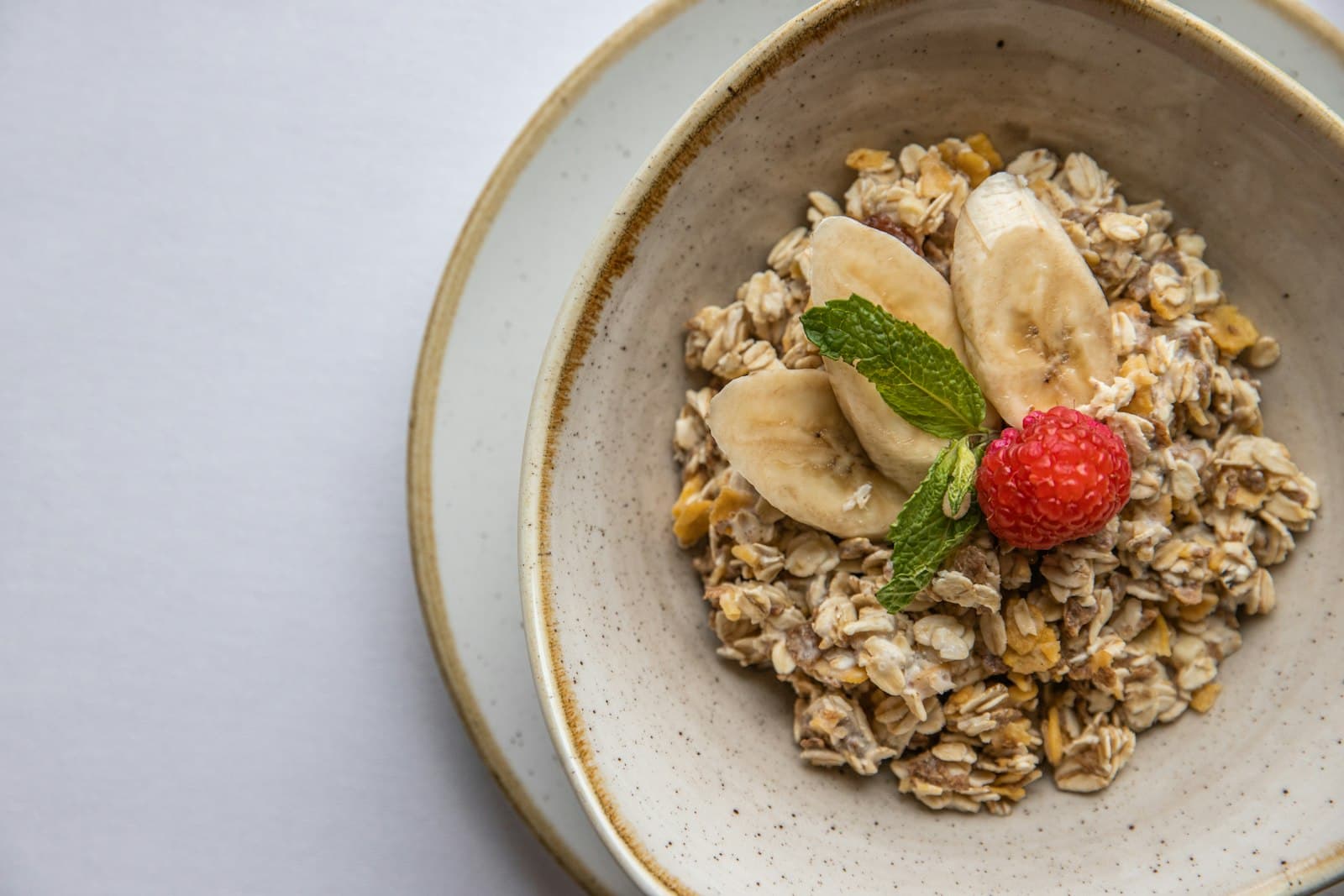
- Porridge made slowly with water or a milk you tolerate, mashed banana stirred in, cinnamon. The most frequently named breakfast across every thread. Cooking a ripe banana down into the oats first is a trick several people describe for sweetness without added sugar.
- Two eggs, any way, on white toast. The second most named. White rather than wholemeal is deliberate for a lot of people, and during active disease the lower-residue choice is the conventional one.
- Bagel or English muffin with cream cheese or peanut butter. Refined, soft, filling, and low effort. Several people describe half a bagel as the compromise when appetite is poor.
For a morning where you need protein and have no appetite
- Plain or Greek yoghurt with honey and a banana or blueberries. Named repeatedly, often specifically lactose-free. Adds protein and calcium without volume.
- Cottage cheese with salt and pepper, or with fruit. High protein per spoonful. More than one person describes having to get used to the texture.
- A blended shake: yoghurt or a milk you tolerate, a banana or frozen berries, protein powder. The most common way people hit a protein target without eating a meal.
For a morning where you are leaving the house fast
- Overnight oats made the night before. Named almost as often as hot porridge, and it removes the decision from the morning entirely.
- Pre-made egg burritos or breakfast sandwiches, frozen in batches and microwaved. Several people describe exactly this, including one who freezes rice balls with tinned fish for the same reason.
- Two-ingredient banana and egg pancakes. A dedicated thread exists for this one. Two ingredients, no flour, takes minutes.
For a morning when solid food is not happening
- A ready-made nutrition shake. Named by many people as the flare breakfast and sometimes as the only breakfast. Your IBD team or dietitian can advise on which formulations suit your situation, and in some healthcare systems they can be prescribed rather than bought.
- Applesauce, or plain white toast, and nothing else. The minimum viable breakfast. It exists so that the tablets have something to land on.
- Warm savoury liquid: miso soup with tofu, or a broth, with a small bowl of rice. One person describes making a week's worth at once. Salt and fluid together are not a bad idea if you are losing both.
Notice what is not on this list: no smoothie packed with raw kale, no chia pudding presented as a cure, no turmeric. Notice also how many of these are refined carbohydrates. That is not a nutritional ideal and nobody in these threads pretends it is. It is what a low-residue morning looks like in practice, and the nutritional cost of that pattern over months is a real thing to raise with a dietitian rather than to solve alone.
Three worked mornings
Abstract advice collapses when the commute is real. Here are three versions, with the reasoning attached.
Morning A: remission, 45-minute train commute, needs to leave at 7:30.
The goal is a complete clear-out before 7:20. Awake at 6:00, glass of water, move around, coffee at 6:15. Porridge at 6:30, small, not a giant bowl. Mesalazine with the porridge. The bathroom sequence happens between 6:45 and 7:15 while still at home. Iron, if prescribed, is the thing to ask about here, because the coffee at 6:15 and the tablet at 6:30 are working against each other on the polyphenol data.
Morning B: active disease, working from home, appetite gone.
The goal is intake, not schedule. There is no commute to protect, so the morning can be slow. A nutrition shake or yoghurt at whatever hour food becomes possible, which for many people is 10 or 11. Tablets with it rather than on an empty stomach if that is what your prescriber advised. The thing to watch is the drift: a fortnight of liquid breakfasts is a coping strategy, a season of them is a conversation with your IBD team. Our guide to what to eat during a UC flare goes through the whole day rather than just the morning.
Morning C: 6am start, 40 minutes door to door.
There is no version of this where a two-hour morning routine fits. The realistic options are to move the eating rather than the schedule: nothing before leaving, then breakfast on arrival if there is a bathroom you can rely on, or a shake in the car. Several people in the threads describe eating their first food at work for exactly this reason. One describes eating nothing before a 6am shift and regretting it by mid-morning with dizziness, which is the failure mode to watch for. If dizziness on standing is a regular feature, mention it: that can be anaemia rather than hunger.
How to test a breakfast properly instead of guessing
The single most common mistake in these threads is condemning a food on the strength of one bad morning. With ulcerative colitis, that is very easy to get wrong, for two reasons specific to this condition.
First, the morning surge happens whether or not you eat. If you eat porridge on a morning when a flare is quietly building, the porridge gets the blame. Second, UC has a genuinely fluctuating natural history, so the symptom you attribute to breakfast may be the disease moving.
A method that survives both:
- Establish whether your disease is active first. Symptoms in remission, symptoms during a flare and symptoms from something else entirely all need different responses, and no food diary can tell them apart. Our guide to knowing whether your ulcerative colitis is flaring covers self-scoring and calprotectin. Hunting for a breakfast trigger during unrecognised active inflammation is how people end up with three safe foods and no explanation.
- Change one thing, and keep it for two weeks. Not the whole breakfast. One component: the milk, or the oats, or the bacon.
- Log the timing, not just the food. Time you woke, time you ate, time of the first bowel movement, urgency, blood, and Bristol type. The timing column is what separates the gastrocolonic response from a reaction to an ingredient.
- Put it back. If symptoms improved, reintroduce the component once things are stable. If they worsen again, you have something. If nothing happens, you have got a food back, which is the whole point. The general method, including the arithmetic of why informal trigger hunting produces false positives, is in how to keep a food diary.
- Do not run a restrictive elimination diet on a hunch. If FODMAPs are the suspicion, that is a short structured process with a reintroduction phase, ideally run with a dietitian, and never a permanent diet. In ulcerative colitis specifically there is a fibre and butyrate trade-off to weigh, which we cover in is a low FODMAP diet good for ulcerative colitis.
Two weeks of timing-stamped breakfasts is also the most useful thing you can put in front of a gastroenterologist about your mornings, because "mornings are terrible" and "I have three bowel movements between 6:15 and 7:10, the first with blood, on mornings I eat before 6:30" are received completely differently. If you want to keep that log on your phone rather than on paper, Clairop is built for exactly this pattern of logging a meal in seconds and looking at what preceded a symptom rather than what followed it, and you can see how it works.
Myths about breakfast with ulcerative colitis
"There is a UC breakfast that reduces inflammation." No breakfast has been shown to reduce inflammation in ulcerative colitis, because no trial has tested a breakfast. The closest thing is oat bran over 24 weeks, which raised butyrate and did not change relapse rates.
"Instant oats are not real oats and that is why they upset you." Finer processing raises the glycaemic response, which is true. That it explains gut symptoms in colitis is not established, and we could find no study comparing oat processing on symptoms in UC. Your own reproducible experience is better evidence than the mechanism.
"Everyone with UC should cut dairy." In a one-year cohort, dairy avoidance was the most common behaviour, it did not reduce relapse risk, and it significantly lowered calcium intake. Lactose malabsorption in IBD is no commoner than in people without IBD in the studies we read.
"Coffee causes flares." Coffee brings forward the urge to go, within minutes, including decaf. The one IBD study measuring calprotectin found it lower in coffee drinkers, almost certainly because unwell people stop drinking it. We could find no good evidence that coffee drives inflammation in UC.
"Carrageenan-free is proven better for colitis." The trial most often cited had 12 people complete questionnaires and 3 relapse events, and a later crossover pilot in 7 people found nothing. It is unsettled, in both directions.
"Breakfast causes the morning diarrhoea, so skip it." Eating adds to a surge that was already happening. Removing breakfast removes one of three or four contributions and adds a daily nutritional cost. Many people find moving breakfast earlier works better than removing it.
"High protein is always safer." Protein appeared alongside meat in the relapse cohort, and those exposures were not separable. Meanwhile undernutrition is a real risk in UC and the guidelines are concerned with adequacy, not restriction. Protein is not the problem; red and processed meat is the item with a signal.
"If a food hurt once, it is a trigger." With a condition whose activity waxes and wanes, single-episode attribution is unreliable. Two weeks, one variable, then put it back.
When to see a doctor promptly
Some things are not breakfast problems, and treating them as one costs time. Contact your IBD team or a doctor promptly if you have:
- New or increasing blood in your stool, or blood that has changed in amount or colour.
- Waking at night to open your bowels. Night-time symptoms point toward genuinely active disease.
- Unexplained weight loss, or clothes fitting differently without trying.
- Fever, or feeling systemically unwell alongside gut symptoms.
- Dizziness on standing, breathlessness or unusual fatigue, which can be anaemia from ongoing blood loss and is worth a blood test rather than a supplement bought on a hunch.
- Severe or unremitting abdominal pain, abdominal swelling, or an inability to keep fluids down. Severe colitis is a medical emergency and does not wait.
- A breakfast you have avoided for weeks because eating brings on symptoms. That is a marker of disease activity, and it is also a nutritional problem accumulating quietly.
If you are getting more than a handful of bowel movements a day, or any blood, do not spend two months testing breakfasts. Get the disease activity assessed first. The food question becomes much easier to answer once you know what the colon is doing.
The honest bottom line
Breakfast with ulcerative colitis is mostly a logistics problem wearing a nutrition costume. The physiology that makes mornings hard is the overnight quiet colon, the wake-up surge, a rectum that holds less than it should, and then two more pushes from the meal and the coffee. None of those is fixed by choosing a different grain.
What the evidence actually supports is modest and useful: oat bran does not make quiescent UC worse and keeps the fibre and butyrate in your diet; red and processed meat is the one breakfast item with a signal against it, from observational data nobody has followed up with a trial; dairy avoidance is common and unhelpful and costs you calcium; coffee moves your timing rather than your inflammation; and what you drink with an iron tablet may matter more than anything else on your plate.
Everything else on this subject, including every confident list of UC-friendly breakfast foods, is extrapolation. We could find no trial comparing breakfasts in ulcerative colitis, and that reflects our searching of PubMed and Europe PMC rather than proof that none exists. The absence is not a gap in your knowledge. It is a gap in the literature, and the pages that paper over it are not doing you a favour.
So: pick two or three breakfasts you can face, eat one early enough that your colon does its work at home, keep a liquid fallback for the mornings that go wrong, ask your pharmacist about the drink you take your iron with, and test changes one at a time over weeks. That is a less satisfying answer than a recipe. It is the one the evidence can carry.