A safe food is not a thing that exists. What exists is a safe dose of a particular version of a food, eaten by a gut that happens to be in a particular state that day. Change any part of that sentence and the same plate of rice can produce a normal afternoon or four hours of cramping.
That is the honest answer to the most upvoted version of this question on r/ibs, where someone wrote that some days they eat safe foods and feel awful, other days they eat the same thing and feel fine, and it had stopped feeling possible to trust their own body (r/ibs thread). Fifty-three replies agreed, and most of them reached for the same idea independently: it is not the food, it is everything the food landed on top of.
The pages that rank for this question mostly give you another list of foods to avoid. A list cannot answer it. If the food were the whole story, the reaction would repeat. This article is about the four things that move underneath a "safe" food, what the research says about each, and how to work out which one moved on you. If your question is the broader one, about why IBS comes in waves at all rather than why one particular meal misbehaved, why IBS comes and goes is the better starting point.
The short answer: you have a threshold, not a list
The cleanest evidence that food reactions in IBS behave like doses rather than switches comes from a randomised, double-blinded, quadruple-arm rechallenge trial. Twenty-five people who had responded to dietary change were given all their food, then challenged with graded doses of fructose, fructans, both, or glucose as a control. Symptoms were not adequately controlled in 70% of people receiving fructose, 77% receiving fructans and 79% receiving the mixture, compared with 14% on glucose. Crucially, symptoms were induced in a dose-dependent manner and reproduced each person's usual IBS symptoms (Shepherd 2008).
Read that last part slowly, because it reframes the whole question. The reaction was not binary. More produced more. Which means there is an amount of almost any fermentable food that your gut will process without complaint, and an amount that it will not, and the line between them is not printed on the packet.
The same logic shows up at the level of the whole diet. In a randomised, single-blind, crossover feeding trial, 30 people with IBS scored their overall gastrointestinal symptoms at 22.8 mm on a visual analogue scale while eating a diet low in fermentable carbohydrates, against 44.9 mm on a typical Australian diet, with almost all food provided. The eight healthy controls barely moved on either diet (Halmos 2014). The variable being manipulated there was total load across everything eaten, not the presence or absence of one item.
Two important exceptions. Coeliac disease and true IgE-mediated food allergy do not work like this, and both need to be excluded rather than managed by trial and error. The ACG suggests coeliac serology in people with IBS and diarrhoea before anything else (Lacy 2021), and coeliac disease affects roughly 1% of most populations with a wide range of presentations, from severe malabsorption to almost none (Lebwohl 2018). Testing has to happen while you are still eating gluten, which is the single most common reason people end up without an answer.
What actually changes between the good day and the bad one
Four things move, and on a bad day usually more than one has moved at once. That is why single-variable thinking ("was it the onions?") fails so reliably.
- The food was not the same food. Preparation, storage, ripeness, variety and recipe all change what actually reaches your colon.
- The dose was not the same dose. Portion drift, and the rest of the day's fermentable load stacking on top.
- Your gut's threshold had moved. Stress, sleep, hormonal phase, what you ate hours earlier, and the state your bowel was already in.
- Your expectation had changed. Attention and anticipation genuinely alter how much sensation registers, and they change what you attribute it to afterwards.
The rest of this article takes each in turn. One framing that circulates in the IBS community captures it better than most clinical explanations: picture a glass that different things pour water into, with bad sleep and stress and a big meal each adding some, and a flare happening only when the glass overflows. A version of it was posted in the thread above, and the point it makes is exactly right. The food is the last pour, not the whole glass.
One: the food on the plate was not the same food
Before you conclude that your gut changed, check whether the food did. "The same meal, prepared the same way" is often not the same meal at all, and some of these differences are large.
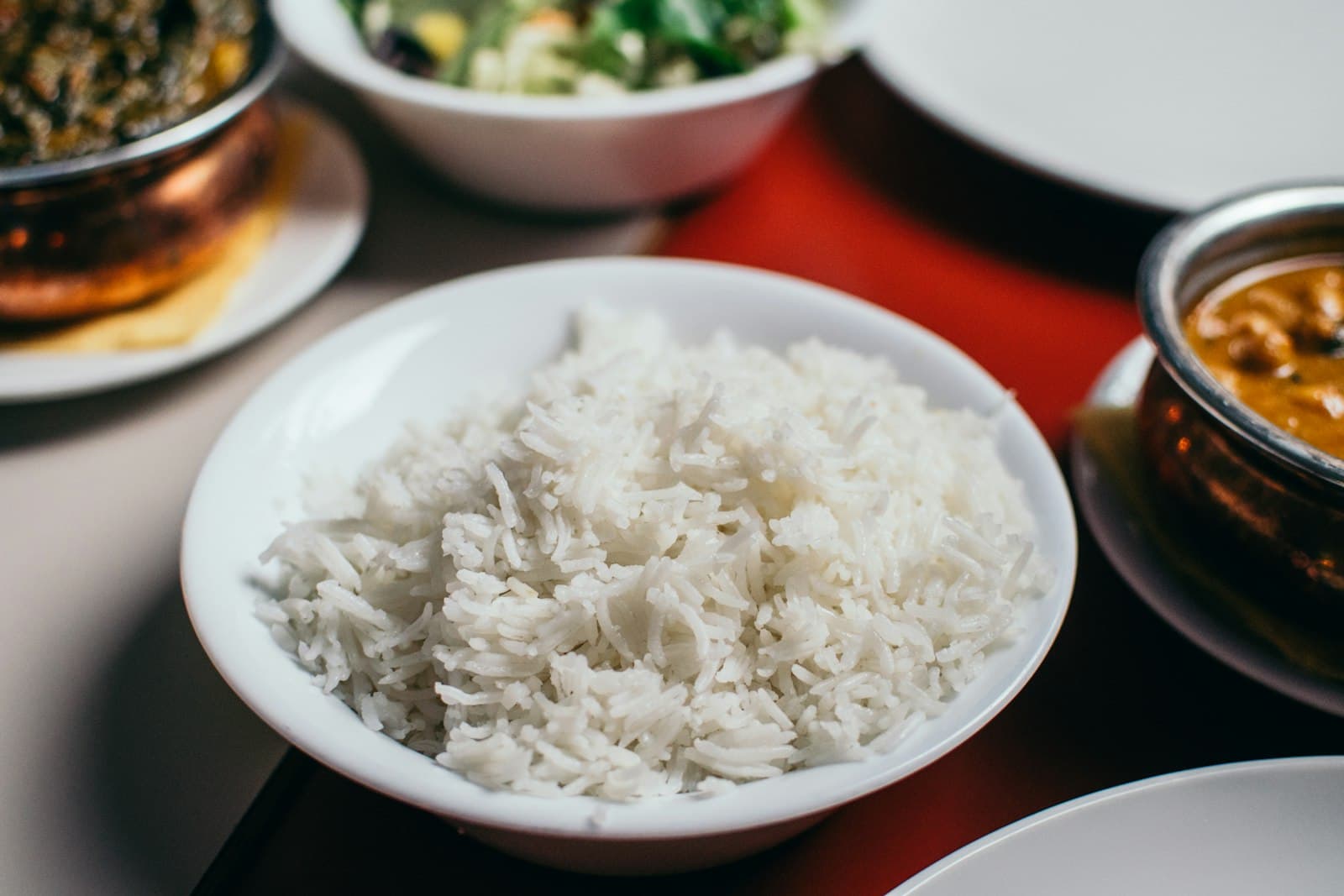
Cooking and cooling changes how much carbohydrate reaches your colon. When cooked starch is chilled, it retrogrades into resistant starch, which is not absorbed in the small intestine. In a crossover study of 32 adults with type 1 diabetes, white rice cooled for 24 hours and reheated produced a markedly lower glycaemic response than the same rice served fresh (Strozyk 2022). In healthy adults, cooking and cooling chickpea pasta roughly doubled measured resistant starch, from 1.83 g to 3.65 g per 100 g (Bojarczuk 2024).
Both of those studies measured blood glucose, not IBS symptoms, and neither one tells you it will bloat you. What they do establish is that yesterday's rice and today's rice are not chemically the same food, and the difference is in exactly the direction that matters: more fermentable substrate arriving in the colon, which is where poorly absorbed carbohydrates are fermented (Misselwitz 2019). If your safe meal is batch-cooked and reheated some days and fresh on others, that is a real variable sitting in your data.
Recipes change without telling you. In a blind crossover trial, 45 healthy adults ate yogurts containing 0%, 3%, 7% or 13% added inulin. The 3% version was as well tolerated as the control, while the 7% and 13% versions produced significantly more bloating and flatulence (Iriondo-DeHond 2020). Inulin, chicory root fibre and similar additions turn up in reformulated "high fibre" or "gut health" versions of products people have eaten for years. The pot looks the same. The dose has moved.
Plant foods vary enormously in fermentable content. Measured across 60 vegetables and 43 fruits, the highest-fructan vegetables ranged from about 1.2 to 17.4 g per 100 g, with garlic at the top (Muir 2007). When a single category spans more than a tenfold range, "a bit of garlic" is not a quantity, and a heavier-handed cook or a different jar of paste is a meaningful change in dose.
Bread deserves its own mention here because it is the food people most often describe as inconsistent. Loaf type, flour and fermentation time all change what you are actually eating, and we have covered that separately in why bread makes IBS worse. Milk is the other one: if lactose-free milk still causes trouble, the lactose-free milk guide works through why the lactose was often not the problem in the first place.
Two: the dose was not the dose you think it was
The second variable is the one most people have already half-worked-out: your safe food did not arrive alone. It arrived on top of everything else you ate in the same window, and fermentable carbohydrates from different foods add together.
This blog covers that in detail elsewhere, so here is the one-sentence version and a link rather than a rebuild. Portions that individually sit under your threshold can cross it when they land together or in close succession, which is why a low-FODMAP meal can still cause symptoms, and the FODMAP stacking guide works through twelve concrete examples of how it happens. The timing question sits alongside it: because fermentation happens in the colon and takes hours, the meal you blame is often not the meal responsible, and how long after eating IBS flares up maps the delay windows.
One correction worth making, because it comes up constantly in threads. Food does not sit in your stomach fermenting. Poorly absorbed short-chain carbohydrates pass through the small intestine and are fermented by bacteria in the colon, which is where the gas and the osmotic water load are generated (Misselwitz 2019). The delay you notice is transit plus fermentation time, not something rotting upstream.
There is also a cumulative version of this that shows up in lived experience more than in trials. In a thread asking whether other people have periods where nothing bothers them and then periods where everything does, one reply described tolerating a fatty meal once, being unsure on the second day, and being in trouble by the third consecutive day, and said they deliberately eat conservatively for a week before an event (r/ibs thread). That is an observation, not evidence, but it is consistent with load accumulating faster than it clears.
Three: your gut's threshold had already moved before you ate
This is the part the food lists cannot capture. The amount of gas or stretch that produces pain is not a fixed property of your bowel. It moves, sometimes within a day, and a threshold that has already dropped turns an ordinary meal into a painful one.
Heightened perception of normal gut sensation, usually called visceral hypersensitivity, is treated as one of the core mechanisms in chronic visceral pain disorders including IBS (De Palma 2023). The important word is "heightened", not "damaged". The signal arriving from your colon may be perfectly normal. What has changed is how loudly it is heard.
Stress moves it, and moves it differently in IBS. In a study using rectal balloon distension before, during and after a mental stress task, the healthy control group's thresholds went up during stress, a normal stress-induced dampening of pain. People with IBS did not show that rise. Both groups were more sensitive after the stressor than before, and the IBS group also had an exaggerated hormonal response (Posserud 2004). Eighteen patients and 22 controls is small, but the design is tight: the stimulus was identical and the perception was not. If you ate your safe lunch in the middle of a bad afternoon, you did not eat it with the same gut. Our guide on whether stress causes IBS flares goes into the pathway in depth.
Sleep moves it. In women with IBS who kept sleep and symptom diaries for a menstrual cycle and wore actigraphs for a week, poorer self-reported sleep quality significantly predicted higher abdominal pain, anxiety and fatigue the next day. Objectively measured sleep efficiency predicted next-day anxiety and fatigue but not abdominal pain. Reversing the analysis, symptoms did not predict subsequent sleep (Buchanan 2014). This was an exploratory study of 24 women and the authors say so plainly, but the direction of the arrow is the useful finding: the bad night came first.
Fat earlier in the day moves it. This one is underappreciated and explains a lot of apparently random evenings. In a barostat study, 61 people with IBS and 20 controls had colonic distension testing before and after one hour of fat delivered to the duodenum. The drop in the pressure thresholds for discomfort and pain was significantly greater in the IBS group, and the area over which they felt the sensation expanded. The effect did not depend on bowel habit subtype, sex, or anxiety and depression scores (Simren 2007). A rich lunch can therefore leave your colon more reactive to a perfectly ordinary dinner.
The state your bowel is already in moves it. Stool consistency correlates strongly with gut microbiota richness and composition, and is used as a proxy for transit time (Vandeputte 2016). Whether you are backed up or already loose is not a neutral starting point for the next meal, which is why so many people describe a flare as a state in which everything becomes a trigger.
Hormonal phase belongs in this list too, and it is the variable most often dismissed. We have covered it separately in why IBS gets worse around your period, including the reverse direction and the conditions that overlap with it.
Four: what you expected from the meal was part of the meal
This section is the one people brace for, so let me be precise about what it does and does not say. It does not say your symptoms are imaginary. It says that attention and anticipation change how much sensation registers and, separately, that human beings are poor at attributing symptoms to specific foods.
The benchmark number comes from a population study in which around 20% of adults surveyed reported food intolerance. Of the 93 who went on to double-blind, placebo-controlled food challenges, 19.4% had a positive reaction, and the estimated population prevalence of genuine reactions to the eight foods tested was 1.4% to 1.8% (Young 1994). Roughly a tenfold gap between perception and blinded confirmation. The authors' conclusion was about the nutritional and financial cost of mistaken attribution, and it was written in 1994 and still lands.
The gluten literature makes the same point more recently and more carefully. Across well-controlled challenge studies, reproducible gluten-specific effects largely disappear once fermentable carbohydrates and expectation bias are controlled for, and nocebo responses in these trials are large (Biesiekierski 2025). Worth noting that this review is written by a researcher who ran several of the original gluten challenge trials, so it is a reappraisal of her own field rather than an outside critique.
Why does this matter for safe foods specifically? Because of the loop it creates. You have a bad reaction after eating something. Next time you eat it, you are watching. Gastrointestinal symptom-specific anxiety, the fear and vigilance directed at gut sensations rather than general anxiety, has been shown to mediate the relationship between psychological distress and symptom severity, and in one validation sample it was the key explanatory variable for IBS diagnostic status (Labus 2007). Those were undergraduate samples rather than clinic patients, so treat the size of the effect cautiously. But the mechanism is not controversial: watching for a sensation makes it easier to find.
One commenter in the r/ibs thread put it in plainer terms, saying that obsessing about what to eat or not eat seems to create the problem, and then immediately hedged that they might be talking rubbish (r/ibs thread). They were not. They were describing something with a literature behind it, and describing it without implying anyone is making it up.
Why a food you ate happily for thirty years can stop working
When people ask this, they usually mean it rhetorically, as evidence that nothing makes sense. It is actually one of the more answerable questions on the list, because several things genuinely change with time. A commenter in the "no safe foods" thread asked exactly this: why should someone who has been drinking milk and eating bread for decades suddenly not tolerate them, and concluded there must be an underlying cause (r/ibs thread). That instinct is correct.
A gut infection is the best-documented turning point. Pooled across 45 studies and 21,421 people with enteritis, IBS prevalence was 10.1% at 12 months after infection and 14.5% beyond 12 months. Risk was 4.2 times higher in those who had an infection in the past year than in those who had not, and 41.9% of people whose enteritis was caused by protozoa or parasites went on to develop IBS (Klem 2017). The mechanisms proposed include lasting changes to the microbiome, epithelial and neuronal remodelling, immune activation, altered bile acid composition, changed transit and visceral hypersensitivity (Berumen 2021).
There is now a plausible mechanism for infection changing your response to one specific food. In mice, a bacterial infection occurring while a dietary antigen was present produced antibodies to that food antigen that were confined to the gut. Later ingestion of that same food then produced increased visceral pain through a mast cell and histamine pathway. In the human part of the same work, injecting food antigens including gluten, wheat, soy and milk into the rectosigmoid mucosa of people with IBS produced local swelling and mast cell activation (Aguilera-Lizarraga 2021). This is mostly animal work with a small human component, and it is not a test you can ask for. But it is the first coherent explanation for the very common story of a food being fine for decades, a bad bout of gastroenteritis, and that food never being fine again.
Related work using confocal laser endomicroscopy, which lets researchers watch the gut lining react in real time, found that 76 of 108 patients with IBS and suspected food intolerance (70%) showed a mucosal response to at least one food component applied directly, with 61% of responders reacting to wheat. Those who responded had higher numbers of intraepithelial lymphocytes and a fourfold higher prevalence of atopic conditions (Fritscher-Ravens 2019, building on Fritscher-Ravens 2014). These were highly selected patients at a specialist centre who had been referred precisely because food intolerance was suspected, and the technique is a research tool rather than something available in clinic, so do not read the 70% as a population figure.
Lactase activity falls with age in most people. Lactase persistence into adulthood is the genetic exception rather than the rule, and lactose malabsorption can also develop secondary to infection or other damage to the small bowel lining. Whether malabsorption produces symptoms depends on the dose, how much lactase you still express and your colonic microbiome, and people with visceral hypersensitivity or IBS are at increased risk of symptoms independently of how much lactose they actually digest (Misselwitz 2019).
Bile acid malabsorption is common and often starts in adulthood. Pooling 18 studies and 1,223 patients with diarrhoea-predominant IBS symptoms, 10% had severe bile acid malabsorption on SeHCAT testing, 32% had moderate and 26% had mild (Wedlake 2009). It can follow gallbladder removal or ileal surgery, and it responds to a specific treatment, which is why it is worth raising with a doctor rather than trying to eat around. That is a conversation for your GP or gastroenterologist, not something to self-diagnose or self-treat.
Coeliac disease can be diagnosed at any age, and diagnosis rates appear to be rising because incidence is genuinely rising, not only because of better detection (Lebwohl 2018). Again: test before you cut gluten out, because the test depends on you still eating it.
If your symptom pattern also includes significant bloating that seems out of proportion to intake, SIBO versus IBS symptoms covers the overlap and what testing can and cannot settle. And if a new medicine or supplement started around the same time your tolerance changed, that is worth raising with your prescriber or pharmacist rather than assuming the food moved.
"I have no safe foods at all": when the trigger is eating, not the food
Some people are not describing inconsistency. They are describing a complete absence of any reliably tolerated food. A post asking whether anyone else has no safe foods drew 71 replies, including from someone with IBS-M for over 30 years who said elimination diets had never exposed a single trigger and that during a diarrhoea flare even water could set things off, while on other days a burger and fries went down fine (r/ibs thread).
The research says this is common rather than strange, and it points somewhere specific.
In a study of 330 people with IBS and 80 healthy volunteers, 63% of patients said their gastrointestinal symptoms were related to meals. Gas and abdominal pain were the most frequent complaints, and the foods most often implicated were carbohydrate-rich items, fatty food, coffee, alcohol and hot spices. Food scores were higher in patients than controls, higher in women and higher in those with anxiety, and were unrelated to IBS subtype (Simren 2001).
The follow-up study is the more useful one. Among 197 people with IBS completing a questionnaire on 56 foods and food groups, 84% reported symptoms related to at least one item. Foods containing incompletely absorbed carbohydrates were implicated by 70%, with dairy at 49%, beans and lentils at 36% and apple at 28%. Foods rich in biogenic amines were implicated by 58% and histamine-releasing foods by 43%. And the key finding for this section: reporting food-related symptoms was associated with more severe overall IBS symptoms and reduced quality of life (Bohn 2013).
There is a mechanical version of this too. Eating is itself a stimulus. Volume produces stretch, fat lowers colonic sensory thresholds within an hour (Simren 2007), and the normal post-meal motor response moves colonic contents regardless of what the meal contained. If every food is a trigger, the common factor is the meal, not the menu. That is not a counsel of despair. It moves the useful levers from "which food" to "how much, how fast, how often, and in what state", which is the approach taken in what to eat during an IBS flare.
It also needs saying that if you genuinely cannot eat enough, or are losing weight, that is a reason to see a doctor promptly rather than to narrow the diet further.
What changed, how to tell, and what to do next
This table is meant to be used the morning after a bad day, when the temptation is to add another food to the banned list.
| What may have changed | Clue that it was this | Reasonable next step |
|---|---|---|
| The version of the food | Batch-cooked and reheated, a different brand, a "new recipe" flash, a different cook, riper or less ripe | Note the version, not just the food name, for a few weeks before judging it |
| Portion size | The restaurant or home-cooked version was visibly bigger, or it was a second helping | Retest the food at the smaller amount you know has worked before |
| Stacking with the rest of the day | Several fermentable foods in the same window, or several days in a row | See FODMAP stacking examples and log the whole day, not the suspect meal |
| Fat earlier in the day | A rich lunch or late fatty snack before the "safe" meal | Track fat separately from the meal you blamed (Simren 2007) |
| Sleep the night before | Short or broken sleep, or a late night | Record sleep quality daily; it predicted next-day pain in Buchanan 2014 |
| Acute stress | A difficult day, a deadline, a conflict, travel | Record a simple daily stress rating alongside symptoms |
| Hormonal phase | Pattern clusters at the same point each cycle | See IBS and your period |
| The bowel state you started in | Already constipated, or already loose, before the meal | Log stool form before as well as after |
| Expectation after a previous bad reaction | Symptoms start unusually fast, or you were watching for them | Retest blind to the food where practical, or at minimum on a calm day |
| Something underlying not yet excluded | New pattern, recent gut infection, weight loss, blood, night waking | See a doctor promptly; coeliac serology and calprotectin are standard first steps (Lacy 2021) |
Clairop logs meals, symptoms and stool in seconds, then looks for the foods your gut reacts to, including reactions that land days later.
Why the safe list keeps shrinking, and why that is worth resisting
The natural response to a safe food betraying you is to remove it. Do that a few dozen times and the list of things you will eat becomes very short, and this is where the real harm in this pattern sits.
Among 288 patients referred to two academic centres for gastroparesis and dyspepsia symptoms, 54.9% had clinically significant feeding or eating disorder symptoms, and 39.9% met a conservative self-report cutoff for avoidant restrictive food intake disorder, with 23.3% showing documented psychosocial or medical impairment. The critical detail: the likelihood of these symptoms tracked with gastrointestinal symptom severity and not with gastric emptying results (Burton Murray 2020). Restriction followed how bad people felt, not what the objective test showed.
A recent review describes the relationship as bidirectional: gut symptoms drive restrictive eating patterns, and restrictive eating then worsens gut symptoms. It also notes that although screening instruments exist, cutoffs have not yet been validated in this population, so distinguishing sensible dietary adaptation from excessive restriction is still a clinical judgement (Berschback 2025). If food fear is becoming the loudest part of your day, our article on whether the low FODMAP diet can cause an eating disorder covers the warning signs and where to take them.
This is also why both major guidelines are careful about how they frame elimination. The ACG recommends a limited trial of a low FODMAP diet to improve global symptoms (Lacy 2021), and the BSG guideline reviews dietary, drug and psychological therapies together rather than positioning diet as the whole answer (Vasant 2021). Restriction is a diagnostic phase, not a destination, and it works best with a dietitian. Our guides on how long to do a low FODMAP diet and how to reintroduce foods afterwards cover the part most people skip.
Worth adding one thing that moves in the other direction. In a follow-up of a randomised trial of increased physical activity, 39 participants reassessed a median of 5.2 years later had lower IBS severity scores than at baseline, along with improvements in quality of life, fatigue, depression and anxiety, and reported more hours of weekly activity (Johannesson 2015). Only half the original cohort returned and there was no control group at follow-up, so read it as encouraging rather than conclusive. Still, it is one of the few levers in this article that raises the threshold instead of lowering it.
A worked example: three weeks of the same breakfast
Sam has IBS-D and eats the same breakfast most mornings: porridge oats with oat milk, banana and a spoon of peanut butter. It has been reliable for about a year. Over three weeks it stops being reliable, and here is what the log shows once the background is recorded alongside the food.
Week one, Tuesday. Bad morning: cramping and two urgent stools by 10am. Same breakfast as always. The instinct is to blame the oats.
What else the log shows for Tuesday. Four and a half hours of broken sleep. A late curry the night before, shared, eaten around 10pm. A presentation at 9am. The banana was distinctly overripe.
Week one, Friday. The identical breakfast, no symptoms at all. Seven and a half hours of sleep, a light dinner the night before, no deadline.
Week two. Sam keeps the breakfast unchanged and adds four things to the log: hours slept, a one-to-five stress rating, stool form before breakfast, and a note on the previous evening's meal including whether it was rich. Three good mornings and one bad one. The bad one follows a takeaway the night before and five hours of sleep.
Week three. A second bad morning, but this time after decent sleep and a calm evening. Sam checks the oat milk carton and finds the brand has been switched, and the new one lists chicory root fibre. That is inulin, and the dose-response work in yogurt suggests the amount added matters a lot (Iriondo-DeHond 2020).
What Sam concludes. Oats were never the variable. Two separate things were: the previous evening's fat and sleep load, which fits both the lipid sensitisation and the next-day sleep findings (Simren 2007, Buchanan 2014), and a silent product change. Had Sam removed oats after week one, the oat milk would have carried on causing trouble in whatever replaced them, and oats would have been lost for nothing.
That is the whole argument of this article in one example. The food was the only thing being recorded, so the food was the only thing that could be blamed.
How to actually test whether a safe food went bad
Two of this blog's other guides do the heavy lifting on method, so this section covers only what is different when the food in question is one you already trusted.
For the general design of a food challenge, including why a single test tells you almost nothing and how to structure a proper rechallenge, see how to find out what triggers your IBS. For the arithmetic of why informal trigger hunting generates so many false positives, see how to keep a food diary for IBS. What follows assumes you have read those.
Record the version, not just the name. "Oats" is not a data point if sometimes it means instant sachets and sometimes steel-cut. Brand, preparation, fresh or reheated, portion.
Log the background variables every day, not only on bad days. Sleep, stress, stool form before the meal, and whether the previous evening was heavy. Without those columns, every bad day looks like a food reaction because food is the only candidate on the page.
Require repeats at a matched dose. Given dose-dependence (Shepherd 2008), a single reaction at an unknown portion proves nothing. Test the same measured amount several times, on days that differ in their background, before you retire a food.
Test on a calm day, deliberately. If your threshold is already low, you are testing the day rather than the food.
Do not test during a flare. When everything is reacting, nothing is informative, and a food wrongly convicted during a bad week tends to stay convicted for years.
This is the kind of bookkeeping that Clairop was built to do: it compares how you felt after meals that contained a food against meals that did not, across delay windows, and shows how many meals each result is based on, so a single bad morning does not become a verdict. The method page explains why it waits for at least five meals with and without a food before showing anything at all. Any notebook with the right columns does the same job; the columns are the part that matters.
Myths about safe foods
Myth: "If it were a real trigger, it would react every time." Reactions to fermentable carbohydrates were dose-dependent in a blinded rechallenge trial (Shepherd 2008). Intermittent reactions are the normal appearance of a dose effect, not evidence that the food is innocent.
Myth: "If it does not react every time, it must be in my head." Both halves of that are wrong. Thresholds demonstrably move with stress and with fat load (Posserud 2004, Simren 2007), and the symptoms are real regardless of what triggered them.
Myth: "The longer my safe list, the better I am doing." The opposite association has been measured: more reported food-related symptoms went with more severe symptoms and worse quality of life (Bohn 2013).
Myth: "Food ferments in your stomach and that is the flare." Fermentation of poorly absorbed carbohydrates happens in the colon (Misselwitz 2019). The delay is transit plus fermentation, which is why timing is so misleading.
Myth: "My gut bacteria must have been different that day." Diet does change the microbiome quickly, but the study most often cited for that used complete animal-based versus plant-based dietary switches (David 2014). No available test can tell you your microbiome explained one particular Tuesday.
Myth: "Cutting more out is always the safer option." Restriction has measurable costs, and in one referral population 40% met a conservative cutoff for avoidant restrictive food intake disorder symptoms (Burton Murray 2020). A narrower diet is not automatically a gentler one.
Myth: "Everyone with IBS reacts to the same list of foods." The lists overlap but the thresholds do not, and reported triggers span carbohydrates, fat, coffee, alcohol, spice and amine-rich foods in different combinations for different people (Simren 2001, Bohn 2013).
When to see a doctor
Inconsistent reactions to familiar foods are a normal feature of IBS. A genuinely new pattern, or one that keeps worsening, is not, and should be assessed rather than eliminated away.
See a doctor promptly if you have any of these:
- Blood in your stool, or black or tarry stools
- Unintended weight loss
- Symptoms that wake you from sleep
- Fever alongside gut symptoms
- Tiredness or breathlessness that could mean anaemia
- Symptoms starting for the first time after the age of 50
- A family history of bowel cancer, inflammatory bowel disease or coeliac disease
- A steady worsening rather than a fluctuating pattern
- Being unable to eat enough, or a diet that has narrowed to a handful of items
None of those are things to manage with a shorter food list. The ACG guideline suggests coeliac serology in people with IBS and diarrhoea, and faecal calprotectin to help rule out inflammatory bowel disease (Lacy 2021); the BSG guideline sets out the equivalent UK framework for investigation and management (Vasant 2021). If your tolerance changed sharply after a bout of gastroenteritis, say so explicitly, because post-infection IBS is well recognised and changes how the picture is read (Klem 2017).
It is also reasonable to ask for a dietitian referral rather than another elimination attempt on your own, particularly if your diet has already narrowed. A structured low FODMAP trial is short, has a reintroduction phase, and is not meant to be permanent.
The short version
- A safe food is a safe dose of a particular version of a food, eaten by a gut in a particular state. Four of those things move.
- Reactions to fermentable carbohydrates are dose-dependent, so intermittency is expected rather than puzzling (Shepherd 2008).
- Before blaming your gut, check whether the food changed: reheated starch, a reformulated product, a different brand, a bigger portion.
- Your threshold moves with stress, sleep and fat eaten hours earlier, all of which have measured effects on how much sensation a given stimulus produces.
- Expectation genuinely shapes both perception and attribution, which is not the same as saying symptoms are imaginary.
- A food tolerated for decades can change status after an infection, or because of falling lactase activity, bile acid malabsorption or coeliac disease. Those are medical questions, not dietary experiments.
- If nothing is safe, the common factor is the meal rather than the menu, and a longer banned list usually signals a lower threshold rather than more intolerances.
- Record the background variables, test at a matched dose, never test during a flare, and take any new or red-flag pattern to a doctor promptly.