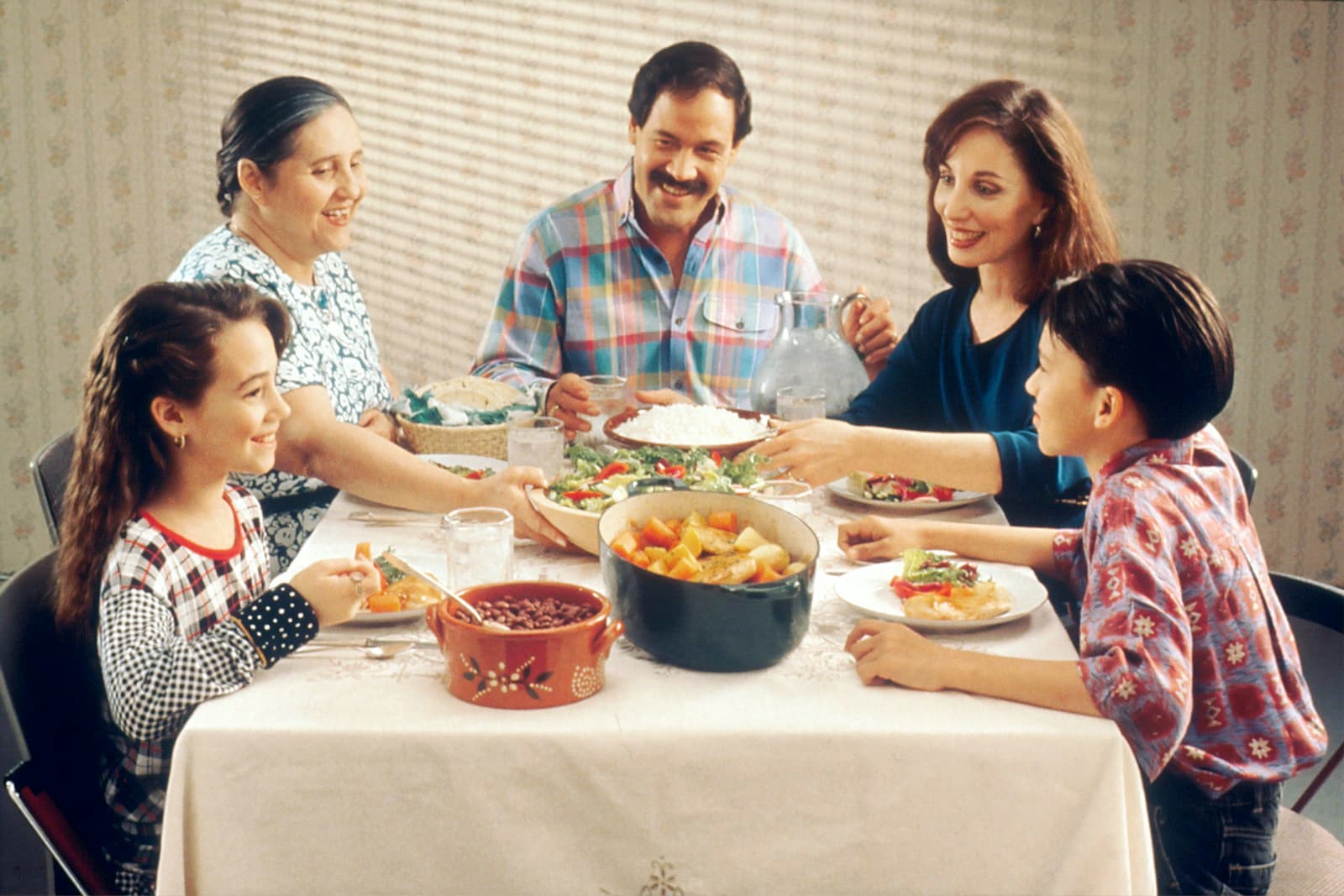
Eating out on a low FODMAP diet is not a verification problem, because verification is not available to you. It is a dose problem. Nobody in the kitchen weighed the onion in the stock, the menu is not required to tell you it is there, and no amount of careful questioning converts an unmeasured meal into a measured one. The useful shift is to stop trying to confirm a meal is low FODMAP and start reducing how much of the load you are exposed to, while noticing that four of the five things a restaurant changes about your dinner have nothing to do with FODMAPs at all.
This post is for people who already have a diagnosis of IBS, Crohn's disease or ulcerative colitis and who are working through, or have worked through, a structured low FODMAP trial. If your symptoms are new, changing, or have never been assessed by a clinician, see a doctor promptly before you change how you eat. Restricting food is not a safe way to investigate a gut problem you have not had looked at.
The short answer: manage the dose, stop chasing certainty
You cannot make a restaurant meal low FODMAP. You can make it lower, and you can change the things about it that are not FODMAPs at all. Those two moves, done reliably, get most people further than an hour of menu research and a tense conversation with a server.
The reason is structural. FODMAPs cause symptoms in a dose-dependent way: fermentable carbohydrates that are poorly absorbed in the small intestine draw water into the lumen and are fermented in the colon, producing gas and distension, and how much of that happens depends on how much arrives (Staudacher 2014). "Does this dish contain garlic" is therefore the wrong question, because the answer is almost always yes somewhere, and the answer that matters is how much. Nobody at the restaurant knows that number, and neither will you.
Once you accept that, eating out becomes a set of trade-offs you can actually control: how many components are on the plate, how much of it you eat, whether the sauce is on the side, how much alcohol and fat come with it, and how long it has been since you last ate. None of those requires the kitchen's cooperation.
The number every eating-out page quotes, and what it actually says
Search "eating out low FODMAP" and you will find the figure that 85.2% of people with IBS struggle to eat out. It is real, and most pages that use it have cut it off halfway through the sentence.
It comes from a long-term follow-up study at a single Italian centre, in which 73 people with IBS started a low FODMAP diet, 68 went through reintroduction, and 41 were reassessed six to twenty-four months later (Bellini 2020). During strict restriction, 85.2% reported increased difficulty eating out at restaurants compared with their habitual diet. During the adapted low FODMAP diet that followed reintroduction, that figure was 58.5%. The same paper reports that 76.6% found it harder to eat at friends' houses and 65.8% found travel harder.
That drop is the most useful fact in the whole topic and it is the one nobody quotes. The headline number is not a description of life with IBS. It is a description of life in the most restrictive phase of a structured diet, a phase designed to last weeks. A page that quotes 85.2% as though it were permanent has told you the opposite of what the study found.
It is worth being precise about what the study can and cannot support. It is a single-centre cohort, not a randomised trial, the authors acknowledge that it lacks a placebo comparison, and the percentages are self-reported difficulty rather than measured behaviour. Those are the limits. Within them, the direction of the finding is consistent across other datasets: implementation burden in the restriction phase is high, and patients in qualitative work describe the diet as burdensome, with support inadequate and the information hard to interpret (Ville 2025).
Why a restaurant meal is structurally unverifiable
Start with what the successful trials actually did. In the randomised crossover study that is usually cited as the high-quality evidence for the diet, participants were provided with almost all of their food and the low FODMAP arm targeted less than 0.5 g of FODMAPs per meal (Halmos 2014). Overall gastrointestinal symptom scores were 22.8 mm on the low FODMAP diet versus 44.9 mm on a typical Australian diet, in 30 people with IBS and 8 healthy controls. That result was produced by a research kitchen weighing ingredients. It is not a description of anything that has ever happened in a restaurant.
Now consider what a restaurant is obliged to tell you. In the United States, the federal menu labelling rule requires chains with 20 or more locations to post calorie counts and to make written nutrition information available on request, covering total calories, fat, saturated fat, trans fat, cholesterol, sodium, total carbohydrate, sugars, fibre and protein (FDA). There is no ingredient requirement and no allergen requirement in that rule at all.
California went further than any other US state with Senate Bill 68, the Allergen Disclosure for Dining Experiences Act, which from 1 July 2026 requires food facilities in chains of 20 or more locations to disclose major food allergens in writing on menus or an accessible equivalent (SB 68). The allergens named in the bill are milk, eggs, fish, crustacean shellfish, tree nuts, wheat, peanuts, soybeans and sesame. Read that list again. The most far-reaching restaurant ingredient-disclosure law in the country does not mention garlic, onion, shallot, leek or any other allium, because alliums are not major allergens. Wheat is on the list, which is genuinely useful to anyone whose main fructan source is bread, but that is a side effect rather than the point.
We checked those two rules directly. We did not check the equivalent rules in every other jurisdiction, and you should not assume from this article that any of them behave differently in the way that matters. The general shape holds, though: allergen-disclosure regimes disclose allergens, and a fructan sensitivity is not an allergy.
And when a restaurant does make an ingredient claim, the claim is not always true. When users of a portable gluten-detection device shared their results, 5,624 tests across 18 months found gluten in 32% of foods labelled gluten-free, with higher detection at dinner than at breakfast and the highest rates in gluten-free labelled pizza and pasta (Lerner 2019). That is crowd-sourced data from self-selected users of a consumer device, so the absolute percentage should be held loosely, and it measures gluten rather than fructans. But it is the best available answer to the question "if the restaurant says it is free of something, is it?" and the answer is "often, not always."
It is not only the garlic: four things a restaurant changes at once
This is the part that most eating-out guides skip, and it is where a lot of unexplained restaurant reactions actually live. A restaurant meal differs from a home meal in at least four ways that have nothing to do with FODMAP content, and each of them independently affects symptoms.
Portion size. Researchers bought the most frequently ordered meals from non-chain restaurants across three US cities and measured their energy content by bomb calorimetry. Meals averaged 1,205 ± 465 calories, three of the four most popular cuisines averaged 1,495 calories, and 92% of meals exceeded typical energy requirements for a single eating occasion (Urban 2016). That study measured energy in restaurant meals, not symptoms in people with IBS, so it does not say restaurants cause IBS flares. What it establishes is that the meal in front of you is usually substantially larger than the equivalent meal at home, and volume alone matters when gut sensitivity is the problem.
Fat load. Restaurant cooking is more generous with fat than home cooking, and fat is one of the food categories people with IBS most commonly blame. In a study of 197 people with IBS asked about 56 food items, 84% reported symptoms from at least one, with fatty foods among the most frequently implicated, and reporting more food-related symptoms was associated with more severe IBS and lower quality of life (Bohn 2013). That is self-reported association, not proof that fat causes the symptoms, but it is a large and consistent signal.
Alcohol. A restaurant meal comes with a drink far more often than a home meal does. NICE's general dietary advice for IBS explicitly includes reducing alcohol and fizzy drinks (NICE CG61). We have a separate post on whether alcohol makes IBS worse and what the evidence does and does not show, so this one will not rebuild it.
Timing. Eating out usually means a later meal, often after a longer gap than usual, and frequently after a day of eating less in anticipation. NICE's first-line advice is blunt about this: have regular meals, take time to eat, and avoid missing meals or leaving long gaps between eating (NICE CG61). The very strategy people adopt to "save room" for a restaurant meal is the one the guideline advises against. Our post on how long after eating IBS tends to flare covers the post-meal timing question in more detail.
Meal-related symptoms are not a fringe phenomenon. In the Rome Foundation Global Epidemiology Study internet survey of 54,127 adults across 26 countries, 11.0% reported that at least half of their abdominal pain episodes were meal-related, and that group had more gastrointestinal symptoms, more psychological distress and worse quality of life (Colomier 2022). Note the population there: that is the general adult population, not an IBS clinic. In a smaller French cohort recruited through a patient association, 84 people with IBS reported that 39% of their meals induced gastrointestinal symptoms (Melchior 2021).
So when a meal out goes badly, there are at least five candidate explanations and only one of them is hidden garlic. Blaming the garlic feels like an answer, and it quietly costs you a food.
Should you eat out at all during elimination?
Honestly, less than usual, and for a reason that is about the experiment rather than about suffering.
The low FODMAP diet is a three-phase process: restriction for a few weeks, structured reintroduction to find which subgroups actually affect you, and then personalisation to the least restrictive diet that controls symptoms (Sultan 2022). NICE positions it as second-line dietary advice that should only be given by a healthcare professional with expertise in dietary management (NICE CG61), and the BDA guidelines say the same (McKenzie 2016). Our post on how long the low FODMAP diet should take covers where the "two to six weeks" figure came from and what to do if nothing changes.
During restriction, you are running a measurement. An unverifiable restaurant meal in the middle of it is a source of noise, because if symptoms return you will not know whether that means the diet is not working or that the pan sauce had onion in it. That is a real argument for eating out less during those few weeks, and it is the argument several people make in the r/FODMAPS thread that seeded this article: it is six to eight weeks, and you get the weeks back.
It is not an argument for withdrawing from social life indefinitely, and the distinction matters. The same cohort that reported 85.2% difficulty eating out also reported 76.6% difficulty eating at friends' houses (Bellini 2020). Social eating is most of eating. A protocol that costs you all of it for two months is tolerable; one that costs you all of it permanently is not the protocol, it is a failure to finish it.
Clairop logs meals, symptoms and stool in seconds, then looks for the foods your gut reacts to, including reactions that land days later.
What to ask, and when to ask it
The most useful practical insight in the threads behind this article did not come from a patient. It came from someone who works as a server, explaining what is physically possible in a kitchen at service time, and it reframes the whole conversation.
Their points, paraphrased: prep happens hours before service, so components are already mixed, marinated and portioned by the time you sit down. You cannot unmix a medley or unmarinate a protein. Asking for something that is not on the menu will usually get a no, because the ingredients for it were not prepped. The productive move is to pick two or three dishes you would actually like and ask the server to check those specific ones, which gives the kitchen something workable instead of an open-ended problem. Emailing ahead or flagging it when you book means the question reaches the kitchen before the rush, which is the only time anyone can think about it.
That is operational knowledge from one person in one thread, offered as lived experience rather than as evidence, but it matches what the rest of the community describes: places that cook to order can help, places that reheat pre-seasoned frozen components cannot, and the difference is not price.
The questions worth asking are the ones about invisible things:
- What is in the seasoning or rub on this?
- Is this marinated before service, or seasoned to order?
- Is the stock or base made here, and does it start with onion?
- Can I have the sauce or dressing on the side?
- Is there anything on the menu that is cooked plain to order?
The question not worth asking is "is this low FODMAP", because almost nobody will know what that means, and the one person who says yes confidently is the one you should trust least.
The allergy question, and why it is not a simple yes
A recurring piece of advice in patient communities is to say "allergy" because it is the only word that makes a kitchen take you seriously. It is worth understanding what that word actually does before using it.
An allergy declaration triggers trace-avoidance procedures: separate surfaces, changed gloves, a different fryer. That is designed to prevent exposure to residues, because for a person with an IgE-mediated allergy, a trace can cause anaphylaxis. A FODMAP problem is not shaped like that. Fructans are dose-dependent, so a residue on a pan is usually irrelevant to you while a portion of caramelised onion is not. Ask for allergy handling and you may get a plainer plate, but you have asked the kitchen to solve a problem you do not have, at a cost that is not yours to pay.
There is a real second consideration. Reviews of allergen management in restaurants identify three recurring hazards: hidden allergens, cross-contamination during preparation, and poor communication between staff and customers (Konstantinou 2025). Anything that makes staff treat allergy declarations as routine preference rather than risk makes those hazards worse for people whose reaction is anaphylaxis rather than bloating.
And staff capacity is genuinely limited. In a cross-sectional survey of 397 restaurant and foodservice employees in Santiago, Chile, 87.5% had never received formal training on food allergies or coeliac disease, and fewer than 2% reached at least 50% correct responses across all the knowledge, attitude and practice domains assessed (Figueroa-Gomez 2025). That is one country and one city, so do not read it as a global figure. It does suggest that the person taking your order is often not equipped to answer your question accurately, whichever word you use.
A middle path that several hospitality workers in these threads describe as effective: state it as a medical dietary restriction that causes severe symptoms, name the ingredients specifically, including the powdered forms, and ask what the kitchen can do rather than asking them to modify a specific dish. That gets the kitchen's attention without invoking machinery built for a different risk.
Where the alliums actually hide, by cuisine
Garlic and onion are not distributed evenly across a menu. They concentrate in the things that were made in advance: stocks, sauces, dressings, marinades, spice blends and anything described as "house". The pattern below is drawn from where patient communities consistently report finding problems, not from laboratory analysis of restaurant food, which as far as we could find does not exist.
| Setting | Usually easier | The hidden sources people get caught by |
|---|---|---|
| Japanese, sushi, poke | Sashimi, simple nigiri, plain rice, grilled fish | Ponzu and dressings, spicy mayo and aioli, miso bases, marinated proteins |
| Steakhouse, grill | Protein cooked with salt and pepper on request, plain potato | House seasoning blends, compound butters, pan sauces, seasoned fries |
| Breakfast, diner | Eggs, plain toast on tolerated bread, bacon | Breakfast potatoes, sausage, seasoning shakers, pre-mixed omelette fillings |
| Italian | Grilled protein, plain rice dishes, some gluten-free bases | Almost all tomato sauces, pizza base sauce, dough conditioners, cured meats |
| Thai, Vietnamese | Rice, glass noodles, dishes cooked to order | Curry pastes, broths, fish sauce blends, garlic oil garnish |
| Indian | Plain rice, plain grilled items, some Jain preparations | Nearly all curry bases, ghee-fried onion masala, chutneys |
| Mexican, Tex-Mex | Plain grilled protein, rice, corn tortillas | Refried beans, salsa, seasoned meats, most pre-mixed spice blends |
| Fast food | Plain burgers, plain fries where unseasoned | Seasoned fries, all dressings and sauces, buns, pre-marinated chicken |
| Salad bars | Individual components chosen yourself | Every pre-made dressing, croutons, pre-mixed bean and grain salads |
Two structural points make this table more useful than a list of safe restaurants. First, wheat is a major fructan source: in an analysis of 55 grains and cereals, total fructan content per portion ranged from 1.12 g in couscous down to 0 g in rice, with dark rye bread at 0.6 g (Biesiekierski 2011). That is why a gluten-free option is often lower in fructans even though gluten itself is not a FODMAP, and why "gluten-free" is a useful proxy rather than an answer. Our post on why bread makes IBS worse covers the fructan-versus-gluten question properly.
Second, powdered garlic and onion are a different problem from fresh, because they appear in seasoning blends applied to things that do not look seasoned. A plain-looking chicken breast or a basket of fries can carry a blend. This is the single most common reported surprise in the threads, and it is why "no onions please" solves so little. Our post on why garlic and onion affect IBS covers the fructan mechanism and the infused-oil question in detail.
Enzymes: what the trials actually show
If you read any Reddit thread about eating out on a low FODMAP diet, enzyme supplements dominate the replies. The trial evidence is real but much narrower than the enthusiasm, and the funding behind it deserves stating out loud. None of what follows is a recommendation to take anything. Talk to your clinician or dietitian before adding any supplement, particularly if you take other medication.
Alpha-galactosidase for galacto-oligosaccharides. In a randomised, double-blind, placebo-controlled crossover trial, 31 people with IBS who were hydrogen producers on breath testing ate provided diets high in GOS and low in other FODMAPs, with full-dose enzyme, half-dose enzyme or placebo. Twenty-one of them were GOS-sensitive, and in that subgroup the full dose reduced overall symptom scores compared with placebo (Tuck 2018). That is a genuine positive result, and it is narrow: one FODMAP subgroup, a provided diet controlled for everything else, a pre-selected sensitive subgroup, and 31 completers.
Fructanase for fructans. This is the one that matters most for garlic, onion and wheat, and the trial is less encouraging than it is usually reported. Thirty healthy adults, not people with IBS, took 25 g of inulin in oatmeal with either a fructanase capsule or a placebo, in a randomised double-blind crossover. The primary endpoint, the maximum overall abdominal symptom score over the first eight hours, was not statistically significant, at P = 0.13. Secondary outcomes did show reductions in abdominal pain, fatigue and burping (Mah 2026).
Enzyme blends in the real world. A study of a FODMAP-targeting enzyme blend reported that after four weeks, 78.0% of participants said their bloating and flatulence had improved, along with improvements in diarrhoea, constipation and pain (Kaye 2026). Those are large numbers, and the design cannot support them as evidence of effect: it was single-arm and open-label, with no control group, and participants were recruited from people who had already bought the product online, which selects for both belief and prior benefit. Authors of the paper are affiliated with Kiwi Biosciences, the company that sells the blend. An uncontrolled before-and-after study in customers is the design most vulnerable to expectation effects, which is precisely why controlled trials exist.
The honest summary: there is one decent randomised trial supporting one enzyme against one FODMAP subgroup in people with IBS, one manufacturer-funded fructan trial in healthy volunteers that missed its primary endpoint, and a lot of uncontrolled commercial data. That is not nothing, and it is not the confident story you will read in a forum.
A worked example: one week with three meals out
Abstract advice does not survive contact with a Tuesday. Here is what managing dose rather than chasing certainty looks like across a week, for someone who has finished reintroduction and knows that fructans are their main problem, with polyols a secondary one.
Monday, work lunch, sandwich shop. Not a decision made at 12:30. A pre-chosen default: a specific sandwich on a tolerated bread, no sauce, from a place used before. The decision was made once, weeks ago, and is now reused. This is the single most repeated piece of practical advice in the r/FODMAPS threads, and it works because it removes the judgement call rather than improving it.
Wednesday, dinner with friends, Italian. The restaurant was chosen from the group's shortlist rather than vetoed. A message went in when the table was booked: a medical dietary restriction, no garlic or onion including powdered, what can the kitchen do. The order is grilled fish with plain potatoes, dressing on the side, one glass of wine rather than three, and stopping at comfortable fullness rather than finishing a 1,400 calorie plate (Urban 2016). Lunch that day was normal, not skipped, which is the NICE regular-meals point doing real work (NICE CG61).
Saturday, a friend's house. Harder than a restaurant, because you cannot order around it and refusing food is socially loaded. The workable version is offering to bring a dish, eating something beforehand so the portion on the night can be small, and not treating a small amount of an uncertain food as a catastrophe.
What gets logged, and what does not. Log the meal, the time and what happened over the following day or two. Do not log a verdict. A reaction after Wednesday cannot distinguish between fructans in the potatoes' seasoning, the wine, the portion size, the late hour and the fact that you had a difficult week. Our post on keeping a food diary for IBS covers why informal trigger-spotting produces so many false positives, and it applies with double force to restaurant meals.
If you use an app for this, the one thing worth demanding of it is that it distinguishes "no data" from "safe". Clairop's food scanning shows the FODMAP load by subgroup with the source for each value, and where there is no published value it says so rather than treating unknown as low. You can also describe a meal out loud instead of itemising it, which is the difference between logging a restaurant dinner and not bothering. How it works has the detail.
The counterpoint: strictness is not the only lever
Here is the section most eating-out guides do not write, because it undercuts the premise. The low FODMAP diet is not the only dietary intervention with evidence behind it, and it is not obviously the best one.
In a systematic review and network meta-analysis of 28 randomised controlled trials covering 2,338 patients and 11 dietary interventions, the low FODMAP diet ranked fourth among the interventions studied in more than one trial, with a relative risk of global IBS symptoms not improving of 0.51 (95% CI 0.37 to 0.70) across 24 trials. A starch-reduced and sucrose-reduced diet ranked first, though on only two trials. The BDA/NICE-style general dietary advice diet ranked tenth, with a relative risk of 0.62 (95% CI 0.43 to 0.90) across eight trials (Cuffe 2025).
Read that last one carefully. General dietary advice, the unglamorous first-line thing, still beat habitual diet in eight trials. And general dietary advice is almost entirely portable to a restaurant: regular meals, not leaving long gaps, limiting caffeine, reducing alcohol and fizzy drinks, moderating portion size (NICE CG61). None of that requires the kitchen to tell you anything.
So if eating out on a strict elimination diet is making your life narrow, the evidence does not force you to choose between strict FODMAP restriction and doing nothing. Both guidelines put general dietary advice first and FODMAP restriction second for a reason (Lacy 2021, Vasant 2021). That is a conversation to have with a dietitian, not a decision to make alone from a blog post.
The part that is not about food
Eating out is where a gut condition becomes visible to other people, and that is a separate problem from the FODMAP content of the meal.
Up to a third of people with IBS also experience anxiety or depression, and psychological comorbidity appears to matter more than gastrointestinal symptoms for long-term quality of life (Staudacher 2023). The specific shape it takes around eating out is anticipatory: the mental cost of a dinner often exceeds the physical one, and declining invitations reliably removes the anxiety, which is exactly what makes avoidance so easy to keep doing. Our posts on IBS anxiety about leaving the house and on dating with IBS cover the avoidance loop and the disclosure question, and travelling with IBS-D covers the logistics version of the same problem.
There is a nutritional and psychological cost to open-ended restriction too. In a seven-year follow-up of 74 people educated on a FODMAP diet by a specialist dietitian, 26% had returned to their habitual diet, 62% were on a personalised diet and 12% were still following strict restriction, with at least one FODMAP still restricted in 84% of the group. Only 23% had had dietitian-directed progression through reintroduction and personalisation (Silva 2025). In the same cohort, disordered eating behaviours were identified in 38% by screening tools, with ARFID risk in 24% and orthorexia risk in 21%. Importantly, the independent predictors were psychological distress and symptom severity, not the diet itself (Silva 2026), so this is not evidence that the diet causes eating disorders. Our post on whether the low FODMAP diet can cause an eating disorder covers that distinction carefully.
What those numbers do say is that most people never finish the process, and the people for whom eating out stays permanently hard are disproportionately the people still in phase one years later. A UK dietetic service evaluation of 184 patients found satisfactory relief rose from 14% at baseline to 69% after restriction and was still 57% at long-term follow-up after reintroduction (Foulkes 2025), which is the reassuring version: you can eat more foods and keep most of the benefit.
Myths about eating out on a low FODMAP diet
"If I ask enough questions, I can make a restaurant meal low FODMAP." You can make it lower. You cannot make it low, because the target used in the trials was under 0.5 g of FODMAPs per meal with food provided by a research kitchen (Halmos 2014), and nobody at a restaurant is measuring anything. Aiming for verification produces a lot of anxiety and no certainty.
"Gluten-free means low FODMAP." It usually means lower in fructans, because wheat is a significant fructan source (Biesiekierski 2011), and it says nothing about garlic, onion, honey, apple or sugar alcohols. It is also not a guarantee on its own terms: gluten was detected in 32% of restaurant foods labelled gluten-free in a crowd-sourced testing dataset (Lerner 2019).
"I reacted, so that dish contains garlic." A restaurant meal changes portion size, fat, alcohol, timing and FODMAP content simultaneously (Urban 2016, NICE CG61). One uncontrolled meal cannot isolate one ingredient. Our posts on finding out what triggers your IBS and FODMAP stacking explain why a single exposure is the weakest possible evidence.
"Enzymes mean I can eat anything." There is one randomised trial in people with IBS supporting alpha-galactosidase against a GOS challenge in the subgroup who reacted to GOS (Tuck 2018), and the fructanase trial in healthy adults missed its primary endpoint and was funded by the enzyme's manufacturer (Mah 2026). That is not a licence.
"Ordering plain food is the answer." It is one answer, and it has a cost the guides rarely mention. A diet that shrinks to grilled chicken and rice whenever you leave the house is a diet that eventually shrinks at home too, and the long-term data show a lot of people stuck in restriction years later (Silva 2025).
"The restriction phase difficulty is just what life with IBS is like." The same cohort that produced the 85.2% figure reported 58.5% after reintroduction (Bellini 2020). The difficulty is largely a property of the phase, not of the condition.
"Small independent restaurants are always better than chains." Independent kitchens that cook to order genuinely can adapt more, which matches what patient communities report. But the calorie study found no significant difference between non-chain and large-chain meals, at plus 5.1% (Urban 2016), and a small kitchen using bought-in bases is no more transparent than a large one. Cooked to order is the variable, not size.
When to see a doctor
Eating out is a quality-of-life problem, not a diagnostic one. These are not:
- Blood in your stool, or black tarry stools
- Unexplained weight loss
- Fever, or night sweats
- Symptoms that wake you from sleep
- Persistent vomiting, or inability to keep fluids down
- Anaemia, or a new iron deficiency
- New symptoms starting after the age of 50
- A family history of bowel cancer, coeliac disease or inflammatory bowel disease
- A marked, persistent change in your usual pattern
Any of those means see a doctor promptly, and it means not writing them off as a bad restaurant meal. The same goes for a symptom pattern that is genuinely new to you rather than a louder version of your usual one.
Two more reasons to get clinical input rather than managing alone. If you are planning a low FODMAP trial, both NICE and the BDA are explicit that it should be delivered by a professional with expertise in dietary management (NICE CG61, McKenzie 2016), and there are measurable effects on the colonic microenvironment during restriction, including reduced total bacterial abundance, that argue against running it open-endedly (Halmos 2015). And if you have Crohn's disease or ulcerative colitis, low FODMAP restriction has been shown to reduce gut symptoms without reducing disease activity or faecal calprotectin (Ville 2025), which means it is a symptom tool and not a substitute for treating inflammation. New or worsening symptoms in IBD need your IBD team, not a menu strategy.
The short version
You cannot verify a restaurant meal, and every hour spent trying is an hour of anxiety bought for nothing. What you can do is reduce the dose: fewer components, cooked to order, sauce on the side, a portion you choose rather than a portion someone plated, a normal lunch beforehand, and one drink rather than three. That handles the FODMAP load and the four other things a restaurant changes at the same time.
The bigger lever is finishing the process. The commonly quoted figure that 85.2% of people find eating out harder is a description of strict restriction, and it falls to 58.5% once people know which FODMAPs actually affect them (Bellini 2020). Most people never get there: in one seven-year follow-up, only 23% had dietitian-directed reintroduction and 84% were still restricting something (Silva 2025). If eating out is the thing making your life small, structured reintroduction with a dietitian is the intervention with the best claim on your effort, not a better set of questions for the server.
And when a meal goes wrong, which it will, log it and move on. One unverifiable dinner is not evidence about a food. It is evidence that restaurants are restaurants.