If you have SIBO (small intestinal bacterial overgrowth, an excess of bacteria in the small intestine, usually diagnosed by a breath test) and you are tired of reading lists of foods to avoid, the real question is what you can actually eat. No food is safe for everyone with SIBO. The foods most people tolerate are plain meat, fish, eggs and low FODMAP vegetables, but even those can bother some people, and the American Gastroenterological Association (AGA) notes that rice and potatoes are a problem for a minority. Your safe list is something you build by testing, not something you can copy from a website.
That is not a satisfying answer, so this article tries to make it useful. It covers which foods are most likely to be tolerated and why, where the popular lists disagree with each other, what the evidence does and does not support (very little of it is from people with SIBO), and a practical method for finding your own safe foods, including the ones that react a day or two later.
What foods do not trigger SIBO?
The honest answer is "fewer than you think are universally safe, and more than you fear are safe for you." SIBO symptoms are largely caused by gas made when the extra bacteria use certain carbohydrates in your diet, such as some fibers, starches and sugars (AGA patient guidance). So foods that contain little fermentable carbohydrate are the most likely to be tolerated, and foods that contain a lot are the most likely to cause trouble.
In r/SIBO, a thread asking exactly this question drew over a hundred replies, and the pattern is worth noticing. Replies split into groups: people recommending low FODMAP and low sulfur eating while admitting it is confusing and makes eating out hard, people listing a short set of foods that work for them (often rice, potatoes, eggs, chicken and salmon), people who moved to a meat-heavy diet, and people who said they had simply given up being strict. Nobody's list matched anybody else's, which is the most important finding in the thread.
Why is there no universal safe food list for SIBO?
There are three reasons, and understanding them stops you from feeling like you are doing something wrong when a "safe" food bothers you.
The overgrowth is not the same in everyone. SIBO is a label for a mix of situations. The AGA's clinical practice update says the definition lacks precision and consistency, and that the true prevalence is undefined (Quigley 2020). Different bacteria, different locations in the small bowel and different underlying causes (slow gut movement, previous surgery, other conditions) plausibly mean different food sensitivities, though that has not been mapped out in studies.
SIBO often overlaps with IBS, and IBS triggers are individual. The reintroduction stage of the low FODMAP diet exists precisely because people differ. A dietetic review describes the diet in three stages, restriction, reintroduction and personalization, with the last one producing a less restrictive diet that excludes only a person's own triggers (Whelan 2018).
Foods are not single ingredients. A plate of chicken, rice and vegetables is also oil, onion powder in the seasoning, garlic in the sauce and a portion size. A reaction to the meal does not tell you which part caused it.
Which foods are least likely to trigger SIBO symptoms?
Foods with little or no fermentable carbohydrate are the best candidates. FODMAPs, the short-chain carbohydrates the low FODMAP diet restricts, are by definition carbohydrates (Gibson 2010), so plain meat, fish and eggs contain essentially none. The table below is a starting framework, not a promise.
| Food group | Examples often tolerated | Why they are a reasonable start | What can go wrong |
|---|---|---|---|
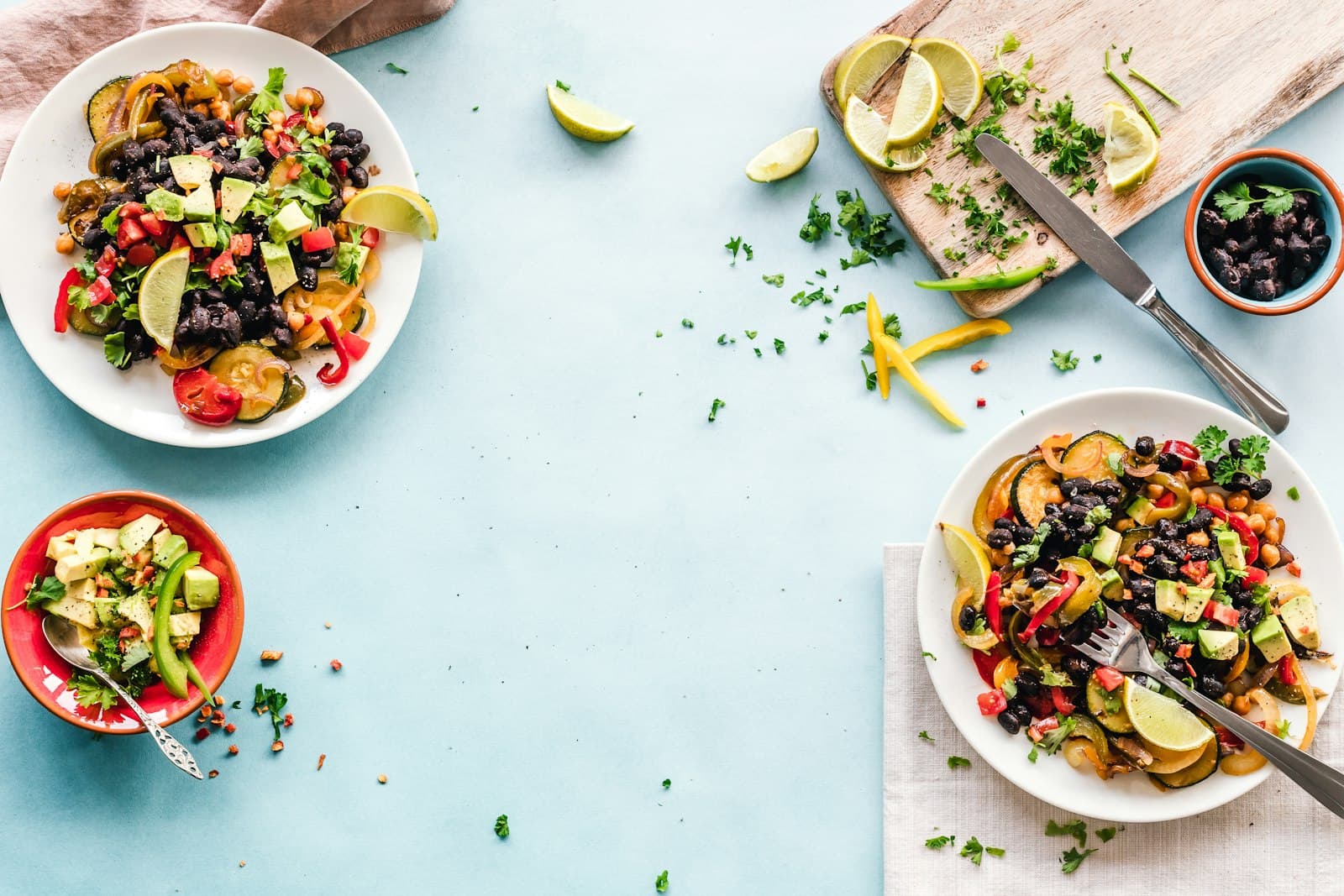
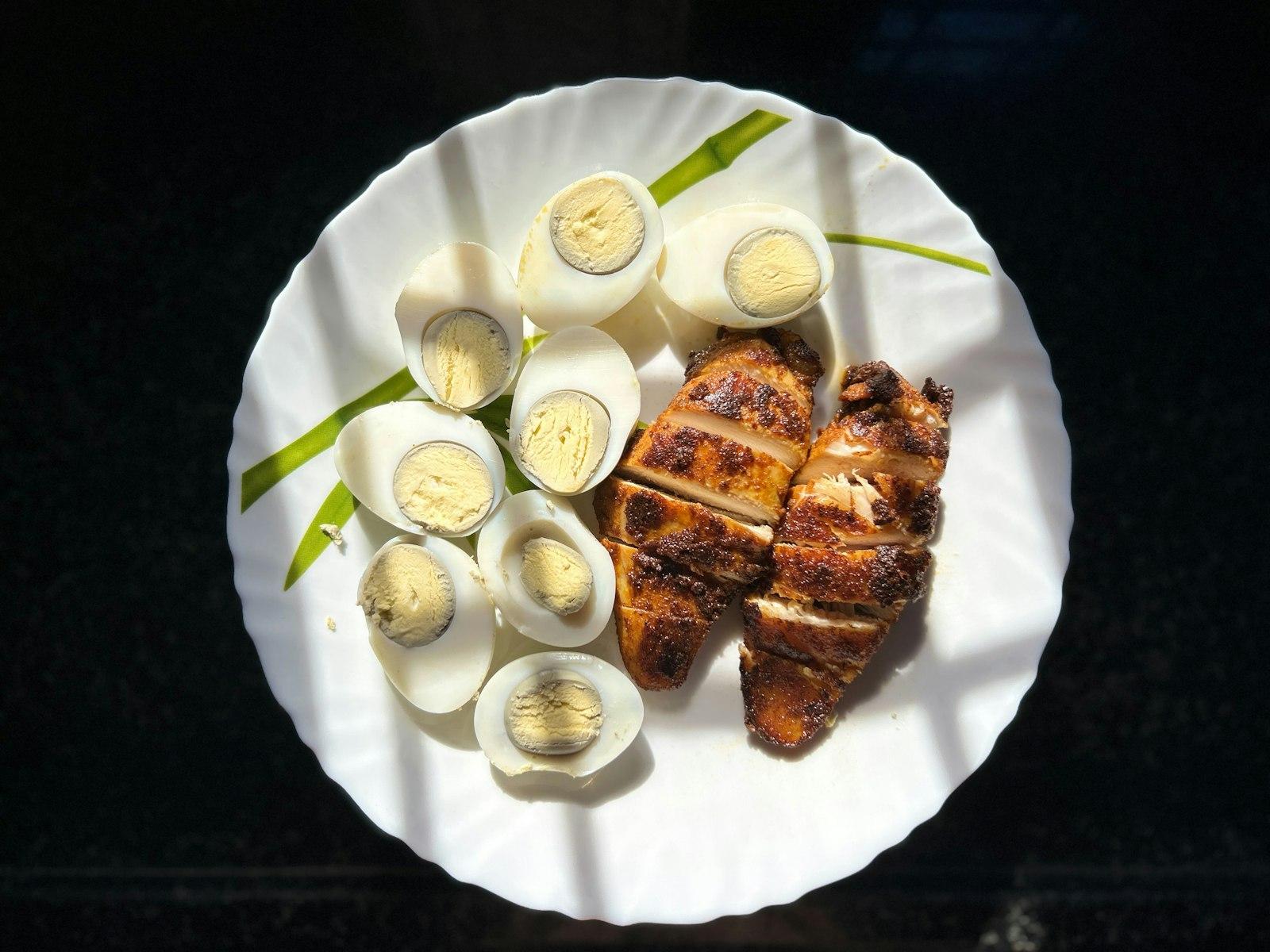
| Protein | Plain chicken, turkey, beef, fish, eggs, firm tofu | Little or no fermentable carbohydrate | Onion or garlic in marinades and stock; processed meats with added ingredients; high-fat cuts bother some people |
| Low FODMAP vegetables | Carrots, spinach, lettuce, cucumber, zucchini (zucchini), tomato | Not among the high fructan or polyol vegetables | Portion size matters; high fiber can still ferment for some |
| Starches | Rice, potatoes, oats in modest portions | Commonly listed as low FODMAP | The AGA says some people with SIBO react to rice, cereal and potatoes |
| Fats and oils | Olive oil, butter in small amounts | Not fermentable | The AGA notes some people find high-fat foods worsen symptoms |
| Fruit | Oranges, grapes, pineapple, strawberries | The AGA suggests oranges, grapes or pineapple instead of apples | Large amounts of any fruit can be a problem for some |
| Drinks | Water, plain tea | No fermentable carbohydrate | Sweeteners, sugar alcohols and large amounts of caffeine bother some people |
Two cautions apply to that table. First, "commonly listed as low FODMAP" is not the same as "tested in SIBO." Second, portion sizes change FODMAP content, and the official portion data lives in the Monash FODMAP app, which Clairop is not affiliated with and whose figures we do not reproduce. If you want precise portion guidance, a dietitian who is trained in the diet is the way to get it (Monash).
The vegetables to be careful with are better documented than the "safe" ones. Garlic, artichoke, shallots, leek bulb and onion had the highest fructan content of the 60 vegetables measured in one Australian analysis, ranging from 1.2 to 17.4 g per 100 g (Muir 2007). That is why swapping them out (or using the green tops of green onions (spring onions) or garlic-infused oil, which your dietitian can explain) is often the first change people make.
Can you eat rice and potatoes with SIBO?
Often yes, but not always, and that disagreement is the clearest example of why no list works for everyone. In the r/SIBO thread above, rice and potatoes are among the most frequently named safe foods. Yet the AGA's patient page says some people with SIBO find that other carbohydrates, including rice, cereal, potatoes, large amounts of fruit, table sugar or desserts, can worsen symptoms even when they are low FODMAP, and that a lower-carbohydrate approach may suit those people better than low FODMAP (AGA).
That is a notable thing for a major medical society to say, because it means "low FODMAP" and "safe for SIBO" are not the same thing. It also means that if you have been eating low FODMAP perfectly and still feel bad, starchy portions are a reasonable thing to look at, preferably by testing smaller portions rather than cutting everything.
The European breath-testing guideline makes a related point: the term FODMAP was defined by chemistry, not biological effect, and it leaves out starches and fibers that can still reach the large bowel and ferment (Hammer 2022). So a food can be "low FODMAP" and still produce gas for you.
Are low sulfur, low histamine and carnivore diets proven for SIBO?
No. We found no published trial of a low sulfur or a low histamine diet in people with SIBO, and no trial of a carnivore diet for it either. They appear often on forums, and some people clearly feel better, but that is anecdote. Part of the reason a very restricted diet helps anyone is simple: it removes most fermentable carbohydrate, which lowers gas in almost everybody. That does not make it a SIBO treatment.
The same r/SIBO thread shows the pattern. One reply suggested histamine intolerance might explain the symptoms, another described following low FODMAP while SIBO kept returning, then switching to a meat-heavy diet and "cheating" occasionally. These are lived experiences worth recognizing, and they are also exactly the kind of story that cannot be turned into advice, because we do not know whether the food, the treatment, the timing or luck made the difference.
The sensible reading is: try structured approaches that have at least some evidence, tell your clinician if you are considering anything more restrictive, and be wary of any plan that keeps getting narrower. Narrowing is the direction restriction takes by default; widening takes deliberate effort.
What does the evidence on SIBO diets actually show?
Evidence on food for SIBO is thin, and anyone who says otherwise is overselling. Here is what exists.
Low FODMAP has strong evidence, but in IBS. A network meta-analysis of 13 randomized trials and 944 people with IBS ranked a low FODMAP diet first against habitual diet for global symptoms, with a relative risk of symptoms not improving of 0.67 (Black 2022). In a controlled crossover trial, people with IBS had lower overall symptom scores on low FODMAP (22.8 mm) than on a typical Australian diet (44.9 mm) (Halmos 2014). Those are IBS findings, not SIBO findings.
SIBO-specific diet evidence is weak. A 2022 narrative review concluded that the potential efficacy of the IBS diet in SIBO is "largely hypothetical", and raised the possibility that low FODMAP could shift the gut microbiota in an unhelpful direction (Wielgosz-Grochowska 2022). The largest SIBO-related low FODMAP study we found was a 2026 online survey of 98 patients using an unvalidated questionnaire, in which people reported reduced symptoms, with the biggest effect on bloating (Bogdanowska-Charkiewicz 2026). A survey of people who chose to do the diet cannot show it works.
The AGA's position is clear. Food-based changes can reduce symptoms but have not been shown to eliminate the overgrowth (AGA). A 2025 narrative review likewise treats nutrition as important for symptoms and preventing relapse, while defining the dietitian's role rather than offering a proven diet (Velasco-Aburto 2025).
The elemental diet is the one diet studied as treatment. In a 2004 study of 93 people with IBS and an abnormal lactulose breath test, 74 (80%) had a normal breath test after 14 days on an exclusive elemental formula (Pimentel 2004). A 2025 pilot of 30 people tolerated a palatable formula for two weeks and showed changes in the stool microbiome and a fall in maximum breath methane levels, though it was small and short (Rezaie 2025). Neither was a randomized controlled comparison with long follow-up. An elemental diet replaces all food with a formula and is a medical treatment to discuss with a doctor, not a way to find safe foods.
For the head-to-head between low FODMAP and the SIBO-branded food lists, see our separate comparison, SIBO diet vs low FODMAP. It goes through where the lists disagree and why.
Why does a "safe" food sometimes cause symptoms?
When a food you trusted suddenly bothers you, the food is rarely the whole story. These are the usual reasons, and each one is a thing you can test.
Portion and stacking. FODMAPs add up. A half portion of one food may be fine, but combined with another moderate food in the same meal the total can cross your threshold. This is why a reaction to one meal says little about one ingredient.
Delay. Gut reactions do not always arrive at the table. Symptoms that show up several hours later, or the next day, are easy to blame on the wrong food. This is the biggest weakness of memory-based food lists.
Meal spacing. The AGA suggests waiting at least three hours between meals or snacks, and not eating close to bedtime, to support the gut's natural cleansing waves (AGA). Those waves are the migrating motor complex, a pattern of small bowel contractions that happens during fasting and is interrupted by feeding; its absence has been linked to SIBO (Deloose 2012). Grazing all day could therefore matter independent of what you eat. This is an area where it is worth asking your clinician about your own situation.
Fat. The AGA notes that some people with SIBO find high-fat foods make symptoms worse. If your trigger is a creamy sauce rather than the vegetable in it, a carbohydrate-based list will never find it.
Treatment timing. Symptoms can change during and after SIBO treatment for reasons unrelated to what you ate. If that is your situation, our post on why you can feel worse after SIBO treatment is worth reading before drawing conclusions about food.
Something else going on. Symptoms are not a diagnosis. If your list keeps shrinking and nothing helps, it is worth asking whether SIBO is the right explanation. We cover the debate in is SIBO a real condition and the testing problems in negative SIBO breath test but still symptoms.
How do I build my own SIBO safe food list?
Start simple for a short, fixed time, log everything with timing, reintroduce one food at a time, then widen. It mirrors the process dietitians use for low FODMAP, adapted for your own pattern. This is a general framework, not medical advice for your case. Ideally you would do it with a GI dietitian.
- See your doctor first. SIBO symptoms overlap with celiac disease, inflammatory bowel disease, bile acid problems and other conditions, and a food list can hide them. Ask whether further testing is needed before you commit to a diet.
- Start with a simple baseline for a short time. The structured low FODMAP approach uses a restriction step lasting about 2 to 6 weeks (Monash), and the AGA describes 2 to 4 weeks of avoiding high FODMAP foods (AGA). Choose a time limit before you begin and put the end date in your calendar.
- Log everything, with timing. Record what you ate, when, the rough portion, and your symptoms with a severity and a time. Include anything you eat "as a treat" or by accident, because accidents are your best natural experiments.
- Reintroduce one food at a time. The Monash approach has you eat a food that is high in one FODMAP group daily for three days, then rest, before the next challenge (Monash). Our guide to reintroducing foods after low FODMAP walks through the practicalities.
- Test starchy foods and fats on purpose. Because the AGA flags rice, potatoes, sugar and high-fat foods as possible problems even on a low FODMAP plan, test them in small portions rather than assuming they are safe.
- Look for patterns across meals, not single meals. One bad evening is noise. The same food followed by symptoms in five of six meals is a signal.
- Widen, do not just maintain. Personalization means eating the most varied diet you can comfortably enjoy, restricting poorly tolerated foods only to the level that gives relief (Monash).
If you are using the diet as part of IBS management, the long-term evidence is reassuring when reintroduction is done properly: in a follow-up of 103 people after dietitian-led education, 57% reported satisfactory symptom relief long term, 82% were following an "adapted" lower-FODMAP diet, and nutritional adequacy was not compromised (O'Keeffe 2018). That was IBS rather than SIBO, but it shows the point of the process: a personalized diet that is wider than the starting one.
Clairop logs meals, symptoms and stool in seconds, then looks for the foods your gut reacts to, including reactions that land days later.
How do you find delayed food triggers?
You find them by comparing many meals, not by remembering one: look at how you felt after meals that contained a food and meals that did not, across windows from hours to days. Memory misses delays, which is why this is the hardest part of any food list, and the one where memory fails most. If a food causes symptoms 10 or 30 hours later, you are unlikely to connect the two, and you will keep eating it while crossing off innocent foods. Delayed reactions are the reason many people end up on a smaller and smaller list that still does not work.
The practical answer is to compare, not remember. For each food, look at how you felt after meals that contained it and after meals that did not, across several delay windows, and over many meals. Doing this by hand across dozens of foods is tedious, which is why it usually does not happen.
This is the job Clairop was built for. You log meals, symptoms and stool by tap, voice or photo, and Clairop tests every food against symptom severity in three windows: within six hours, six to twenty-four hours, and one to three days. It reports the effect size alongside each result and corrects for the fact that testing hundreds of foods at once will throw up false positives by chance, and it will not show a result until there are at least five meals with and five without a food. You can then take a one-page summary to your appointment. It is an iPhone app that tracks patterns and helps you spot candidates; it does not diagnose or treat SIBO, and any result is a prompt to test, not a verdict. For a wider look at the options, see our list of food and symptom tracker apps.
Even if you never use an app, the principle holds: a safe list built from many logged meals is more reliable than one built from your worst night.
How long should I stay on a restricted list?
As briefly as your symptoms allow. The AGA says the strict restriction phase is generally temporary, with gradual reintroduction after about 4 to 6 weeks, ideally with a GI dietitian, to identify personal triggers and reduce the risk of unnecessary long-term restriction and nutrient deficiencies (AGA).
There are real costs to staying restricted. In a four-week randomized trial of a diet restricting fermentable carbohydrates in IBS, bifidobacteria concentrations were lower in the diet group than in the control group, although symptoms improved (Staudacher 2012). What that means over years is unknown, and it is one reason the process is designed to end in a wider diet.
Weight is the other one. The AGA notes that long-standing SIBO can interfere with absorption and lead to weight loss and low vitamin B12, A, D and E, so a restricted diet on top of that can compound the problem. If you are losing weight without trying, that needs a doctor promptly, not a tighter food list. Our guide on how to gain weight with SIBO covers what the evidence shows and what a dietitian does about it.
What mistakes make SIBO food lists fail?
Most failed food lists fail for the same few reasons.
- Copying someone else's list. A thread of safe foods tells you what worked for those people, not for you.
- Judging a food on one meal. Portion, stacking, delay and meal spacing all muddy a single bad meal.
- Never leaving the restriction phase. A list that only ever shrinks is a warning sign, not a success.
- Assuming low FODMAP means safe. The AGA itself says some low FODMAP starches bother some people with SIBO.
- Stacking restrictions. Running low FODMAP, low sulfur, low histamine and meat-only at once leaves almost nothing to learn from, because you cannot tell what helped.
- Skipping the doctor. Food cannot tell you what is causing symptoms, and a list can mask conditions that need treatment.
- Treating the list as the treatment. The AGA says food changes have not been shown to eliminate SIBO. Treatment decisions belong with your prescriber.
When should I see a doctor about my diet and SIBO?
See a doctor promptly if you have blood in your stool, unexplained weight loss, fever, symptoms that wake you at night, signs of anemia, symptoms that started after the age of 50, or a family history of bowel cancer or inflammatory bowel disease. Those are not things a food list can explain or resolve.
Also speak to a doctor or dietitian if your list has become short enough that you are worried about nutrition, if you are afraid of eating, or if you have ever had an eating disorder. The AGA specifically advises telling your provider about an eating disorder history or fear of food, because the three-step process is not usually recommended in those cases (AGA). Our article on whether the low FODMAP diet can cause an eating disorder goes into this.
The short version
There is no universal list, the evidence for any SIBO diet is thin, and the way to find your foods is to test them carefully, log them with timing, and widen as soon as you can.