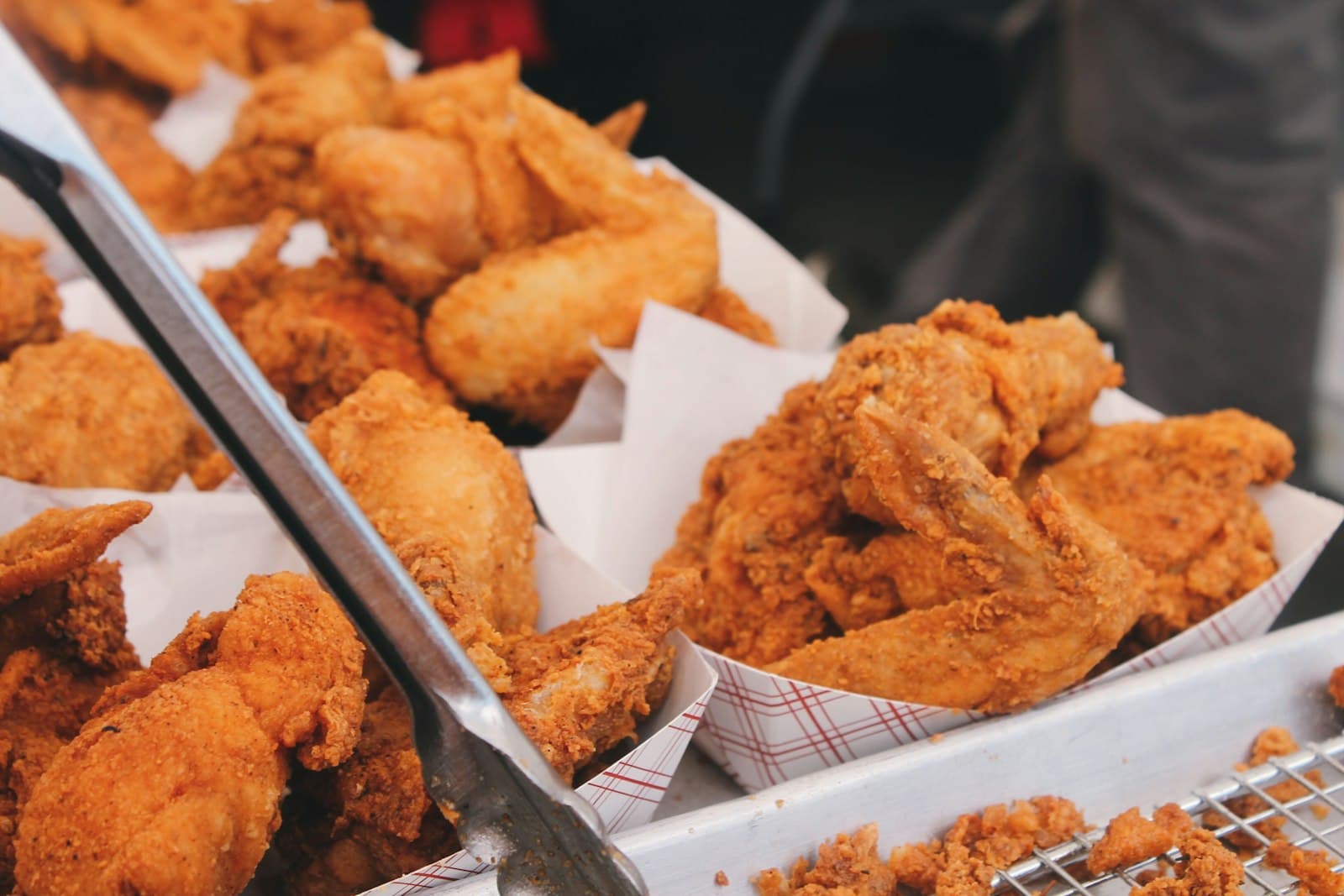
The worst foods for IBS, going by what people with IBS actually report, are fried and fatty food, dairy, beans and lentils, wheat and bread, certain fruits such as apple, spicy food, coffee and alcohol. But that is a ranking of blame, and when researchers hide the suspect inside an identical-looking powder so nobody knows what they are eating, the order changes. Onion, garlic and wheat (through their fructans) and the sugar alcohol mannitol rise to the top, and lactose, the sugar behind most dairy complaints, falls to roughly the level of a placebo. Chili has its own guide: does spicy food make IBS worse.
That gap between the two rankings is the most useful thing a "worst foods" list can tell you, and it is the thing almost no list mentions. Most of the pages we read for this article present a confident top seven or top twenty with no numbers at all. One says "generally, those suffering from IBS are also lactose intolerant" without a source; another quotes a global lactose figure from a meta-analysis that its journal has since retracted. This article builds the ranking from the studies, says where each number comes from, and then explains why your own top three will almost certainly differ from everybody else's.
We have separate, deeper articles on most individual foods here, from garlic and onion to bread, sorbitol, coffee, alcohol and lactose-free milk. This page does not repeat them. Its job is the ranking itself, and why the rankings disagree.
The short answer: two honest rankings, not one
There are two legitimate ways to rank the worst foods for IBS, and they answer different questions. The first asks people with IBS which foods they believe cause their symptoms. The second gives people a suspect without telling them, alongside a dummy, and counts how often symptoms actually come back. The first tells you where to start looking. The second tells you how often the suspect survives a fair test.
Neither is "the real list". Questionnaires capture whole foods eaten in real portions in real life, which is what you care about, but they cannot separate a food from the meal around it, from the stress of the day, or from what you already expected to happen. Blinded challenges remove expectation, but they test isolated carbohydrates in powders and capsules at fixed doses, in people selected because they had already responded to a diet. A good ranking needs both columns, and where the columns disagree is where you learn something.
Here is the short version of what both columns say, before the detail:
- Most often blamed: fried and fatty food, dairy, beans and lentils, wheat and bread, apple and stone fruits, spicy food, alcohol and coffee (Böhn 2013, Simrén 2001, Hayes 2014).
- Most often confirmed under blinding: fructans (onion, garlic, wheat, rye) and mannitol, followed by galacto-oligosaccharides (beans and lentils) (Van den Houte 2024).
- Blamed far more than blinding supports: lactose, which dominates complaints about dairy.
- Never properly blinded at all: fat, spice, fizzy drinks and raw vegetables, which are on almost every list and in official advice anyway.
How this ranking was built, and what it cannot tell you
We took the food-level percentages from the three questionnaire studies of people with IBS whose abstracts give them, from Sweden, Ireland and an earlier Swedish cohort, and set them against the largest blinded reintroduction trial we could find. For foods with no blinded data, we looked for the best controlled physiology study, and we say so where all we found was lab work or a study in healthy volunteers.
Three limits apply to everything below. The three food-ranking surveys all come from European clinics, so the rankings reflect European diets. We describe the Böhn and Simrén surveys as Swedish because both author teams are based in Gothenburg; their abstracts do not say where patients were recruited. Questionnaires record what people believe, which is valuable but not the same as cause. And the blinded trial was run in Belgian tertiary care on people who had already improved on a low FODMAP diet, so its percentages describe that group, not everyone with IBS. We could not read conflict-of-interest statements for most of the trials cited, so we do not comment on them.
The worst foods for IBS, in one table
This is the whole ranking on one screen. "Blamed" figures are the share of people with IBS who named that food in the questionnaire studies. "Blinded" figures are the share whose symptoms came back when given the relevant carbohydrate without knowing it, against 26% for a glucose placebo in the same trial.
| Food or group | How often blamed | Blinded or controlled evidence | Our read |
|---|---|---|---|
| Fried and fatty food | 52% in Sweden; 36% in Ireland | No blinded food trial. Fat infused into the gut lowered pain thresholds more in IBS than in controls | Plausible and common, untested as a food |
| Dairy | 49% (milk alone 43%) in Sweden | Lactose 28% vs placebo 26% | Blamed far more than blinding supports, with a subgroup who do react |
| Onion and garlic (fructans) | Not itemised in the surveys we read | Fructans 56%, the top trigger | The strongest blinded evidence of any food |
| Wheat, bread, flour | 53% in Ireland; flour 24% in Sweden | Fructans 56%; gluten no worse than placebo in two trials | Usually the fructans, not the gluten |
| Beans and lentils | 36% in Sweden | Galacto-oligosaccharides 35% | Confirmed in about a third |
| Apple, pear, stone fruit | Apple 28%, plum 23% in Sweden | Fructose 27%, sorbitol 23% vs placebo 26% | Mixed: dose and fruit type matter |
| Mushrooms and some vegetables (mannitol) | Not itemised | Mannitol 54%, second overall | Underrated on most lists |
| Spicy food | 39% in Ireland | Chilli raised gut sensitivity in healthy volunteers; long-term chilli reduced burning in a small IBS-D trial | Genuinely unsettled |
| Alcohol | Wine and beer 31% in Sweden | No blinded trial in IBS | See the alcohol article |
| Coffee | Among the most often reported in Sweden | No blinded trial in IBS | See the coffee article |
| Sugar-free sweets and gum | Not itemised | Polyols raised symptoms in IBS in a 10 g challenge | Dose-dependent, easy to avoid |
| Wheat bran | Not itemised | Did not beat placebo reliably; most dropouts | Avoid adding it, per guidelines |
Sources for the table: survey figures from Böhn 2013 and Hayes 2014; blinded carbohydrate figures from Van den Houte 2024; other rows as cited in each section below.
1. Fried and fatty food: the most blamed, and never blinded
Fried and fatty food is the single most commonly blamed item in the most detailed IBS food survey we found, named by 52% of 197 Swedish patients (Böhn 2013), and fatty food also featured near the top in an earlier Swedish cohort of 330 patients (Simrén 2001) and in an Irish survey, where 36% named it (Hayes 2014). In the Reddit threads behind this article, "fried foods" was one of the most upvoted single-word answers to the question of what people's worst trigger is (r/ibs). Why fat in particular sets off symptoms is covered in why fatty foods trigger IBS.
The physiology behind that is reasonably well described. When researchers infused fat directly into the duodenum of 61 people with IBS and 20 healthy controls and then inflated a balloon in the colon, the pressure at which people with IBS felt discomfort and pain dropped further after the fat than it did in controls, and the pain spread over a larger area of the body (Simrén 2007). Fat, in other words, appears to turn up the volume on the colon's sensitivity in IBS. That is one plausible reason a greasy takeaway can bring on cramps and urgency within the hour, a timing pattern our after-eating timeline and rushing to the toilet after meals articles cover in detail.
Two things about that study cut against the way most "worst foods" lists use it. First, the response "was similar in IBS subgroups based on the predominant bowel habit", meaning people with IBS-C and alternating IBS reacted much like those with IBS-D, so fat is not only a diarrhoea problem. Second, it was a lab infusion of fat, not a meal. Nobody has given people with IBS a disguised high-fat meal and a disguised low-fat meal and compared what happens, as far as we could find.
That matters because fat almost never arrives alone. A takeaway burger brings fat, onion, wheat, a large portion and often alcohol together. In the Reddit threads, people regularly separate out fats they tolerate (olive oil, peanut butter in small amounts) from the ones they do not (deep-fried food, cream sauces, fatty meat), which fits the idea that dose and the rest of the meal matter more than fat as a category (r/ibs).
What about "processed food"? A large French cohort of 33,343 adults found that people whose diet contained the most ultra-processed food had 25% higher odds of reporting IBS than those eating the least (adjusted odds ratio 1.25, 95% CI 1.12 to 1.39) (Schnabel 2018). That is a real association, but it compared people who already did or did not have IBS, so it cannot tell you whether processed food worsens IBS or whether people with IBS eat differently. The authors say longitudinal studies are needed. It supports "processed food is worth looking at", not "processed food is a proven trigger".
2. Dairy: blamed by half, confirmed in far fewer
Dairy is the most blamed carbohydrate food in the Swedish survey: 49% of people with IBS named dairy products, and 43% named milk specifically (Böhn 2013). In an Irish survey, milk products were the whole food group people most often cut out, by 9.6% of patients (Hayes 2014), and in a Swedish population survey people with IBS had five times the odds of avoiding lactose compared with people without IBS (Nybacka 2024).
Then look at the blinded column. In a trial where people who had improved on a low FODMAP diet were given lactose powder without knowing what it was, symptoms came back in 28% of them, against 26% for the glucose placebo given the same way (Van den Houte 2024). Lactose and placebo, in that group, were close to indistinguishable on average.
That does not mean dairy complaints are imaginary. Three things can be true at once:
- A subgroup really does react. In a study by researchers in China of 55 people with IBS-D and 18 healthy controls, all of whom had low lactase activity, 46% of the IBS-D group developed symptoms after a 20 g lactose test against 17% of controls, and the ones who reacted had more anxiety, more mast cells in the gut lining and a bigger jump in rectal sensitivity after lactose (Yang 2014). So it is the sensitivity of the gut, not just the missing enzyme, that seems to decide who gets symptoms.
- Dairy is more than lactose. Cheese, cream, ice cream and butter bring fat, and many dairy dishes bring wheat and onion too. A person who blames "dairy" after mac and cheese or a cream soup may be reacting to the fat or the sauce. The lactose-free milk article works through these alternatives one by one.
- Infection can raise dairy complaints for years. Three years after a Giardia outbreak, a Norwegian research group found exposed adults had twice the odds of reporting food intolerance (odds ratio 2.00), and dairy was the most commonly reported intolerance (Litleskare 2015). Response rates differed widely between the exposed and control groups (65% vs 31%), which may have inflated the gap, but the pattern fits what many people describe after a bad stomach bug.
The practical read: if dairy is on your list, it is worth testing lactose separately from fat. Lactose-free milk against ordinary milk, at the same volume, is a cleaner test than "dairy versus no dairy".
3. Onion and garlic: the strongest blinded evidence of any food
Onion and garlic are the foods with the strongest evidence of actually causing IBS symptoms, because they are the densest everyday source of fructans, and fructans were the most common trigger in blinded testing: they brought symptoms back in 56% of people, more than any other carbohydrate tested (Van den Houte 2024). An earlier blinded, placebo-controlled trial in 25 people with IBS and fructose malabsorption found 77% reported inadequate symptom control when given fructans, against 14% on glucose, with symptoms rising as the dose rose (Shepherd 2008).
Interestingly, the surveys we read do not list onion or garlic among their top items, probably because people eat them as an ingredient rather than as a food and rarely notice them. That is the opposite problem to dairy: under-blamed rather than over-blamed. Reddit fills the gap. One of the most upvoted posts we found in r/ibs is simply titled "onion might be the worst food out there", and its top reply, with dozens of agreements, is that they are in everything (r/ibs). Several commenters describe relatives who cannot understand how an amount you can barely taste causes hours of pain.
The reason a barely tasted amount can matter, and why powders, stocks and spice blends are a bigger problem than a visible slice of onion, is covered fully in the garlic and onion article, including why infused oil behaves differently and why an enzyme supplement aimed at beans does not touch onion. If you want the full picture of which FODMAPs people react to in what order, the reintroduction order article owns that trial in more depth.
4. Wheat and bread: usually the fructans, not the gluten
Bread and cereal foods were the single most blamed food group in the Irish survey, named by 53% of 135 people with IBS (Hayes 2014). In Sweden, flour was named by 24% (Böhn 2013). Many people assume the culprit is gluten, and two blinded trials say it usually is not.
In the first, 37 people with IBS who believed they were gluten sensitive (with coeliac disease excluded) improved on a reduced-FODMAP diet, then worsened to a similar degree whether their diet contained added gluten or added whey protein; gluten-specific effects appeared in only 8% (Biesiekierski 2013). In the second, 59 people on a self-started gluten-free diet were given muesli bars containing gluten, fructans or neither, without knowing which. Fructans raised symptoms; gluten did not differ from placebo (Skodje 2018).
So wheat is genuinely high on the list, but mostly because of the fructans it shares with onion and garlic. That is also why many people find sourdough or a smaller portion behaves differently from a large wholemeal sandwich. The bread article covers the portion, loaf type and sourdough questions. One rule from it is worth repeating here because it is easy to get wrong: get tested for coeliac disease before cutting gluten, because the test needs gluten in your diet to work, and NICE lists coeliac antibody testing among the standard tests for anyone meeting IBS criteria (NICE CG61).
5. Beans and lentils: confirmed in about a third
Beans and lentils were named by 36% of people in the Swedish survey (Böhn 2013), and galacto-oligosaccharides, the carbohydrates beans and lentils are rich in, brought symptoms back in 35% of people under blinding (Van den Houte 2024). That is one of the few places where the blamed column and the blinded column roughly agree.
The main thing these carbohydrates do is produce gas in the colon, and the reason gas matters more in IBS is not necessarily that more of it is made. When researchers infused the same volume of gas into the small intestine of 20 people with IBS and 20 healthy controls, 18 of the IBS group developed gas retention, increased symptoms or visible abdominal distension within two hours, against 4 of the controls (Serra 2001). The IBS gut seems to move gas along less efficiently and tolerate it less well. That is part of why a bowl of chilli with beans can leave one person bloated and leave their friend unaffected, and it links closely to why IBS bloating can make you look pregnant.
The pulses most often blamed on Reddit are baked beans, kidney beans and lentils, frequently described as the food people knowingly keep eating anyway because they love it (r/ibs). Portion size is the obvious lever, and for many people a small serving of canned, rinsed lentils lands very differently from a large bowl of dried beans cooked from scratch.
6. Apples, pears and stone fruit: where dose decides everything
Apple was named by 28% and plum by 23% of people in the Swedish survey (Böhn 2013). These fruits share a chemistry that explains why: in a laboratory analysis of 41 fruits, apple, pear, mango, clingstone peach and watermelon all contained more fructose than glucose, which makes the fructose harder to absorb, and sorbitol was found in 15 of the fruits tested (Muir 2009).
Under blinding, though, fructose on its own brought symptoms back in 27% of people and sorbitol in 23%, against 26% for placebo (Van den Houte 2024). On average, in that group, neither sugar alone looked much worse than glucose. The earlier, smaller trial selected for people with fructose malabsorption did find fructose triggered symptoms in 70% against 14% on glucose (Shepherd 2008). The difference between those trials is partly who was recruited and partly dose, and it is a good illustration of why one person's "apples destroy me" and another's "apples are fine" can both be accurate.
Fruit also tends to arrive in quantity. A glass of apple juice, a smoothie or a bowl of fruit salad concentrates several portions into one sitting. NICE's general advice is to limit fresh fruit to three portions of about 80 g a day (NICE CG61), which is a portion rule, not a ban. If stone fruit in particular bothers you, the sugar alcohol section below and the sorbitol article are where to look next.
7. Mannitol: the trigger most lists leave out
Mannitol is the trigger most "worst foods for IBS" lists leave out, yet it was the second most common in blinded testing, bringing symptoms back in 54% of people, only just behind fructans (Van den Houte 2024). It is a sugar alcohol, and in a published food analysis, mannitol was found mainly in certain vegetables, while sorbitol turned up in certain fruits and in sugar-free gum (Yao 2014).
In the same paper's blinded challenge, 10 g of either sugar alcohol increased gut symptoms in people with IBS but not in healthy volunteers, and the symptoms did not depend on whether a breath test showed the sugar alcohol had been absorbed (Yao 2014). That second finding matters for anyone hoping a breath test will name their worst foods: in this study, the gut's reaction and the absorption result were separate things.
People on Reddit tend to name mushrooms and cauliflower as the foods that taught them they react to mannitol, sometimes describing it as a painful lesson after a period of eating freely (r/ibs). Because the blinded trial tested a powder rather than specific vegetables, we would treat that as a reasonable place to look rather than a confirmed list.
8. Spicy food: the most genuinely unsettled item on the list
Spicy food is on nearly every list and in UK dietary advice, but the evidence pulls in two directions. It was the second most blamed food group in Ireland, named by 39% (Hayes 2014), and "hot spices" were among the most frequently reported triggers in Sweden (Simrén 2001).
On the side of spice as a trigger: in 4,763 Iranian adults, people who ate spicy food ten or more times a week were more likely to have IBS than those who never did (odds ratio 1.92, 95% CI 1.23 to 3.01), but the link held only in women, not in men, and the study's definition of spicy food included pepper, curry, ginger, cinnamon and turmeric, which is broader than chilli (Esmaillzadeh 2013). It was a cross-sectional study, so it cannot show direction. And in 18 healthy volunteers, three days of chilli made the rectum more sensitive to a balloon, lowering the pressure at which people felt urgency (Gonlachanvit 2007). Note that this was in people without IBS.
On the other side: in a small double-blind crossover of 16 people with IBS-D, six weeks of chilli capsules before meals reduced post-meal abdominal burning and raised the threshold at which the rectum first registered a balloon, with no change in other symptoms (Aniwan 2014). The authors interpret that as repeated exposure desensitising the receptor that chilli acts on.
Put together, it is possible that an occasional very hot meal and regular moderate spice behave differently, but with 16 participants in one trial and 18 healthy volunteers in another, nobody should build a rule on it. If you love spicy food and are unsure, it is one of the more worthwhile things to test properly rather than drop by default.
9. Coffee and alcohol: common, and covered elsewhere
Coffee and alcohol both belong on any honest list. Coffee and alcohol were among the most frequently reported triggers in the Swedish cohort of 330 patients (Simrén 2001), wine and beer were named by 31% in the later Swedish survey (Böhn 2013), and in a Swedish population survey people with IBS had twice the odds of avoiding alcohol (Nybacka 2024). NICE advises restricting tea and coffee to three cups a day and reducing alcohol (NICE CG61).
We have full articles on both, so we will not rebuild them here. Is coffee bad for IBS-D covers why the same cup lands harder when you have diarrhoea-predominant IBS and how to tell whether decaf does it too. Does alcohol make IBS worse covers why the type of drink, the mixer and the whole night out matter more than the alcohol on its own.
10. Fizzy drinks: on the official list, with no trial behind it
NICE advises people with IBS to reduce fizzy drinks (NICE CG61), and in an IBS-C thread on Reddit, soda was named as "public enemy number one" by more than one person (r/ibs). Yet we could not find a single trial testing carbonated drinks in IBS. Our Europe PMC search for studies with "carbonated" and "irritable" in the title returned nothing, which reflects our searching rather than proof that no study exists.
There are plausible mechanisms: swallowed gas, the high-fructose syrups in many regular sodas, and the sweeteners in some diet versions. Interestingly, in the Giardia study, people exposed to the infection did not differ from controls in perceived intolerance to soda, coffee or spicy food, even though they differed for dairy, fat, vegetables, fruit, cereals and alcohol (Litleskare 2015). Several people in the Reddit threads also separate sugary fizzy drinks from plain sparkling water or sugar-free versions they tolerate. If fizzy drinks bother you, it is worth testing plain sparkling water separately from your usual soda, because the bubbles and the syrup are different suspects.
11. Sugar-free sweets, gum and diet products
Sugar alcohols such as sorbitol, mannitol and xylitol are a dose-dependent trigger, which is why the same sugar-free mint can be harmless one day and a problem after half a packet. NICE specifically advises people with IBS and diarrhoea to avoid sorbitol, naming sugar-free sweets, chewing gum and drinks, and some diabetic and slimming products (NICE CG61). In the blinded challenge described above, a 10 g dose of sorbitol or mannitol increased symptoms in people with IBS (Yao 2014).
The Reddit threads add one more category: the "smart" sweets, protein bars and low-sugar snacks that use sugar alcohols or other poorly absorbed sweeteners, which several people name as their worst bloating offender (r/ibs). The sorbitol article covers how much it takes, where it hides on labels and in medicines, and how it compares with erythritol and xylitol.
12. Wheat bran and "roughage": the one item guidelines agree on
Insoluble fibre such as wheat bran is the item on this list where guidelines are most consistent: NICE says people with IBS should be discouraged from eating insoluble fibre such as bran (NICE CG61), and the British guideline notes that insoluble fibre like wheat bran did not show benefit and "may exacerbate abdominal pain and bloating" (Vasant 2021). Whether fibre helps or hurts depends on the type: see does fiber make IBS worse.
The clearest trial is a primary care study of 275 people with IBS, who were given 10 g a day of psyllium (soluble fibre), bran or a rice flour placebo for 12 weeks (Bijkerk 2009). Psyllium beat placebo in the first two months. Bran only did better than placebo in the third month, and that difference was not statistically significant in the stricter worst-case analysis. Early dropout was most common in the bran group, and the main reason was that IBS symptoms got worse.
What about raw vegetables and salads? This is one of the questions people ask most in the Reddit threads: many describe big salads and raw vegetables as among their worst foods and say cooked vegetables sit better (r/ibs). We could not find a trial comparing raw and cooked vegetables in IBS, so we cannot tell you it is true. Two things are worth knowing. Cooking does not remove FODMAPs like the fructans in onion, so a cooked trigger stays a trigger. And a large raw salad is a large volume of food, so the meal size point below may explain some of the effect.
Clairop logs meals, symptoms and stool in seconds, then looks for the foods your gut reacts to, including reactions that land days later.
Why your worst-foods list will not match anyone else's
Your own worst foods probably differ from every list on the internet, including this one, for at least six reasons that each have evidence behind them.
Your country and cuisine. In Sweden, fatty food and dairy led (Böhn 2013); in Ireland, bread and cereal foods led, with spicy food second (Hayes 2014). People can only blame foods they eat, and they eat what is normal where they live. A list written for an American audience and a list written in India are measuring different diets.
Your dose. Almost every trigger tested properly is dose-dependent. Fructose and fructans caused symptoms in a dose-dependent way in the blinded trial (Shepherd 2008). That means "worst food" is really "worst food at the portion I usually eat", and several FODMAPs in one meal can add up, which is what the FODMAP stacking article explains with examples.
Your gut's sensitivity on the day. The same food can land differently depending on stress, sleep, your cycle and what you ate yesterday. The article on why safe foods sometimes trigger IBS is about exactly this: a threshold that moves, rather than a fixed list.
How severe your IBS is. In the Swedish survey, people with more severe IBS and more somatic symptoms blamed more foods (Böhn 2013). In the earlier cohort, food-related symptom scores were higher in women and in people with anxiety (Simrén 2001). A longer list can mean a more reactive gut, more attention to the gut, or both, and the studies cannot separate those.
What happened to your gut before. After a Giardia outbreak, perceived food intolerance was roughly twice as common three years later, for both high and low FODMAP foods (Litleskare 2015). People who developed IBS after an infection may have a different list from people whose IBS came on gradually.
Not your subtype, mostly. This one surprises people, because search suggestions are full of "worst foods for IBS-D" and "worst foods for IBS-C". In two separate Swedish surveys, the number of foods people blamed was unrelated to whether they had IBS-D, IBS-C or mixed IBS (Böhn 2013, Simrén 2001). The more detailed subtype section is below.
How much of a "worst food" is expectation?
A meaningful share of reactions to a suspected food happen when the food is not there, and that is a finding about how brains and guts work together, not an accusation that anyone is imagining their symptoms. Every blinded trial in this article shows it:
- In the gluten trial, 22 of 59 participants had their highest symptom score in the placebo week, against 24 for fructans and 13 for gluten (Skodje 2018).
- In the earlier gluten trial, symptoms worsened to a similar degree on gluten and on whey protein, the supposed control (Biesiekierski 2013).
- In the large reintroduction trial, the glucose placebo powder triggered a recurrence in 26% of people, more than sorbitol did (Van den Houte 2024).
- In the fructose trial, 14% reported inadequate symptom control on glucose (Shepherd 2008).
Some of that is background noise: IBS symptoms vary day to day regardless of what you eat, so any test period will contain some bad days. Some is expectation: a gut that is braced for pain is more sensitive to ordinary sensations. Neither is a reason to distrust your own experience, but both are reasons to test a suspected worst food before removing it for good. A food you avoid on the strength of one bad evening may be innocent, and the article on finding your triggers explains how to run a challenge you can actually believe.
Is eating too much of a safe food worse than a trigger food?
For many people, yes. One of the original Reddit threads asked exactly this, and the poster's own example was a large chicken-and-rice burrito, no obvious trigger in it, that left them more bloated and sore than a known trigger would have (r/ibs). Several replies said the same: portion control, smaller plates or eating half and saving the rest helped more than avoiding any particular food.
There is reasonable evidence behind the idea, even if nobody has run the exact trial. Meal-related pain is common: in the Rome Foundation's survey of 54,127 adults across 26 countries, 11% reported that at least half of their abdominal pain episodes were linked to meals, and that group was more likely to meet criteria for a disorder of gut-brain interaction such as IBS (Colomier 2022). The gut in IBS handles gas and stretching less comfortably (Serra 2001), and the colon's sensitivity rises after fat (Simrén 2007). A big meal is more stretch, more fat and, often, more of several FODMAPs at once. NICE's first two pieces of diet advice are not about any specific food: have regular meals and take time to eat, and avoid long gaps between meals (NICE CG61).
So a realistic "worst foods" list for many people includes an entry that is not a food at all: a large meal eaten quickly after a long gap.
Worst foods for IBS-D versus IBS-C
There is less subtype-specific evidence than the search suggestions imply. What we found:
For IBS-D, the specific evidence is that lactose intolerance in IBS-D was tied to anxiety, gut-lining immune activity and rising rectal sensitivity after lactose (Yang 2014), that loose stools were independently associated with severe food avoidance in a specialist clinic cohort (Melchior 2022), and that NICE singles out sorbitol for people with diarrhoea (NICE CG61). Coffee is covered in its own IBS-D article.
For IBS-C, the most specific evidence is about fibre type: insoluble wheat bran is advised against, and psyllium did better in the primary care trial (Bijkerk 2009, Vasant 2021). Gas-forming foods can feel worse when stool moves slowly, which is a plausible inference rather than a tested one.
For both, the fat-sensitivity lab study found similar responses in IBS-D, IBS-C and alternating IBS (Simrén 2007), and the surveys found the number of trigger foods unrelated to subtype. If you are unsure which subtype you have, or it seems to change, the IBS-D versus IBS-C article explains how subtype is defined and why it shifts over time.
What a "worst foods" list can cost you
Every food you cut has a price, and the price grows faster than the list. In a Norwegian health-survey study of 84 people with IBS, 62% limited or excluded foods, on average 2.5 of them, and 12% had an inadequate diet (Monsbakken 2006). In the Irish survey, 92% of people with IBS had changed their diet to reduce symptoms, and few had sought professional advice before restricting foods (Hayes 2014). Among 955 people attending a specialist IBS centre, 13.2% reported severe food avoidance and restriction, and those people had worse quality of life, more severe symptoms and lower intake of energy, protein and carbohydrate (Melchior 2022). People with IBS also report more worry and anxiety about diet (Nybacka 2024).
The Reddit threads describe the same thing from the inside: people living on a handful of "safe" foods for months, saying they can only eat plain rice, or that everything is a trigger during a flare (r/ibs). That is a reason to be careful with any list, including this one. Starting from a long published list of worst foods and cutting all of them at once is the fastest route to a narrow diet with no information about which foods were actually the problem. If food has started to feel frightening, the article on low FODMAP and disordered eating is worth reading, and so is a conversation with your doctor about a dietitian referral.
Lists versus diets: what actually reduces symptoms
The research on which diets help IBS is stronger than the research on any single worst food, and it points to a structured approach rather than a list. A network meta-analysis of 28 randomised trials with 2,338 patients found the most evidence for a low FODMAP diet, though it rated most comparisons as low or very low confidence (Cuffe 2025). In a head-to-head trial in non-constipated IBS, a 50-point drop in symptom score was reached by 42% on traditional dietary advice, 55% on low FODMAP and 58% on gluten-free, a difference that was not statistically significant, and traditional advice was rated cheaper and easier to follow (Rej 2022).
That is why the British guideline treats traditional dietary advice (regular meals, limiting alcohol and caffeine, adjusting fibre, reducing fatty and spicy food) as first-line and the low FODMAP diet as second-line, ideally with a dietitian (Vasant 2021). The low FODMAP diet is not a permanent list of banned foods. It is a short elimination phase, usually a few weeks, followed by structured reintroduction to find which groups matter for you and in what amount. If you want the background on what the acronym actually covers, start with what FODMAP stands for.
A worked example: from a published list to your own top three
Here is how one person might turn a generic list into a personal one without cutting a dozen foods. This is an illustration of the method, not a plan to follow, and someone with a dietitian should follow their dietitian.
Weeks 1 and 2: record, do not cut. She keeps eating normally and logs meals and a daily symptom score. By the end, her worst days cluster after three kinds of meal: takeaway curries, Sunday roasts with gravy, and big lunchtime salads at work.
Week 3: break the meals into suspects. The curries bring fat, onion, garlic, chilli and a large portion. The roast brings onion in the gravy, a big plate and wine. The salads bring raw vegetables, a large volume, apple slices and a honey dressing. Onion appears in two of three, fat in two, large portions in all three. Spice appears in one.
Weeks 4 to 6: test one suspect at a time. She makes the same curry at home twice, once with onion and garlic and once with garlic-infused oil and the green tops of spring onion, keeping the chilli and the portion the same. Then she tests a half portion of the original. Then the salad without apple and honey.
What she learns. Onion turns out to matter, as the blinded evidence predicts for many people. The chilli, which she had been planning to give up, does not seem to. Portion size matters almost as much as onion. The salad is fine at half the size. Her top three are now onion and garlic, large meals, and possibly wine, which she has not tested yet. She has cut one ingredient instead of six foods.
The hard part of that process is the delay: fructans and beans often take a day or more, which makes it easy to blame the wrong meal. If you log on your phone, Clairop checks each logged food against three delay windows (within six hours, six to twenty-four hours, and one to three days) and waits until it has at least five meals with a food and five without before showing a pattern. Paper works too; this guide to finding triggers without logging everything covers the lightest-touch version.
Myths about the worst foods for IBS
"Most people with IBS are lactose intolerant." No study we read supports that. Dairy is among the most blamed foods, but under blinding lactose brought symptoms back about as often as placebo in the largest trial (Van den Houte 2024), and the much-quoted global lactose figures come from a retracted paper (Lancet Gastroenterol Hepatol 2025).
"Gluten is one of the worst foods for IBS." In two blinded trials of people who believed gluten was their problem, gluten was no worse than placebo on average and fructans were the stronger trigger (Biesiekierski 2013, Skodje 2018). Wheat matters; gluten usually does not, unless you have coeliac disease, which needs testing.
"There is a definitive top ten." The top of the list depends on the country, on whether you count blame or blinded reactions, and on dose. Any page with a confident ranking and no numbers is giving you an opinion.
"Fatty food only affects people with IBS-D." The lab evidence found the fat response similar across IBS-D, IBS-C and alternating IBS (Simrén 2007).
"Healthy food can't be a trigger." Apples, pears, beans, lentils, onion, garlic, wholemeal bread and some vegetables are among the most commonly confirmed triggers, precisely because they are rich in fermentable carbohydrates. That does not make them unhealthy, and it does not mean you need to avoid them forever.
"If a food is on the list, cut it." The surveys show most people with IBS already change their diet, often without advice (Hayes 2014), and severe avoidance is linked with lower nutrient intake (Melchior 2022). Test first, cut second.
When to see a doctor
See a doctor if you have not been formally diagnosed with IBS, and see a doctor promptly if you have any of the following, whatever you have been eating: blood in your stool, unexplained weight loss, a fever, symptoms that wake you from sleep, signs of anaemia such as unusual tiredness or breathlessness, symptoms that started after the age of 50, or a family history of bowel cancer, coeliac disease or inflammatory bowel disease. These are not features a food list can explain.
It is also worth going back to your doctor if your list of problem foods keeps growing, if you are losing weight or skipping meals to avoid symptoms, or if diarrhoea is frequent and does not respond to changes in diet, since other conditions such as coeliac disease or bile acid malabsorption can look very like food-triggered IBS. NICE recommends that more specialised dietary approaches, including exclusion diets like low FODMAP, are given only by a healthcare professional with expertise in dietary management (NICE CG61). If you are weighing up whether you need a specialist, this guide to seeing a gastroenterologist for IBS walks through the decision.
The short version
- The most commonly blamed foods in IBS are fried and fatty food, dairy, beans, wheat and bread, apple and stone fruit, spice, alcohol and coffee.
- The most commonly confirmed under blinding are fructans (onion, garlic, wheat) and mannitol, then the carbohydrates in beans and lentils.
- Lactose, sorbitol and fructose on their own looked much like placebo in the largest blinded trial, though a subgroup of people do react.
- Fat, spice and fizzy drinks are in official advice without blinded trials behind them. That does not make them innocent, but it makes them worth testing rather than assuming.
- Your own worst foods depend on your diet, portion size, sensitivity on the day and history, and much less on your IBS subtype than search results suggest.
- Treat any list, including this one, as a set of suspects to test one at a time, ideally with a dietitian, not a set of foods to cut.