Carbonated drinks can make IBS worse, but "carbonated drink" is really two suspects sharing one can. The bubbles are carbon dioxide, and the research we found shows them acting mainly on the stomach: a short stretch, a feeling of fullness, and a burp. Whatever is dissolved in the drink, such as fructose-heavy syrup, sugar alcohols, inulin or caffeine, is what travels on to the bowel, where most IBS symptoms live. We could not find a single trial that tested carbonation itself in people with IBS, which is why the most useful thing you can do is test the bubbles and the contents separately.
That split explains why the Reddit threads on this question disagree so completely. One person has to give up soda entirely, another swears that a can of something fizzy is the only thing that shifts their gas, and a third finds plain seltzer fine but anything "zero sugar" disastrous. They may all be right, because they may be reacting to different things.
The short answer: two drinks in one can
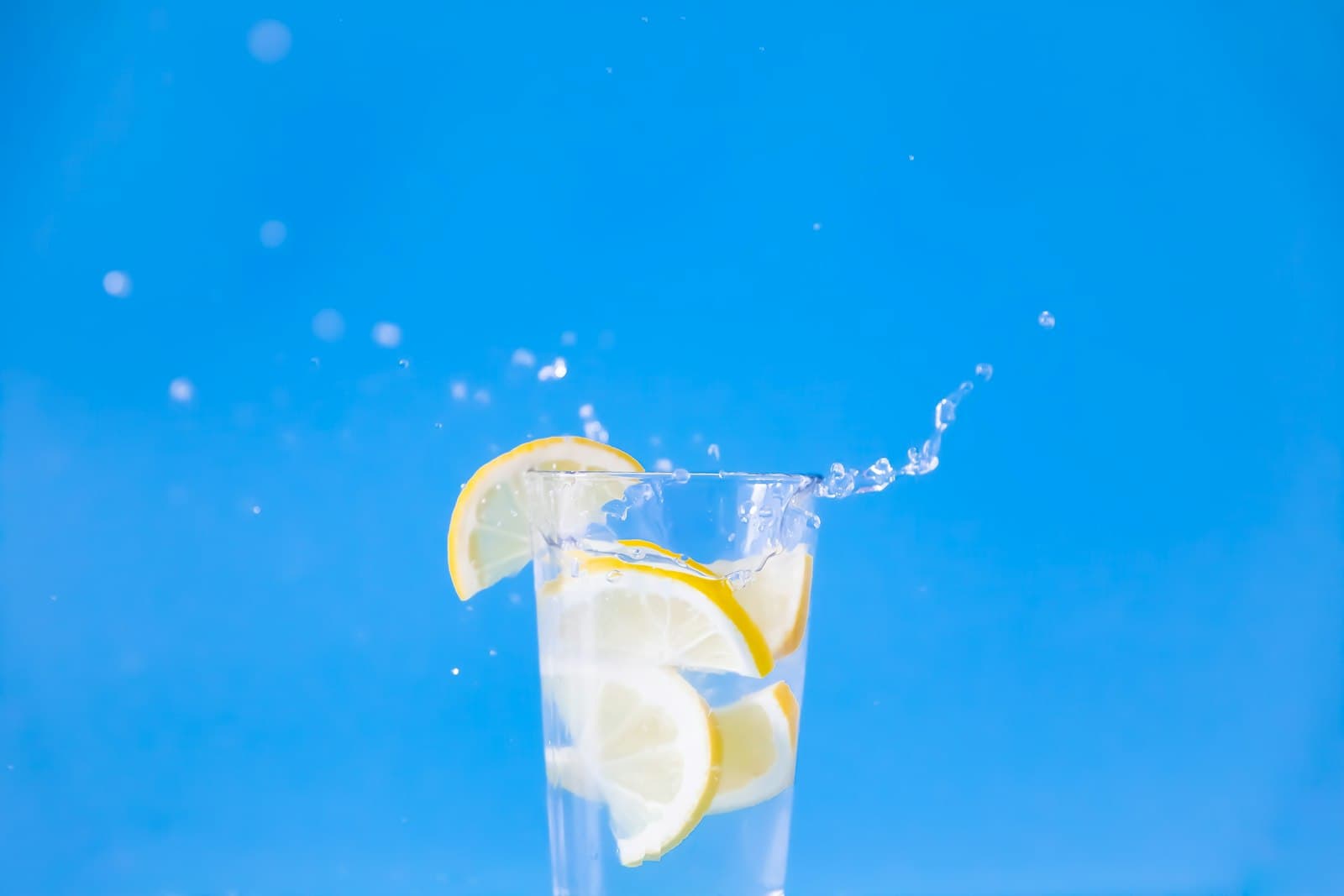
A carbonated drink is best thought of as two drinks at once. One is a gas load: carbon dioxide dissolved under pressure that comes out of solution in your glass, your mouth and your stomach. The other is everything else: water, sugar or sweetener, acids, flavourings, caffeine, and in some products added fibre or alcohol. These two parts act on different parts of the gut and on different timescales.
Official advice treats them as one. The UK's NICE guideline for IBS tells people to "reduce intake of alcohol and fizzy drinks" as part of its first-line dietary advice (NICE CG61). The British Society of Gastroenterology describes that same package of traditional dietary advice and is candid about where it comes from: its own summary lists regular meals, limiting alcohol and caffeine, adjusting fibre and reducing fatty and spicy foods, and says the evidence for this is "based on a combination of clinical experience and the potential mechanisms" rather than on randomised trials (Vasant 2021). Fizzy drinks are not named in that BSG summary at all.
Our sibling article on the worst foods for IBS already covers the headline point: fizzy drinks are on the official list with no blinded trial behind them. This article goes further into the question of why, physically, a drink with bubbles might bother you, why it helps some people, and how to tell whether your problem is the gas or the contents.
What happens to the bubbles in your stomach
The gas goes to your stomach first, and that is where the measurable effects are. The amount is larger than most people imagine. In one MRI study, a 300 ml bottle of a carbonated drink at about 3.7 volumes of carbonation carried roughly 1.1 litres of carbon dioxide when it was opened (Cuomo 2011). Some of that escapes in the glass and the mouth, but compare it with the gut's normal gas content: a CT study of healthy adults found a median of about 95 ml of gas in the entire intestine (Bendezú 2015).
A note on that 1.1 litre figure. The paper gives it as 1,125 ml for a 300 ml drink at "around 3.7" volumes; 300 multiplied by 3.7 is 1,110 ml, so the stated figure implies about 3.75 volumes. The difference is trivial, but it shows the number is an estimate at opening, not a measurement of what reached anyone's stomach.
Several small studies in healthy volunteers describe what the stomach does with that gas:
- The stomach gets bigger, briefly. In the same study, total gastric volume measured by MRI was significantly larger after the carbonated drink than after the same drink de-gassed or water (Cuomo 2011). In another, a highly carbonated glucose drink enlarged the lower part of the stomach during the first 20 minutes, but overall gastric volume and the speed of emptying were no different from the flat version (Lau 2017).
- The meal sits higher in the stomach. In eight healthy volunteers, drinking carbonated rather than still water with a meal did not change how fast the meal emptied, but more of the meal stayed in the upper stomach early on: 74% versus 56% of solids, and 43% versus 27% of liquids (Pouderoux 1997).
- Bloating tracks stomach volume. In an MRI study of 34 healthy adults who drank 500 ml of beer or soda, bloating ratings correlated most strongly with total gastric volume, and women retained more liquid in the stomach than men (Camps 2018).
- You feel fuller. Young women felt significantly fuller after 250 ml of carbonated water than after still water (Wakisaka 2012). A follow-up from the same group found that even holding carbonated water in the mouth and spitting it out produced a transient feeling of fullness (Suzuki 2017), so part of that sensation starts before anything is swallowed.
Most of this gas leaves the way it came in. A 2026 review of belching disorders describes gastric belching as a natural, physiological response to distension: the stretched stomach triggers a brief relaxation of the valve at its top, gas escapes upwards, and up to about 30 belches a day is normal (Liu 2026).
Does the gas from a drink reach your bowel?
Probably very little of it, though we could not find a study that traced the carbon dioxide from a drink through the human gut, so this is an inference rather than a measurement. Two lines of evidence point the same way.
First, the gas you pass from the other end is mostly made in the colon. When researchers analysed every passage of wind from 16 people over four hours, about 74% of it was gas produced inside the bowel (hydrogen, carbon dioxide and methane), and carbon dioxide rose and fell with hydrogen, which suggested it was mainly a bacterial product (Suarez 1997).
Second, the gut is very good at getting rid of gas without you passing it. In 20 healthy people given a meal designed to produce gas, only about 23% of the gas produced by fermentation was passed as wind; the rest had been absorbed into the blood or used up by gut microbes (Mego 2015). If you check the arithmetic in the abstract, 376 ml evacuated out of 1,817 ml produced is about 21%, not 23%. The likely explanation is that 23% is the average of each person's own percentage rather than a ratio of the group averages, which is a normal way to report it, but the abstract does not say.
So the honest picture is this: the gas from a fizzy drink acts mostly in the stomach and upper gut, and is burped or absorbed. The wind and lower bloating that people with IBS complain about hours later is mostly made in the colon by bacteria fermenting carbohydrate, and the carbohydrate may well have come in the same drink.
Why a brief stretch can hurt more when you have IBS
IBS is mainly a problem of how the gut senses what is in it, not of how much is in it. That is why a short stretch that a healthy person barely notices can register as discomfort. The research on this is not about drinks specifically, but it explains the mechanism.
When researchers stretched the stomach of 35 healthy volunteers while infusing gas into the small intestine, they noticed the gas far more (a perception score of 5.6 against 1.9), even though no extra gas was retained (Serra 2002). In other words, a full stomach turned up the volume on sensations from further down. That was in healthy people.
In people with IBS, the same team infused gas directly into the small intestine. After two hours, 18 of 20 people with IBS had retained gas, developed symptoms or developed visible distension, compared with 4 of 20 healthy controls (Serra 2001). The heightened sensitivity is not confined to one place: an older study found people with IBS had lower thresholds not only for rectal stretch but for stretch in the oesophagus too (Trimble 1995).
The clearest demonstration that sensitivity, not gas volume, drives symptoms used drinks. People with IBS and healthy volunteers drank 500 ml containing 40 g of glucose, fructose or inulin. MRI showed similar changes in bowel water and colonic gas in both groups, yet the people with IBS reported far more symptoms (Major 2017). Our article on whether fibre makes IBS worse covers that study in more depth, and the one on looking pregnant from IBS bloating explains why visible swelling is mostly a reflex of the diaphragm and abdominal wall rather than a balloon of gas.
Put together, there is a plausible route for bubbles to bother someone with IBS without ever reaching the bowel: a stomach stretched by gas, in a gut that is more sensitive than average, can amplify the sensations from everything below it. That is a mechanism, not a proven effect, because no one has tested it with fizzy drinks in IBS.
Why fizzy drinks make some people feel better
One of the threads behind this article was titled, in effect, "carbonated drinks seem to relieve my IBS rather than aggravate it", and several replies agreed (r/ibs). Another poster described liking the burp that bubbles bring when they feel full of air (r/ibs). There are two plausible reasons.
The first is the burp. Gas in the stomach provokes the valve at the top of the stomach to open, and a belch that carries out the drink's gas can carry out swallowed air that was already there (Liu 2026). That feels like relief from "gas", but it only works on gas in the stomach.
The second is constipation. Two small trials, neither in IBS, suggest carbonated water may help. In 21 people with functional dyspepsia and constipation, those given carbonated water for about 15 days saw their dyspepsia and constipation scores fall, while those given tap water did not (Cuomo 2002). In 40 older adults confined to bed after a stroke, two weeks of carbonated water increased the frequency of bowel movements compared with tap water (Mun 2011).
Both deserve caution. The 2002 trial was tiny, and its tap-water group started with a higher average dyspepsia score (9.7 against 7.9), so the groups were not well matched. Its abstract reports changes within each group rather than a direct comparison between them, and it describes the trial as double-blind, although it is hard to see how participants could have failed to notice bubbles. We could not read a funding statement for it. The 2011 trial is available to us only as an abstract, and six of its 40 participants dropped out.
If you have IBS-C and find fizzy water helps, that fits these findings without proving anything. Our guide on what to eat with IBS-C covers the drinks with better evidence behind them.
Is it the bubbles or what is in the can?
For most people, what is dissolved in the drink is the more likely trigger, because those ingredients have actual trial evidence in IBS and the bubbles do not. This is the question one r/ibs poster asked directly about zero-sugar energy drinks, and the replies split between the sweeteners, the caffeine and the carbonation (r/ibs).
| Drink | Gas | What else it carries | Best-evidenced IBS concern |
|---|---|---|---|
| Plain sparkling water, seltzer, club soda | Yes | Nothing, or a little mineral content | Stomach stretch only |
| Flavoured sparkling water | Yes | Flavourings; check for juice, syrups or sweeteners | Usually stomach stretch only |
| Regular soda with high-fructose corn syrup | Yes | Sugar that is about 60% fructose | Excess fructose |
| Regular soda with sugar (sucrose) | Yes | Roughly equal fructose and glucose | Sugar load; usually less excess fructose |
| Diet or zero-sugar soda | Yes | Intense sweeteners; some products use sugar alcohols | Sugar alcohols, if present |
| Cola and energy drinks | Yes | Caffeine, often with sugar or sweeteners | Caffeine, plus the sweetener |
| Prebiotic soda | Yes | Often inulin or chicory root fibre | Fructans |
| Beer, cider, alcohol-free beer | Yes | Alcohol (except alcohol-free), fermentation carbohydrate | The carbohydrate and alcohol |
Syrup-sweetened sodas: an excess of fructose
When laboratories analysed popular sugar-sweetened drinks made with high-fructose corn syrup, fructose made up 60.6% of the sugar on average, a ratio of roughly 60 to 40, meaning these drinks contain about 50% more fructose than glucose (Walker 2014). Some pure fruit juices had twice as much fructose as glucose. Table sugar, by contrast, is half and half.
Fructose in drinks is a well-tested IBS trigger. In a blinded rechallenge trial, people with IBS and fructose malabsorption who had improved on a diet low in fructose and fructans were given fructose, fructans, a mix, or glucose as drinks with meals. Symptoms were inadequately controlled in 70% on fructose, 77% on fructans and 79% on the mix, against 14% on glucose (Shepherd 2008). In the MRI study above, a 40 g fructose drink pushed 11 of 29 people with IBS over a symptom threshold, compared with 6 of 29 after glucose (Major 2017).
To make that concrete: if a can's label says it contains 40 g of sugars and the sweetener is high-fructose corn syrup, about 24 g is fructose and about 16 g glucose, an excess of roughly 8 g of fructose. That is a worked example from the Walker ratio, not a measurement of any particular brand. Whether glucose alongside fructose softens the effect is a separate question that our article on fructose malabsorption versus IBS covers.
Sugar-free drinks: check for sugar alcohols
"Sugar-free" is not one ingredient. Some diet drinks are sweetened with intense sweeteners such as sucralose, aspartame or acesulfame, and some products use sugar alcohols (polyols) such as sorbitol, xylitol or erythritol. NICE specifically advises people with IBS and diarrhoea to avoid sorbitol, naming sugar-free drinks among its sources (NICE CG61). Our article on sorbitol as an IBS trigger covers the dose question in detail.
Not all polyols behave the same. In a placebo-controlled study of healthy young adults drinking the sweetener dissolved in water, 20 g and 35 g of erythritol caused no significant symptoms and 50 g caused only more nausea and gut rumbling, whereas 35 g or more of xylitol caused watery stools (Storey 2007). Those were healthy students, not people with IBS, and the doses were larger than a single drink. We could not read a funding statement for this paper.
For intense sweeteners, the evidence is thinner. A 2026 meta-analysis of ten small randomised trials in healthy adults found that sucralose did not significantly change gut bacterial diversity or blood glucose over the short periods studied (Wulandari 2026). We found no blinded trial testing sucralose or aspartame for IBS symptoms. Several replies in the Reddit threads blame sweeteners, one describing a dash to the toilet within half an hour of sucralose or aspartame (r/ibs); that is worth testing in yourself, but it is not evidence that these sweeteners trigger IBS in general.
Caffeine in colas and energy drinks
Colas and energy drinks add caffeine, which is a separate push on the bowel. We cover that in our article on whether coffee is bad for IBS-D rather than repeating it here. The practical point is that a zero-sugar energy drink contains at least three suspects at once: gas, sweetener and caffeine.
Prebiotic sodas and fermented drinks
Drinks marketed for gut health can list inulin or chicory root fibre, and inulin is a fructan, one of the FODMAP groups. In the MRI study, a 40 g inulin drink pushed 13 of 29 people with IBS over the symptom threshold, the highest of the three sugars tested (Major 2017). A single can carries much less than 40 g, but it adds to the day's total. One reply in a Reddit thread warned that these drinks "can backfire" for people with IBS (r/ibs); the label is the place to check. If you are new to the groups, our explainer on what FODMAP stands for sets them out.
Beer and alcohol-free beer carry fermentation-derived carbohydrate as well as gas. One r/FODMAPS poster woke with painful gas the morning after a small glass of alcohol-free beer, and a reply pointed out that fermentation, not just carbonation, was a suspect (r/FODMAPS). Our article on whether alcohol makes IBS worse covers beer, mixers and the night out.
Clairop logs meals, symptoms and stool in seconds, then looks for the foods your gut reacts to, including reactions that land days later.
Does diet soda cause IBS?
There is no good evidence that it does. The question comes up often: a long r/ibs thread asked whether years of diet soda were a common thread among people with IBS, and many replies said no, some having never drunk it (r/ibs).
The research that seems to support a link is weaker than it looks. A 2026 meta-analysis of ultra-processed food and IBS reported its strongest association for carbonated or sugar-sweetened drinks, an odds ratio of 1.98 (Li 2026). Read the full text and that figure rests on just two studies, both cross-sectional surveys:
- A house-to-house survey of 2,774 adults in three villages in Uttar Pradesh, India, where "aerated soft drink" was one of several factors linked to functional gut disorders, alongside chewing tobacco, tea or coffee, vegetarian diet and anxiety (Ghoshal 2017). Only 75 people had IBS alone and 115 had IBS overlapping with dyspepsia.
- A questionnaire of 351 Yemeni medical students, in which drinking carbonated soft drinks was linked to IBS with an odds ratio of 3.35 and a wide confidence interval of 1.14 to 9.88 (Mahyoub 2024).
A cross-sectional survey measures habits and symptoms at the same moment, so it cannot show which came first. People with gut symptoms may change what they drink because of those symptoms, in either direction. The meta-analysis nonetheless describes its pooled result as a "32% greater risk of developing IBS", which is causal language its data cannot support. Its main table also has two oddities we could not resolve from the paper: two different studies are given the identical odds ratio and confidence interval (1.32, 0.99 to 1.75), and two different studies share the same reference number. Both may be transcription errors. The authors declared no funding.
None of these studies separated regular from diet drinks, or carbonation from sugar. They are a reason to keep asking the question, not an answer to it.
Fizzy drinks, heartburn and the upper gut
If your trouble after a fizzy drink is burning, burping or nausea rather than bowel symptoms, the upper gut is the more likely source. IBS often overlaps with reflux and indigestion, which our article on IBS and nausea after eating covers.
The evidence on carbonation and reflux points in two directions. In nine healthy volunteers, carbonated drinks reduced the pressure and length of the valve between the oesophagus and stomach by 30 to 50% for 20 minutes, and in 62% of cases the reduction reached a level normally considered incompetent; tap water had no such effect (Hamoui 2006). Yet a systematic review found only a very brief drop in oesophageal acidity after carbonated drinks, no evidence that they damage the oesophagus, and no consistent link to reflux symptoms, concluding that there was no direct evidence that they promote or worsen reflux disease (Johnson 2010).
Why a fizzy drink can hit you the next day
The bubbles act quickly, so a reaction the next morning probably is not the bubbles. The stomach studies above measured their effects in the first 20 to 30 minutes (Lau 2017; Camps 2018).
Things that need time to reach the colon and ferment work on a slower clock. In the MRI drink study, symptoms after fructose peaked sooner than after inulin, and breath hydrogen, a marker of fermentation, rose earlier with fructose too (Major 2017). A syrup-sweetened soda, a polyol-sweetened drink, a prebiotic soda or a beer can therefore cause trouble hours later, sometimes overnight. One r/FODMAPS poster had exactly this pattern after alcohol-free beer, with a little discomfort at the time and painful gas the following morning (r/FODMAPS).
Our article on how long after eating IBS flares up covers timing in general. The short version for drinks: a quick, upper, full feeling within the hour points towards gas and stomach stretch; lower cramping, wind and loose stools hours later point towards what was dissolved in the drink, or something else eaten the same day.
How to test whether fizzy drinks are your trigger
The way to answer this for yourself is to split the drink into its parts and test them one at a time, while keeping the rest of your diet as steady as you can. Here is a three-week structure.
Week 1: no fizzy drinks. Swap to still water or whatever still drink you know you tolerate. Keep meals ordinary. Note your daily symptoms so you have a baseline. A short weekly score helps you compare weeks fairly:
Week 2: plain sparkling water only. Unflavoured, unsweetened, in the amount you would normally drink. If your symptoms are no worse than week 1, carbonation on its own is probably not your main problem. If they are worse, note when: within the hour and high in the abdomen, or later and lower down.
Week 3: your usual drink, flat. Open it, let it go flat, and drink the same amount. If this week is bad and week 2 was fine, the contents are the suspect. Read the label for high-fructose corn syrup, sorbitol, xylitol or other sugar alcohols, inulin or chicory root, and caffeine.
If week 3 implicates the contents, you can narrow further with the same drink in a sugar-sweetened rather than syrup-sweetened version, or caffeine-free rather than caffeinated. Our guide on how to find out what triggers your IBS explains how to repeat a test so one bad day does not mislead you.
A tracker that lines up drinks and symptoms over several hours helps with the delayed reactions that memory gets wrong. Clairop tests each logged food against three delay windows, from within six hours to one to three days later (how it works), but a notebook with times written down works too.
Practical swaps people use
If the bubbles bother you but you love them, there are compromises. None of these has been tested in a trial; they are logical consequences of the evidence above and things people describe doing.
- Smaller amounts, less fizz. The stomach stretch scales with the gas load. Home carbonation machines let you choose a lighter fizz, as one r/ibs reply pointed out (r/ibs).
- Let it go flat. One person in the threads now drinks ginger ale only once it has gone flat (r/ibs). Flat soda removes the gas and leaves the contents, making it a good test as well as a compromise.
- Away from meals. One r/FODMAPS reply found sparkling water caused more trouble close to meals than between them (r/FODMAPS). That fits the healthy-volunteer finding that a carbonated drink keeps more of a meal in the upper stomach (Pouderoux 1997), but it is one person's experience.
- Step down rather than stop. A route more than one person describes is soda, then flavoured seltzer, then plain water, which separates sugar from bubbles along the way.
- Skip the straw if you belch a lot. For excessive belching linked to swallowed air, the 2026 review lists avoiding straws, gum, sipping and carbonated drinks as the mainstay advice, while noting that this rests on expert opinion with no controlled trials (Liu 2026).
If you are following a low FODMAP diet, plain sparkling water contains no FODMAPs. The diet is meant to be a short, structured process, ideally with a dietitian, followed by reintroduction to find your own thresholds, not a permanent way of eating. Our guide on how to reintroduce foods after low FODMAP covers that stage.
A worked example: three drinks, one answer
Here is a hypothetical example to show how the test can separate suspects.
Sam has IBS with diarrhoea and drinks three cans of a zero-sugar cola a day. Sam assumes the bubbles are the problem because the cola makes them burp and feel bloated soon after.
In week 1, with only still water, Sam's afternoons are calmer and loose stools drop from most days to about two days a week. In week 2, Sam drinks the same volume of plain sparkling water. The early full, burpy feeling comes back, but the afternoon cramps and loose stools do not. In week 3, Sam drinks the cola flat. The full feeling is gone, but the cramping and urgency return within an hour or two.
The label lists caffeine and two intense sweeteners, and no sugar alcohols. So the likely suspect for the bowel symptoms is the caffeine, with the bubbles responsible only for the upper fullness. Sam tries a caffeine-free version of the same cola, still fizzy, and the bowel symptoms stay quiet. Sam keeps the fizz and drops the caffeine, an outcome that "cut out fizzy drinks" would never have found.
The same structure could easily have pointed elsewhere: at sorbitol in a different diet drink, at fructose in a regular soda, or at the bubbles themselves for someone whose main complaint is upper bloating.
Myths about carbonated drinks and IBS
"Carbonation is a FODMAP." It is not. FODMAPs are fermentable carbohydrates. Carbon dioxide is a gas, and plain sparkling water contains no carbohydrate. Whether it bothers you is a separate question from whether it is low FODMAP.
"The gas from soda is the gas I pass later." Probably mostly not. The wind people pass is largely produced in the colon by bacteria (Suarez 1997), and the gas from a drink acts mostly in the stomach and is burped or absorbed. What can reach the colon is the drink's carbohydrate.
"Fizzy drinks are proven IBS triggers." They are on official advice lists, but we found no trial in IBS, and the BSG says traditional dietary advice rests on clinical experience and mechanisms rather than randomised trials (Vasant 2021).
"Diet soda causes IBS." The available evidence is two cross-sectional surveys that cannot show cause and effect (Li 2026).
"Sugar-free is always the safer swap." Not if the sugar-free version uses sugar alcohols. NICE advises people with IBS and diarrhoea to avoid sorbitol, and names sugar-free drinks among its sources (NICE CG61).
"Fizzy drinks cause reflux." They briefly loosen the valve at the top of the stomach in healthy volunteers, but a systematic review found no direct evidence that they promote or worsen reflux disease (Johnson 2010).
If you have Crohn's disease or ulcerative colitis
This article is about IBS, and we found no study of carbonation in inflammatory bowel disease. If you have Crohn's or colitis, do not assume new or worsening symptoms after drinks are an IBS-type sensitivity. A change in your usual pattern is worth raising with your IBD team, because symptoms of active inflammation can look similar.
When to see a doctor
Discomfort after a fizzy drink is common and usually harmless, but some symptoms need checking whatever you think caused them.
It is also worth seeing a doctor if burping has become constant and bothersome, if heartburn persists despite changes you have made, or if you have cut out so many drinks and foods that eating has become stressful. A GP or dietitian can help you test triggers in a structured way rather than by elimination alone.
The short version
Carbonated drinks can make IBS worse, but they are rarely one trigger. The bubbles stretch the stomach for a short time, cause fullness and burping, and in a sensitive gut may amplify other sensations. The contents, such as fructose-heavy syrup, sugar alcohols, inulin and caffeine, are the better-evidenced IBS triggers and are what reach the bowel hours later. We found no trial of fizzy drinks in IBS, so test plain sparkling water, then your usual drink gone flat, before deciding what to give up.