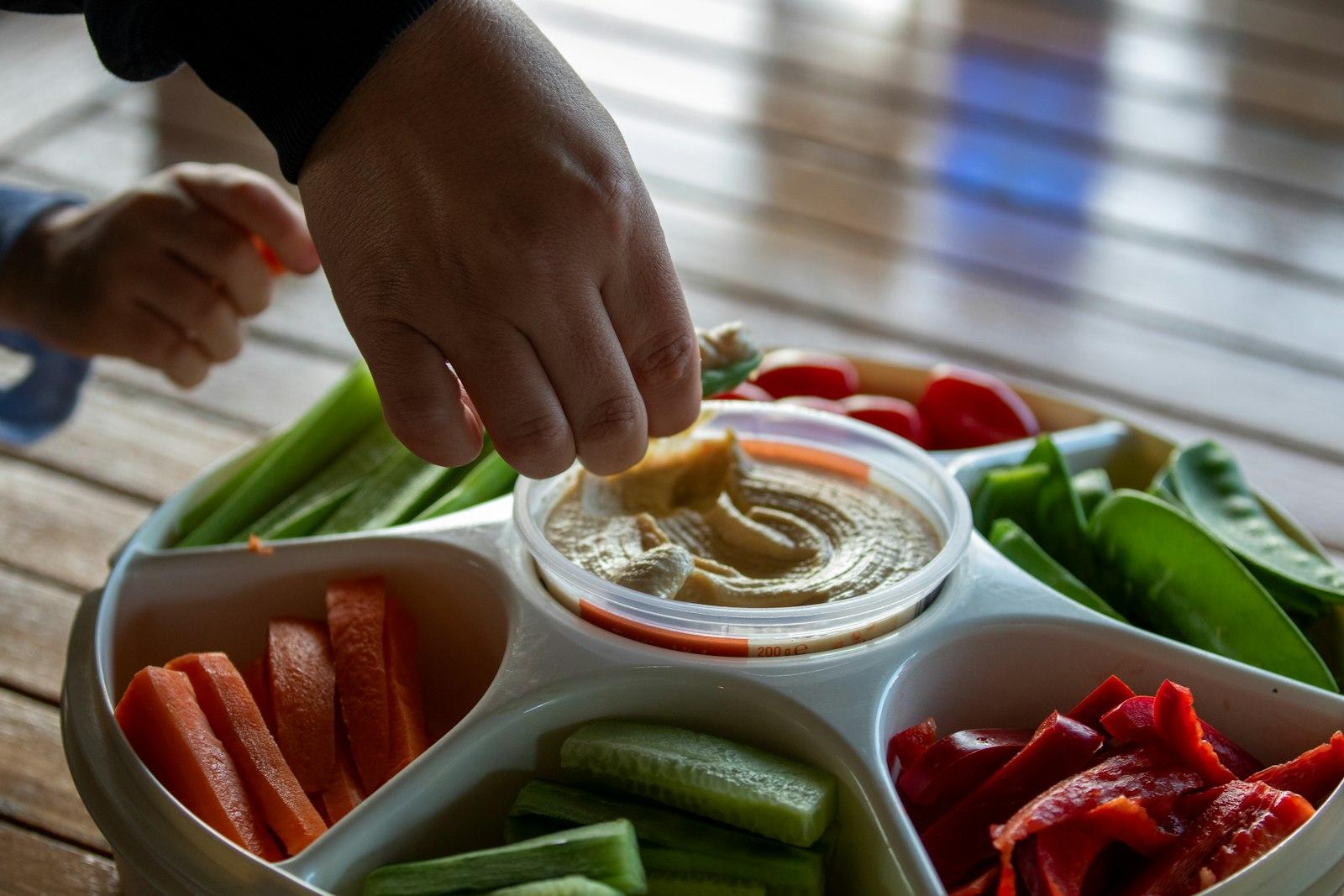
Yes, most people with an ostomy (a surgically created opening, or stoma, that passes stool out of the body) can eventually eat veggies and dip. The usual advice is to leave raw vegetables out for the first 6 to 8 weeks after an ileostomy, then reintroduce them one at a time, chopped small and well chewed. Stringy ones such as celery come last.
This article is general information, not personal medical advice. Your surgeon and stoma (WOC) nurse know your anatomy, your surgery and your recovery, and their instructions override anything written here.
Can you eat raw vegetables with an ostomy at all?
Raw vegetables are not banned with an ostomy. UOAA states there is no specific "ostomy diet", that individual sensitivity to foods varies greatly, and that you work out what suits you by trial, following your nurse or doctor's orders at each stage (UOAA). The real questions are timing, which vegetable, how much, and how well you chew it. Related: raw fruits and vegetables for Crohn's
The question comes from a thread in r/ostomy where someone facing surgery asked whether they would have to say goodbye to veggies and dip forever (r/ostomy thread). It drew more than eighty comments, and the replies are a fair map of how varied the experience is. A common theme was eating bland food for the first month or so, then adding things back slowly and trying again if something goes badly. Several people said they eat salad or raw vegetables years later without a blockage and warned against letting fear run your diet. Others said they avoid raw vegetables entirely because even well-cooked pieces show up in the bag. One person who eats nearly everything mentioned a partial obstruction that made for a miserable day.
Both groups are describing real life, and neither is a medical source. What the thread does not tell a newcomer is which kind of ostomy each person has, or how long ago their surgery was. Those two facts change the answer, so the next sections separate them.
Is it different with an ileostomy, a colostomy or a urostomy?
Yes. An ileostomy brings the end of the small bowel to the surface, so food arrives at the stoma earlier and less broken down. A colostomy uses the large bowel, so stool is more formed. A urostomy diverts urine, not stool, so raw vegetables do not pose a blockage risk at the stoma. The ileostomy is the one the blockage warnings are mostly written for.
UOAA says people who have had ileostomy surgery are most at risk of blockages and dehydration, and that thorough chewing and good hydration are sensible for everyone (UOAA). Colostomy UK says poorly digested food is the main reason people with a stoma develop a partial or complete bowel obstruction, and that with an ileostomy a blockage can develop in under 24 hours, while with a colostomy it tends to build over several days and may start looking like constipation (Colostomy UK).
| Ileostomy | Colostomy | Urostomy | |
|---|---|---|---|
| What comes out | Liquid to paste, small bowel contents | Formed or soft stool | Urine |
| Raw veg after the first weeks | Reintroduce in small, chewed portions | Often return to usual eating with care | No bowel blockage issue |
| Typical early-weeks advice | Avoid raw veg, salad and celery for 6 to 8 weeks (St Mark's) | Cooked, peeled, well-chewed veg first; move back toward usual diet after about 4 weeks (Alberta) | Follow your team's general advice |
| How a blockage tends to look | Can build within 24 hours | Often builds over days, may resemble constipation | Not a food blockage |
| Main extra risk | Blockage and dehydration | Constipation if fiber and fluid are low | Hydration and urine health |
Sources for the table: St Mark's Hospital, Alberta Health Services, Colostomy UK, Ostomy Canada.
If you have an ileostomy and are trying to work out which foods in general cause trouble, our guide to the foods that cause ileostomy blockage covers the full list and the surgical research on why blockages happen. This article stays with the snack tray. If you have a colostomy and want the wider picture, are colostomies as bad as people say? is a good companion.
When can you eat raw vegetables after ostomy surgery?
For an ileostomy, UK hospital advice is to wait about six to eight weeks. A St Mark's Hospital leaflet says that for the first six to eight weeks you should avoid raw vegetables, salad, celery, vegetable skins, peas, sweetcorn, mushrooms and other fibrous foods, and that once the ileostomy has settled you may reintroduce them in small quantities, well chewed (St Mark's Hospital).
For a colostomy the timeline is gentler and varies by service. Alberta Health Services suggests soft, lower-fiber foods in the first two to four weeks, vegetables without skins or seeds, cooked and chewed well, then continuing to add foods after four weeks with the goal of eating the way you did before surgery (Alberta Health Services). Ostomy Canada says colostomates and urostomates can usually return to previous habits, taking it easy for a week or two after leaving hospital with nuts, fruit skins, raw vegetables and popcorn (Ostomy Canada).
Those are services' defaults, not rules. Your own timeline can be longer if you have had a complicated recovery, a narrowing of the bowel, a stricture from Crohn's disease, a hernia, or recent additional surgery. Colostomy UK specifically lists strictures, adhesions, hernias and recent abdominal surgery as reasons to contact your team promptly if you have a suspected obstruction (Colostomy UK). People in r/ostomy often quote four to six weeks of bland eating or six to eight weeks without raw produce, which lines up with the leaflets, but a thread is not your surgeon. Ask at your follow-up appointment: "When can I start trying raw vegetables, and which ones would you start with?"
If you are heading toward a reversal, the rules change again afterward; our ileostomy reversal recovery guide covers the eating side of that.
Which raw vegetables are the riskiest on a veggie tray?
The vegetables named most often are the stringy, tough or skin-covered ones. No trial has ranked raw vegetables by blockage risk, so any ranking is a synthesis of what stoma charities and hospital leaflets list. Treat the tiers below as "go slower with these", not as measured risk.
Ostomy Canada gives the clearest description: celery, asparagus and broccoli can have long fibrous strands that are hard to digest and may "ball up", causing a painful blockage, and it suggests peeling the tough outer stalk or eating only the tender hearts. Mushrooms, especially fresh ones, are described as notorious for going through undigested or causing blockages for some people, and if in doubt about a first-time vegetable it advises peeling the skin and steaming or soft-cooking it (Ostomy Canada). A US health-system page lists raw vegetables, celery, cabbage, bean sprouts, pea pods, corn and mushrooms among foods to be careful with (UMass Memorial Health). The Alberta colostomy handout names celery, cabbage, bok choy, napa cabbage, corn and popcorn as higher-fiber foods that can raise blockage risk while the colostomy settles (Alberta Health Services).
| Tier | Veg tray items | Why they are flagged | What people try |
|---|---|---|---|
| Go slowest | Celery, asparagus, broccoli stalks, raw cabbage, bean sprouts, pea pods | Long fibrous strands or tough sheets | Peel stalks, use tender hearts only, chop very small, or skip raw |
| Go slowly | Mushrooms, raw sweetcorn kernels, tomato skins and seeds | Pieces that pass through intact | Slice thin or peel and deseed, test alone |
| Test in small amounts | Raw carrot, cucumber with skin, bell pepper, cauliflower, broccoli florets, salad leaves | Named only under "raw vegetables" or "salad" in general lists | Cut small, peel cucumber, chew well, one at a time |
| Usually the easier step | Peeled, well-cooked or steamed versions of any of the above | Softer fiber | Roasted or steamed carrot, cooked florets, sieved tomato |
Two honest caveats. First, a vegetable being on a list does not mean it will block you. Royal Devon's colostomy leaflet lists lettuce, celery, green leafy vegetables, tomato skins and seeds and "any raw vegetables" among foods to reduce when output is increased and watery, and offers peeled, well-cooked carrots, zucchini and sieved tomato as easier alternatives (Royal Devon). That is advice about loose output, not blockage. Second, the lists differ between hospitals. One reason is that the underlying research is thin: a scoping review of ileostomy diet found 31 research studies and 44 expert opinion articles or guidelines, and concluded that advice is commonly provided but inconsistent, conflicting and inadequate, with a lack of high-quality research (Mitchell 2021).
In r/ostomy, people describe raw carrot, lettuce and peas emerging looking much as they went in, without any trouble, while others find the same vegetables show up in the bag even when cooked soft. That tells you what to expect, not what to fear.
How do you chew and portion raw vegetables with an ostomy?
Chew until the pieces are small and soft, take your time, and keep the portion modest. Colostomy UK advises chewing food really well until it breaks into small pieces, and eating slowly (Colostomy UK). A St Mark's leaflet adds taking your time and avoiding drinking through a straw or chewing gum, which can increase swallowed air and wind (St Mark's Hospital).
There is no evidence-based number of chews. The reason the advice is so consistent is simple physics. Studies of chewing in healthy adults show that how well people break food down varies a lot between individuals. In a crossover study of 15 people eating rice, the particle size distribution after chewing differed significantly between them, and the amount of undigested material left after in vitro digestion correlated with the share of large particles in the chewed bolus (Ranawana 2010). That study was about blood sugar, not stomas, but the principle carries over: the bigger the pieces leaving your mouth, the more intact material reaches the end of your bowel.
Chewing has limits too. After chewing whole or diced almonds, most particles were still 1000 micrometers across or larger in a study that followed almonds from mouth to stool (Mandalari 2018). Almonds are tougher than any vegetable on a tray, so this is not a claim about carrots. It does show why "chew more" is helpful but not a guarantee, and why chopping the food small before you eat it is a worthwhile extra step.
A practical sequence for the first time you try a raw vegetable:
- Choose a day at home, early in the day, with nothing else new on the menu.
- Cut the vegetable into thin slices or small pieces, and peel it if it has a tough skin.
- Start with a small portion, for example three or four pieces, not a platter.
- Chew each mouthful until it is soft and well broken down, then swallow, and sip fluid between bites.
- Eat slowly and stop if you feel full early or notice cramping.
- Watch output over the next day or so for changes in volume, consistency, pain or swelling.
- If it went well, you can repeat it, then try a slightly larger portion later.
For portion size, a St Mark's leaflet counts two tablespoons of vegetables or a small salad as a portion (St Mark's Hospital). That is a unit of measure, not a recommendation for how much raw veg to eat at once. For a first trial, a few small pieces is a more cautious start.
Is dip safe with an ostomy?
A smooth dip is rarely the issue; the vegetable is. Blockages come from fibrous material that stays intact, and a creamy dip does not add that. But a dip can change other things: how rich the meal is, how salty it is, and how many chewing demands the food puts on you if it is chunky.
None of the guidance we read talks about dips specifically, so this section is reasoned from general ostomy advice rather than from dip research. Ostomy Canada notes that after ostomy surgery high-fat items can be harder to manage (Ostomy Canada), and St Mark's suggests using fats sparingly as part of a general healthy diet while noting some people notice that spicy, fried or heavily seasoned dishes change how they feel early on (St Mark's Hospital). Royal Devon's colostomy leaflet lists spicy food among the things that can contribute to increased watery output (Royal Devon).
Some practical points that follow from that:
- Smooth beats chunky at first. A smooth dip with no seeds, skins or raw onion pieces adds no extra fiber to chew. Salsa with tomato skins and seeds is a different matter, since tomato skins appear on several early-weeks lists.
- Change one thing at a time. If you try a new vegetable and a new dip in the same sitting and your output changes, you will not know which was responsible.
- Portion the dip too. A very rich, spicy or salty dip eaten in volume can change output in some people. A spoonful alongside the vegetable is a gentler test than a bowl.
- Mind the drinks. Fizzy drinks and alcohol are often present at the same occasions as veggies and dip. Royal Devon's leaflet lists fizzy drinks and beer among things that may increase wind, and Alberta Health Services lists alcohol and fizzy drinks among foods and fluids that may cause gas or odor, so if you are testing a vegetable, keep the rest of the evening ordinary.
Stoma services also stress fluid. A St Mark's leaflet suggests at least 8 to 10 cups of fluid a day (1.5 to 2 liters) for people with a new ileostomy, with extra salt rather than extra fluid if output is high (St Mark's Hospital). For more on hydration, see how much water to drink with an ileostomy.
How do you test a vegetable you are nervous about?
Test one vegetable at a time, in a small portion, and give each trial a fair chance before drawing conclusions. Royal Devon's colostomy leaflet advises introducing only one new food at a time so symptoms can be linked to a specific food, and if a food seems to cause increased wind or output, cutting it for a few days and trying it again to check it was not a one-off (Royal Devon). Colostomy UK suggests trying a suspect food at least three times, with a couple of weeks between attempts, before eliminating it altogether (Colostomy UK).
That "try again later" approach matters because the alternative, which many people drift into, is to remove a food after one bad day and never test it again. A UK study of people with ileostomies found that over 85% avoided foods, particularly fruits and vegetables. At 6 to 10 weeks after surgery the most common reason was being advised to (71%), and 53% avoided foods because of gas. At 12 months or more, the most common reasons were seeing foods in the bag (60%) or having been advised to (60%) (England 2023). The study was small, with 17 people at 6 to 10 weeks, 16 with an established ileostomy and 20 after reversal, but its authors concluded that after the initial recovery period, foods should not be automatically excluded unless found to be problematic after reintroduction.
A simple testing ladder many stoma teams would recognize:
- Cooked and peeled. Steamed or roasted carrot, peeled zucchini, sieved tomato.
- Cooked with skin or more fiber. Steamed broccoli florets, cooked peppers.
- Raw, soft and thin. Thinly sliced cucumber with the skin removed, grated raw carrot.
- Raw, firmer. Carrot sticks cut thin, bell pepper strips, cauliflower florets in small pieces.
- Raw and stringy. Celery with the tough outer strings peeled, tender hearts first, asparagus tips.
You can stop on any rung. Plenty of people are happy at rung three and never need celery. The point is that you decide based on your own results, not on a list.
What if you see vegetables in your ostomy bag?
Seeing pieces of vegetable in your bag is common and not in itself a sign of a problem. Small bowel digestion does not break down plant cell walls and some fiber, so recognizable bits of carrot, pea skin or lettuce can come out looking much as they went in. In the UK study above, food being visible in the bag was one of the two most common reasons for avoiding foods at 12 months or more (England 2023), which shows how many people react to it by cutting foods out.
The difference between "visible" and "stuck" is output. If you are emptying your bag at your usual pace and the output is normal for you, undigested pieces are a nuisance and a reminder to chew, not an emergency. What people report in r/ostomy is a mix: some see pieces and shrug, some feel anxious each time. Interviews with 26 people with ileostomies, 12 stoma care nurses and 12 dietitians in the UK and Australia found persistent dietary restriction, explicit fear of food blockages and reliance on online forums when professional follow-up was limited (Magee 2026). If fear of seeing food in the bag is steering your whole diet, ask your stoma nurse or a dietitian to look at the pattern with you.
Do raw vegetables really cause blockages?
Raw vegetables can contribute, but the strongest measured risk factors for stoma outlet obstruction are anatomical, not dietary. In a meta-analysis of 16 cohort studies covering 2,228 patients, a loop ileostomy carried roughly six and a half times the odds of stoma outlet obstruction compared with an end ileostomy (odds ratio 6.53, 95% CI 2.83 to 15.03) (Toffaha 2025). A second meta-analysis found that high-output stoma and thicker rectus abdominis muscle were significant risk factors (Gan 2025). Both were in people after colorectal surgery, not specifically IBD, and observational.
That does not mean food is irrelevant. Colostomy UK still names poorly digested food as the main reason people with a stoma get a partial or complete obstruction (Colostomy UK). The honest reading is that diet is one factor among several, and that you cannot predict your own risk from a list. The longer discussion, including the surgical trials, is in our post on foods that cause ileostomy blockage.
What are the signs of a blockage after eating raw vegetables?
The main sign is output that slows or stops. Colostomy UK lists reduced output needing the pouch emptied less often, cramping pain near the stoma or across the abdomen, swelling of the abdomen or stoma, reduced urine, and nausea or vomiting (Colostomy UK). Our full guide to the signs of an ileostomy blockage walks through the sequence in more detail, including the misleading watery stage.
This is also the stage where forum folk remedies come up. We would not rely on them. A stoma team will tell you what they want you to do for a partial blockage, and it may differ depending on whether you have an ileostomy or colostomy, or a known narrowing.
Clairop logs meals, symptoms and stool in seconds, then looks for the foods your gut reacts to, including reactions that land days later.
Is it worth eating raw vegetables at all?
Vegetables are a main route to dietary fiber, which is linked to better long-term health in the general population, so it is reasonable to want them back. A large set of reviews of prospective studies and trials found that the highest fiber eaters had 15 to 30% lower all-cause and cardiovascular mortality and lower incidence of several conditions compared with the lowest, with the greatest risk reduction at 25 to 29 g of fiber a day (Reynolds 2019). That research excluded people with chronic disease, so it does not tell you what an ostomate should eat, and fiber is not only found in raw vegetables.
In the UK ileostomy study, fiber intake was lower than the population median in people with an ileostomy (England 2023). The usual middle path is not raw-only or nothing. Cooked, peeled and puréed vegetables count too, and St Mark's explicitly suggests well-cooked or puréed vegetables, vegetables in soup or casseroles, and peeled or stewed fruit if some fruit and vegetables upset you (St Mark's Hospital). If you are avoiding most vegetables a year after surgery, that is worth raising with a dietitian. Advice written for week three is not meant to be followed forever. In the UK and Ireland survey, only 29% had received advice from a dietitian, against 60% who would have preferred to (Mitchell 2020).
What if the advice you get is conflicting?
It often is, and you are not imagining it. In an online survey of 291 people with an ileostomy in the UK and Ireland, 62% felt at least some of the advice they received was conflicting (Mitchell 2020). Interviews with 21 healthcare professionals found that profession strongly shaped the advice given, and that the lack of research and consensus contributed to mixed messages (Mitchell 2023).
When two sources disagree, use this order: your own surgeon or stoma nurse, then your hospital's leaflet, then a national charity (UOAA, Ostomy Canada, Colostomy UK), then forums. Ask them to be specific: which vegetables, prepared how, after how many weeks, and what they want you to do if output slows.
If you also live with Crohn's or ulcerative colitis, the wider question of raw vegetables in IBD is covered in raw fruits and vegetables for Crohn's disease and can you eat vegetables with ulcerative colitis. For the difference between "low residue" and "low fiber" wording on leaflets, see low residue vs low fiber diet.
How can a food log help you try vegetables again?
A short log turns "I think celery bothered me" into something you can check. Write down the vegetable, how you prepared it, how much you ate, how well you chewed, and what your output did over the next day: volume, consistency, pain, swelling, gas. Our guide to tracking food triggers with an ostomy shows a simple way to do it on paper or a phone.
If you prefer an app, Clairop logs meals by tap, voice, typed sentence or photo, and lays them on a timeline beside symptom entries so you can see the food and the output together. It cannot tell you whether you have a blockage, but the record is useful to show your stoma nurse. Our best food and symptom tracker apps list compares the options.
What should you ask your stoma nurse?
Bring specific questions to your next appointment:
- When can I start trying raw vegetables, given my type of stoma and my surgery?
- Which vegetables would you start with, and which would you leave until last?
- How should I prepare them (peel, cook, chop, grate)?
- How much fluid and salt should I aim for, and does that change with the foods I am adding?
- What counts as a blockage for me, and when should I call rather than wait?
- Do I have any narrowing, hernia or Crohn's disease that changes this advice?
The short version
Veggies and dip are usually back on the menu, but they come back in stages. Wait for your team's go-ahead, begin with cooked and peeled, move to thin, small raw pieces, treat celery and other stringy vegetables as the last rung, chew far more than feels natural, drink fluids, and change one thing at a time. If output slows or stops with cramping, swelling or vomiting, get help promptly. Ask your stoma nurse or dietitian to set the pace.