Yes, many people with Crohn's disease can eat some raw fruit and vegetables, but whether you can depends on three things: whether you are in a flare, whether you have a narrowed section of bowel (a stricture), and what you have had removed. A stricture is a scarred, narrowed stretch of bowel that food can get stuck in. Raw produce is the food group where the question "is it safe?" has the most different answers, and a stricture is the one answer that matters most.
This article is about raw produce specifically: skins, seeds, leaves, salads and fresh fruit. It sorts out what the guidelines say, why one person eats a whole salad and another ends up in hospital after an apple skin, which raw foods people most often report tolerating, and how to add them back without guessing. If you want the wider fiber picture, our companion guide on whether fiber is good or bad for Crohn's disease covers it. For the flare itself, see what to eat during a Crohn's flare-up.
Nothing here replaces advice from your gastroenterologist or an IBD dietitian. Where the evidence is thin we say so, because on this topic it often is.
Can you eat raw fruits and vegetables with Crohn's disease?
For many people, yes in remission and sometimes in small amounts, but a flare or a stricture can make raw produce painful or risky. The American Gastroenterological Association (AGA) advises that unless there is a contraindication, everyone with IBD should follow a Mediterranean-style diet rich in a variety of fresh fruit and vegetables. In the same document it says people with symptomatic strictures may not tolerate fibrous, plant-based foods such as raw fruit and vegetables because of their texture (Hashash 2024).
That pairing is the whole story in two sentences. The general advice is to eat plants. The exception is a mechanical one: if a section of your bowel is narrowed, how coarse the food is matters more than which plant it came from. The AGA's suggested workaround for strictures is not to drop fruit and vegetables but to chew carefully and cook or process them to a soft, less fibrous consistency, so people with strictures can still eat a wider variety of plants and get fiber. Popcorn raises the same questions about tough fiber; see can you eat popcorn with Crohn's disease?.
The AGA describes this as a clinical practice update based on existing literature and expert opinion, not a systematic review, and it did not formally grade the evidence. In other words, this is the best available guidance, not hard trial data. It is also guidance for the average person with Crohn's. It cannot know where your disease sits, how long it has been quiet, or whether you have had surgery, which is why your own team's view outranks any list in this article.
What do people in r/CrohnsDisease actually report eating raw?
Replies range from "I can eat anything" to "I cannot eat any fresh fruit or vegetables," and both are real. That spread is the most useful thing the community shows you, because it tells you not to expect your answer from anyone else's list.
In a recent r/CrohnsDisease thread asking which raw fruit and vegetables people can eat, the most upvoted replies split into three groups. The largest group described being able to eat most things but paying for it later in the bathroom, which is a useful reminder that "tolerated" can mean "no pain" rather than "no effect." The next most common reply listed melon, usually cantaloupe, watermelon and honeydew. A third group wrote long, oddly specific lists: romaine leaf but not the stem, butter lettuce, baby spinach without stems, skinned apples, seedless strawberries, blueberries, canned but not fresh pineapple, peeled cucumber. The same person who could eat those could not eat carrots, celery, most squash or corn, which they noted seemed random.
A few patterns in that thread are worth taking seriously because they recur everywhere:
- Portion and frequency. Several people said they could eat most produce in small amounts but not several days in a row.
- Skins, seeds and stems come off first. Almost every "I can eat it" list is peeled, seedless or stemless.
- Acidity. One person found salads easier with lemon juice or vinegar. There is no research behind that here, so treat it as a curiosity rather than advice.
- Some people avoid everything. A handful said they had stopped eating fresh fruit and vegetables entirely after bad experiences, and several said they avoided berries out of sadness more than evidence.
A second thread, "Do apple peels cause you pain?", is where the stricture warning shows up in the community's own words. The top reply told the asker to check with their gastroenterologist about strictures before trying it, because apple peel can cause a blockage. Other replies described hospital admissions after eating apple with the skin, and plenty of people said they only eat applesauce, cooked apple or peeled slices now. Replies also included a note that a gastroenterologist had advised chewing thoroughly and avoiding fruit skins.
None of that proves anything about your gut. It describes what people report, and it shows why asking about strictures first is the single best-supported piece of advice in the whole discussion.
Why can raw produce cause problems in Crohn's disease?
Raw produce is harder on a Crohn's gut for two separate reasons, one chemical and one physical, and only the physical one involves a stricture.
Fiber type and speed. The Crohn's and Colitis Foundation separates fiber by how it behaves in water: a fresh raspberry disintegrates quickly, so it is mostly soluble fiber, while an apple skin does not dissolve and is mostly insoluble fiber, which the Foundation says can cause more frequent or urgent trips to the bathroom (Crohn's & Colitis Foundation). Its list of common trigger foods includes raw kale, apple skin and sunflower seeds under insoluble fiber, and Brussels sprouts, cabbage, cauliflower and asparagus as high-fiber foods. A trigger food, the Foundation notes, causes symptoms but does not necessarily cause harm or inflammation.
That distinction is worth holding on to. Feeling bad after raw broccoli does not mean raw broccoli inflamed your bowel. It may only mean the coarse fiber sped things up or produced gas in an irritable segment.
Physical bulk and narrowing. A stricture is a narrowed section of intestine, usually from repeated inflammation and scarring. Anything that does not break down can get stuck there. Plant matter is the classic culprit: a published case report is titled "Small bowel obstruction by phytobezoar in Crohn's disease: strictureplasty," describing a plant-fiber mass blocking the small bowel and needing surgery (Taylan 2010). That is one case report, not a rate. We could not find a reliable figure for how often raw produce causes blockage in people with Crohn's strictures, and we will not invent one.
The European Crohn's and Colitis Organisation (ECCO) publishes a topical review on diagnosing and managing fibrostenosing Crohn's disease (Rieder 2016). The practical point for readers is that strictures are found with imaging or endoscopy and managed by your IBD team, not diagnosed by what a food does.
Do I have a stricture, and why does it change the answer?
A stricture is a narrowed section of bowel, usually from repeated inflammation and scarring, and it changes the answer because coarse, skinned or seeded produce can lodge there. It is found with imaging or endoscopy, not by how a food feels, so ask your team rather than guessing. You cannot reliably tell from how you feel, so ask. If you have never been told whether you have strictures, that is the first question to put to your gastroenterologist before you experiment with skins, seeds or raw salad.
Symptoms people commonly describe with a narrowed section include cramping pain that comes on after eating (often after fibrous food), bloating, nausea, and a sense that food is "stuck." None of those is specific. They also occur in active inflammation, in IBS-type symptoms alongside Crohn's, and after surgery. This is why imaging, not a food diary, makes the call.
What a stricture changes in practice:
- The AGA's advice for people with symptomatic strictures is to cook and process produce to a soft consistency and chew carefully (Hashash 2024).
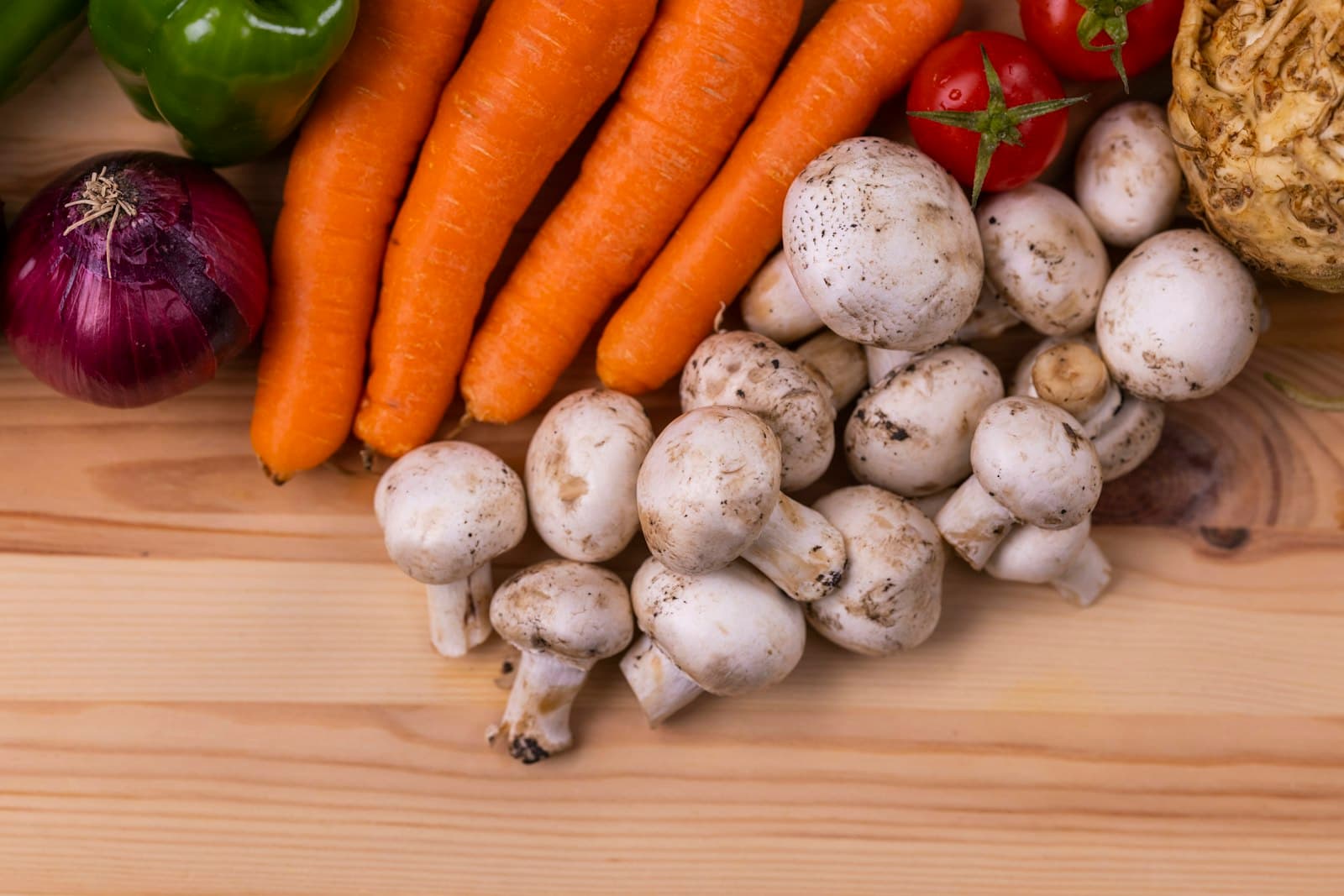
- The Crohn's and Colitis Foundation lists foods that could be problematic with stricturing Crohn's: mushrooms, popcorn, steak, dried meats or fruit, raw nuts and salads. It adds that depending on how symptomatic you are, you may need to adjust the amount and texture of other foods too, not only those with fiber (Crohn's & Colitis Foundation).
- Even once remission arrives, the Foundation says people with stricturing disease should ask their doctor whether to keep adjusting food texture.
Notice what is missing from all of that: a blanket instruction to avoid fruit and vegetables. The advice is to change the form.
Raw or cooked: which is better for Crohn's?
Cooked, peeled and blended produce is usually easier in a flare or with a stricture, and raw soft produce is often reintroduced in remission. Cooking softens the plant's structure, and peeling, deseeding or blending shrinks the particle size that reaches the narrow section of gut. Tomatoes are a good worked example of raw versus cooked versus sauce: see can I eat tomatoes with Crohn's disease.
The Crohn's and Colitis Foundation gives a useful way to think about this through three dials: type, texture and amount. On texture, it says raw kale and blended kale contain the same amount of insoluble fiber, but blended kale is much better tolerated because it behaves more like soluble fiber in the intestine. It also suggests nut butters instead of raw nuts (Crohn's & Colitis Foundation). A related Foundation article quotes a dietitian suggesting you imagine whether food would fit through a strainer: the smaller the pieces, the more likely you are to tolerate them. It also points out that canned and frozen produce is typically peeled and chopped and soft once thawed, which makes them useful options (Crohn's & Colitis Foundation 2025).
Here is how the same produce can change as you move down the form ladder. This is a working guide drawn from the Foundation and AGA advice above, not a list of what is safe for you.
| Produce | Harder to tolerate | Often easier |
|---|---|---|
| Apple | Raw with skin | Peeled slices, applesauce, cooked apple |
| Leafy greens | Raw kale, stems, ribs | Tender leaves (butter lettuce, baby spinach), cooked and chopped, blended |
| Carrot | Raw sticks | Cooked until fork-tender |
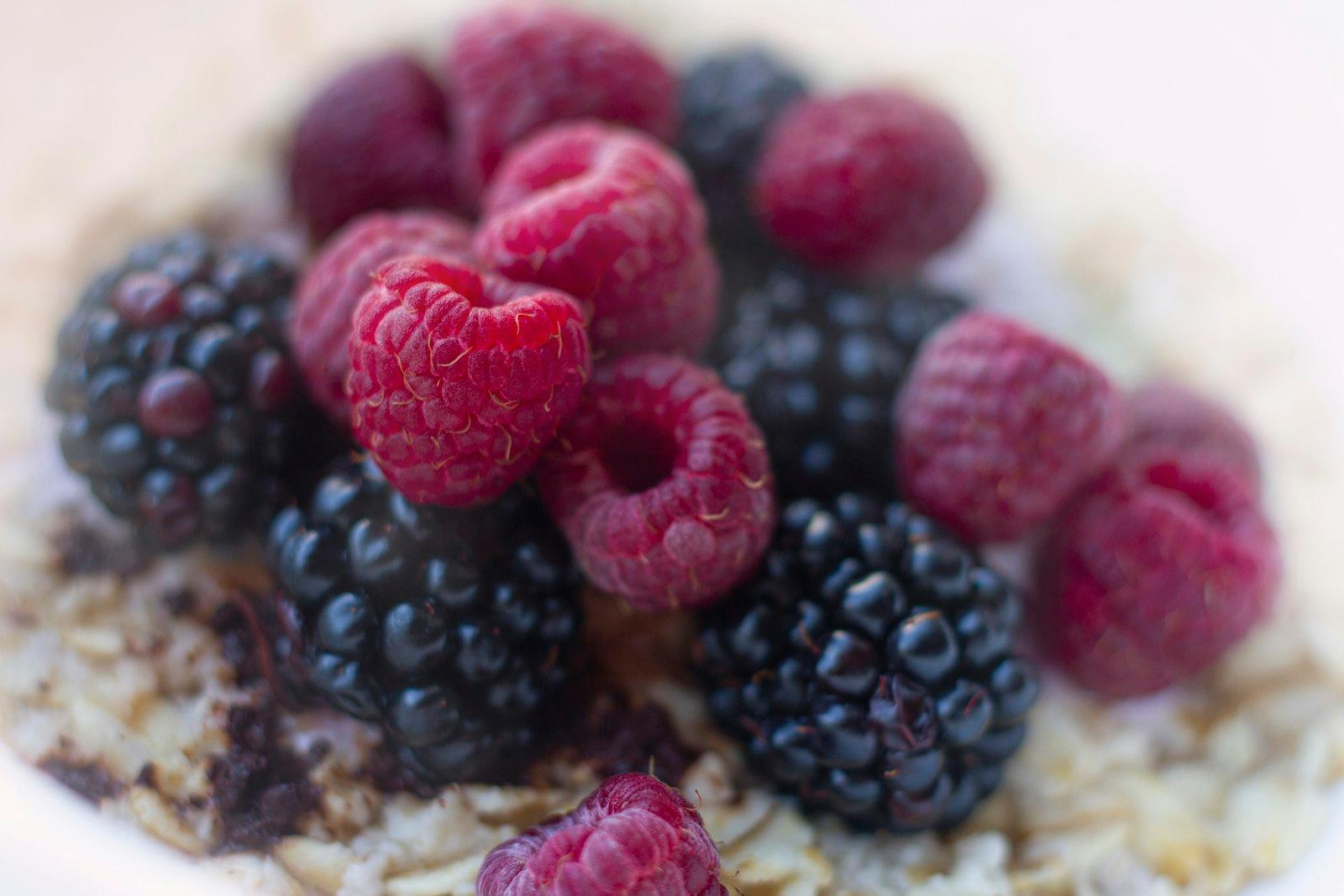
| Berries | Seeded berries (raspberry seeds, strawberry seeds) | Blended, strained or seedless options |
| Stone fruit | Skin on, underripe | Ripe, peeled |
| Squash and pumpkin | Skin, stringy flesh | Peeled, cooked soft, puréed |
| Cucumber | Skin and seeds | Peeled, seeds scooped |
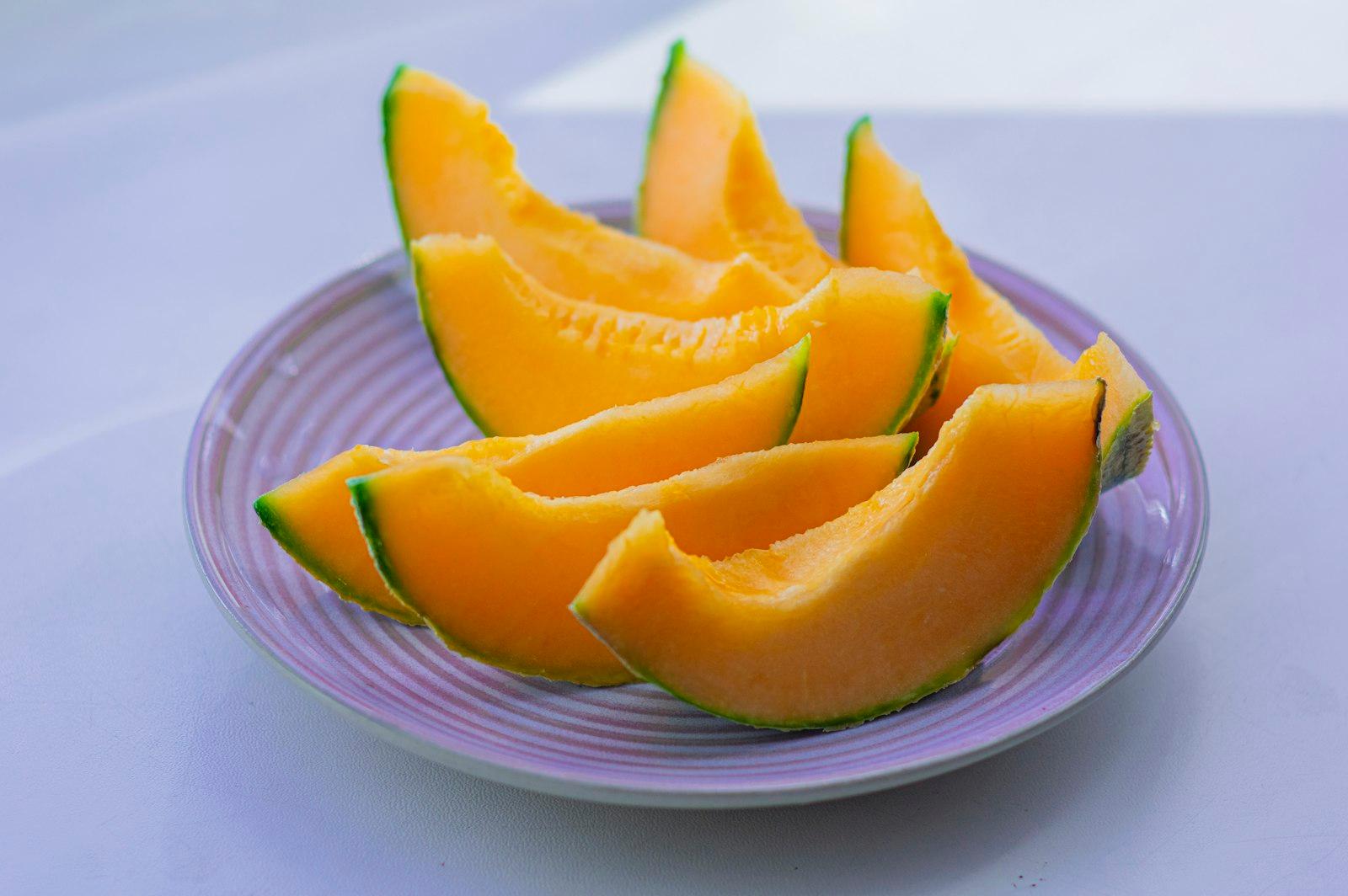
| Melon | Underripe, firm flesh | Ripe, soft flesh |
| Cabbage family | Raw cabbage, raw broccoli stalks | Well cooked, florets only, soups |
If you eat a lot of cooked food and want a more thorough explanation of what "low fiber" and "low residue" mean, our comparison of low-residue vs low-fiber diets is the place to go. The short version is that the two terms are used interchangeably in research and there is no agreed quantitative definition of a low-residue diet (Vanhauwaert 2015).
What do guidelines say about fiber and fruit and vegetables in Crohn's?
Guidelines say to keep eating plants and restrict fiber only for strictures, not for Crohn's in general. The evidence for fiber "preventing flares" is observational and mixed, and no diet has consistently been shown to reduce flare rates in IBD.
Here is what is on the record:
- AGA (2024). A Mediterranean-style, fruit- and vegetable-rich diet for everyone with IBD unless contraindicated, with texture accommodations for strictures. It also states plainly that no diet has consistently been found to decrease the rate of flares in adults with IBD, and that a diet low in red and processed meat has not been found to reduce relapse in Crohn's (Hashash 2024).
- The International Organization for the Study of Inflammatory Bowel Diseases (IOIBD). Its expert dietary guidance document, written from the best current evidence, is the source the Crohn's and Colitis Foundation cites for its "foods to add" and "foods to limit" lists. The Foundation's resulting suggestions for increasing include bananas, raspberries, applesauce and blended fruit, and squashes, fork-tender cooked carrots and green beans (Levine 2020). That list is IOIBD guidance as passed on by the Foundation, which is why it skews soft and cooked.
- A systematic review of randomized trials of fiber in IBD found 23 trials; in Crohn's disease, none of the 12 studies reported a benefit on disease activity. The authors also concluded that, excluding overt gastrointestinal obstruction, there was no evidence that fiber intake should be restricted in IBD (Wedlake 2014). Read that carefully: no evidence of benefit for treating disease, and no evidence of harm that justifies restricting it.
- A 2023 systematic review and meta-analysis pooled 11 studies and 2,389 people with Crohn's and concluded that a diet rich in fiber, with or without usual therapy, improved remission rates (Serrano Fernandez 2023). It is a supportive finding, but it pools fiber-rich diets in general, not raw fruit and vegetables specifically.
For a plain-language walk through of how fiber types behave, see our guide to whether fiber is good or bad for Crohn's disease.
Is avoiding raw produce linked to more Crohn's flares?
In observational data, yes, an association, but it cannot show that avoiding fiber caused the flares. People who felt worse may have avoided more fiber because they felt worse.
The best-known study is from the CCFA Partners internet cohort. Among 1,619 people in remission, those with Crohn's disease in the highest quartile of fiber intake were less likely to flare at six months than those in the lowest quartile (adjusted odds ratio 0.58, 95% CI 0.37 to 0.90). People with Crohn's who said they did not avoid high-fiber foods were about 40% less likely to flare than those who did (adjusted OR 0.59, 95% CI 0.43 to 0.81). The authors also found that people with longer disease duration, a history of surgery or a past hospitalization ate less fiber (Brotherton 2016). That last finding is the catch: the people most likely to flare again are also the people most likely to restrict, so the pattern could run in either direction.
A separate, larger prospective study looked at whether fiber intake changes the chance of developing Crohn's in the first place. Among 170,776 women followed for 26 years, the highest fiber quintile (a median of 24.3 g a day) had about a 40% lower risk of Crohn's (hazard ratio 0.59), and the association was strongest for fiber from fruit; it was not seen for ulcerative colitis (Ananthakrishnan 2013). This is about onset, not about managing established disease or strictures, so it does not tell you what to eat today.
Put together, the evidence supports not cutting out plants unnecessarily. It does not support forcing raw produce through pain, and it says nothing about people with strictures.
What is wrong with avoiding fruit and vegetables entirely?
Total avoidance is common but it carries its own risks: less variety, lower fiber and a higher chance of malnutrition and anxious eating. These risks are real even when the avoidance feels sensible.
In a cross-sectional study of 161 people with IBD, 92% avoided at least one food when symptomatic and 74% kept avoiding at least one food even without symptoms. Seventeen percent screened positive for avoidant restrictive food intake disorder (ARFID), and they were far more likely to be at risk of malnutrition (Yelencich 2022). A systematic review of 26 studies found that people with IBD typically eat less fiber than healthy comparison groups, with intakes ranging from about 10 to 21 g a day in the studies reviewed, and only 10% to 21% meeting national recommendations in four studies (Day 2021).
In the CCFA Partners survey, patients most often named non-leafy vegetables, fruit, leafy vegetables and high-fiber foods among foods they believed made symptoms worse, and yogurt, rice and bananas among those that helped (Cohen 2013). The authors concluded that patients identify foods they think worsen symptoms and restrict their diets accordingly, and that prospective studies were needed to learn whether diet affects the disease course. Belief is a legitimate starting point, but beliefs formed during a flare tend to stick long after the flare is gone.
The Crohn's and Colitis Foundation's advice on this is clear: if you feel restricted, your diet is likely lacking variety, and an IBD-focused dietitian can help work out what is triggering symptoms. It also cautions against restrictive diets recommended by friends or the internet unless a clinician has set them up, because of nutrient deficiency, unplanned weight loss and disordered eating risks (Crohn's & Colitis Foundation). The European society ESPEN also publishes a clinical nutrition guideline for IBD that dietitians and doctors can use when nutrition is at risk (Bischoff 2023).
Clairop logs meals, symptoms and stool in seconds, then looks for the foods your gut reacts to, including reactions that land days later.
Which raw fruits and vegetables are usually tolerated?
There is no tested "safe list" for Crohn's, but a pattern shows in both clinical advice and community reports: soft, ripe, peeled and seedless first, and coarse, skinned, stringy or seeded last. The same step-by-step testing applies to nuts and nut butter.
Foods that dietitians and the Foundation name as gentler starting points include bananas, avocados, soft melons such as papaya, ripe peeled peaches, peeled potatoes, and cooked, fork-tender squash, carrots and green beans (Crohn's & Colitis Foundation 2025). In the r/CrohnsDisease thread, melon, ripe banana, avocado, ripe mango or peach, peeled cucumber, tender lettuce and baby spinach were among the raw items people said they handled, usually with conditions attached.
Foods that more often cause trouble in the same sources are:
- raw kale, raw cabbage, raw cauliflower, Brussels sprouts and asparagus (listed as high-fiber trigger foods)
- apple skin and other tough fruit skins
- seeds and seeded berries
- corn and popcorn
- salad greens with stems and ribs, particularly if you have strictures
- dried fruit
The common factor is not "raw" itself but toughness, skins, seeds and stringiness. That is why "raw versus cooked" is a less useful question than "how coarse is this when it reaches my gut?"
Remember that a list tells you what to try, not what will work. One person in the thread could eat romaine but not carrots, which a general list would predict the other way round. Your own record is better evidence than any list.
How do I add raw fruit and vegetables back to my diet?
Add them back one food, one form and one small portion at a time, only once your team confirms inflammation has settled, and watch for two to three days before judging. The Foundation advises adding fruit and vegetables slowly rather than all at once, because adding a lot at once can increase frequent and urgent trips to the bathroom.
This is a practical plan, not a prescription. If you have strictures, had surgery, or are underweight, ask your team or an IBD dietitian before you start.
Step 1: check the starting point. Make sure you are not in a flare. If you are unsure, our guide to how to tell if you are in a Crohn's flare covers it, and your team can confirm with a calprotectin test or imaging. Reintroducing food during active inflammation makes every result hard to read.
Step 2: ask about strictures and surgery. If you have a stricture, raw skins, seeds and stringy produce are the first things to ask about, and your team may want you to stay with cooked or puréed forms.
Step 3: pick one food in its gentlest form. For example, a few slices of ripe melon, not a fruit salad. Having a single item is the only way to know what caused what.
Step 4: small portion, well chewed. Start with a few mouthfuls. Chewing thoroughly and avoiding fruit skins was the advice one person in the community said their gastroenterologist gave them.
Step 5: log it and wait. Note the food, the form (raw, peeled, cooked, blended), the portion and how you feel over the next two to three days, since reactions to food can be delayed.
Step 6: repeat before you decide. One good or bad day is noise. Try it two or three times before you call it safe or a trigger, and do not stack it with other new foods.
Step 7: step up one dial. If peeled worked, try with skin another day. If cooked worked, try soft raw. Move only one dial at a time. Several people in the community said they could manage most produce in small portions but not several days in a row, so try spacing as well as size.
Here is what a gentle reintroduction ladder might look like. The order is illustrative. Your team can tell you where it should start.
| Stage | Examples | What you are testing |
|---|---|---|
| 1. Soft and cooked | Cooked carrot, squash, peeled potato, green beans, applesauce | Baseline tolerance of cooked plants |
| 2. Soft and raw, peeled or seedless | Ripe banana, ripe melon, avocado, peeled ripe peach, peeled cucumber | Can raw texture be handled? |
| 3. Tender raw leaves | Butter lettuce, baby spinach without stems, romaine leaf only | Leaves in small amounts |
| 4. Skins, seeds, stems | Apple with skin, seeded berries, celery, broccoli stalks | The harder, riskier textures (only if no stricture concern) |
| 5. Mixed and large portions | Full salad, raw vegetable platter, several portions in a day | Real-life eating |
Our related guides for other conditions run the same slow approach. The ulcerative colitis version is can you eat vegetables with ulcerative colitis, and for those with a stoma, can you eat veggies and dip with an ostomy covers raw vegetables with an ileostomy or colostomy. If you have an ileostomy, also see foods that cause ileostomy blockage, because the stringy-and-skinned rules are stricter there.
What should I log when testing raw foods?
Log the food, the form, the portion, the timing and the next two to three days of symptoms, plus whether you were in a flare, because without those you cannot separate food from everything else going on. A written record is more reliable than memory, especially when reactions are delayed.
A minimal log might have these columns:
| Date and time | Food | Form (raw, peeled, cooked, blended) | Portion | Other new foods or stress that day | Symptoms in the next 24 hours | Symptoms on days 2 and 3 | Flare status |
|---|
Three habits make the log useful:
- Note the form every time. "Apple" is not enough. "Apple, raw, with skin, half" and "apple, peeled, cooked" are different experiments.
- Record stool and pain, not just "felt fine." Frequency, urgency, pain and bloating over the next day or two.
- Keep flare status on the page. A food that fails during a flare may be fine in remission, and the reverse.
A paper notebook works. If you prefer an app, the Crohn's disease food diary guide compares what to look for. Clairop is an iPhone app that logs what you ate and your symptoms and looks for patterns across a delay window of up to three days, which helps with reactions that appear the next day. It does not diagnose, and it is not a substitute for your care team.
For more on what drives Crohn's flares in general, see what triggers a Crohn's flare-up. If you are wondering how far diet alone can go, see can you control Crohn's disease with diet alone.
Does a Mediterranean-style diet help Crohn's disease?
It is the diet the AGA suggests for people with IBD generally, and a trial found it performed about as well as a stricter diet, but it did not prove that it treats Crohn's. In a randomized trial of 194 adults with mild to moderate Crohn's symptoms, symptomatic remission at week 6 was 43.5% on the Mediterranean diet and 46.5% on the Specific Carbohydrate Diet, a difference that was not significant. The authors suggested that, given how much easier the Mediterranean diet is to follow and its other health benefits, it may be preferred for most people with Crohn's with mild to moderate symptoms (Lewis 2021).
What that does and does not mean: a Mediterranean-style pattern is a reasonable general target and it is far less restrictive than diets that cut out whole food groups. It does not mean raw salad cures anything, and it does not override a stricture. Cooked vegetables, olive oil, fish, soft fruit and whole grains you tolerate can all be part of it. Our piece on whether a low-FODMAP diet helps Crohn's is relevant if you still have gut symptoms in remission, because that is a different cause from a stricture.
When should I see a doctor?
See your IBD team promptly if raw or fibrous food reliably causes cramping, bloating or vomiting, if you are avoiding more and more foods, or if you are losing weight without trying. Those are signals worth investigating, not just managing.
Seek urgent care for:
- severe or worsening belly pain, particularly after a fibrous meal
- repeated vomiting
- a swollen, hard belly
- being unable to pass stool or gas
- blood in your stool, fever or dehydration alongside symptoms
Also speak with your team or a dietitian if you have had surgery and are unsure which foods are safe for you, since the right advice differs after a resection. Our piece on food and symptom diaries after Crohn's bowel resection covers tracking in that situation.
Common myths about raw produce and Crohn's
"Raw vegetables are always bad for Crohn's." Not in guidelines. The AGA recommends fresh fruit and vegetables for people with IBD and carves out a texture exception for symptomatic strictures.
"Fiber causes flares." There is no good evidence for that. A review of trials found none of the 12 Crohn's studies showed benefit on disease activity, but also no evidence that fiber should be restricted outside obstruction (Wedlake 2014). Fiber can trigger symptoms without inflaming the bowel.
"If I can eat it without pain, it is fine." Pain-free is not the same as no effect. Some people in the community said they can eat nearly anything but pay for it in the bathroom, so look at stool and urgency too.
"My list is permanent." Tolerance often changes with inflammation. What failed in a flare may be fine in remission, and what was fine may fail later.
"Avoiding produce keeps me safe." It may keep one kind of symptom away while risking nutrition, variety and the fear of food that comes with long lists.
What this article could not tell you
We could not find good data on how often raw produce causes blockage in people with Crohn's strictures, so we have not given a number. The research on fiber in Crohn's is mostly observational and the trials are small, so what the guidelines say is mostly expert consensus. Reddit threads are about individuals. They show what people report, and they are not evidence that a food is safe. And no article can tell you whether you have a stricture. Your gastroenterologist can, through imaging or endoscopy.
Used sensibly, raw fruit and vegetables are a thing to test, not a thing to fear or force. Start soft, change one thing at a time, keep a record, and let your own results and your care team shape the list.