A low FODMAP food list sorts foods by the fermentable carbohydrate they carry, and only a few foods are simple yes or no answers. Plain meat, fish, eggs, rice and oats are usually fine. Onion, garlic, wheat, legumes, milk, apples and sugar-free sweets usually are not. For most foods in between, portion matters more than the food.
This guide gives you the list the way people actually search for it: what you can eat, what you cannot, what you can eat freely, the heaviest hitters, the surprises, the most common trigger, the apple question, and what happens after the restriction phase. Each section opens with a short answer, and the tables are grouped by food group with the FODMAP subgroup each high item carries.
What can you actually eat on a low FODMAP diet?
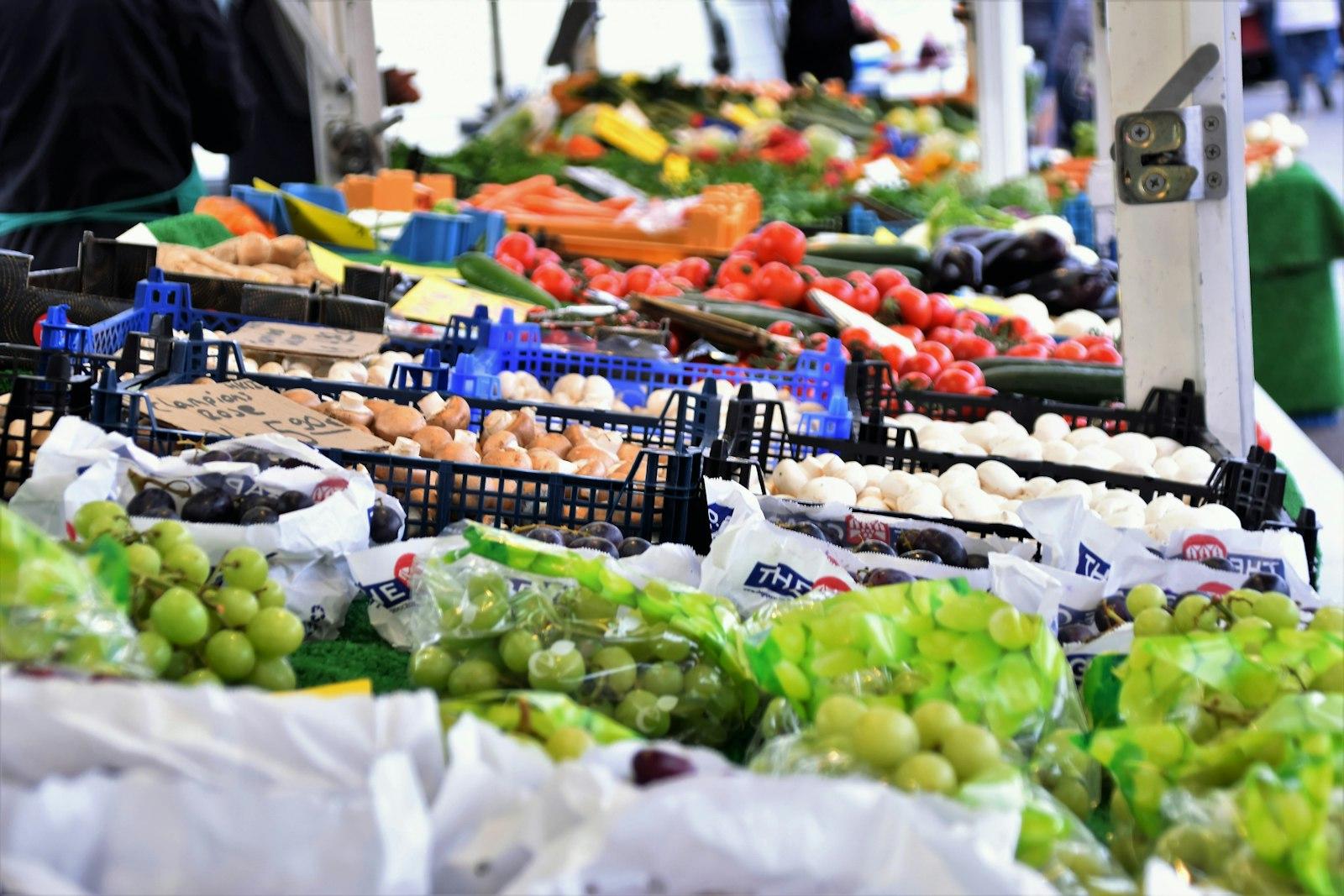
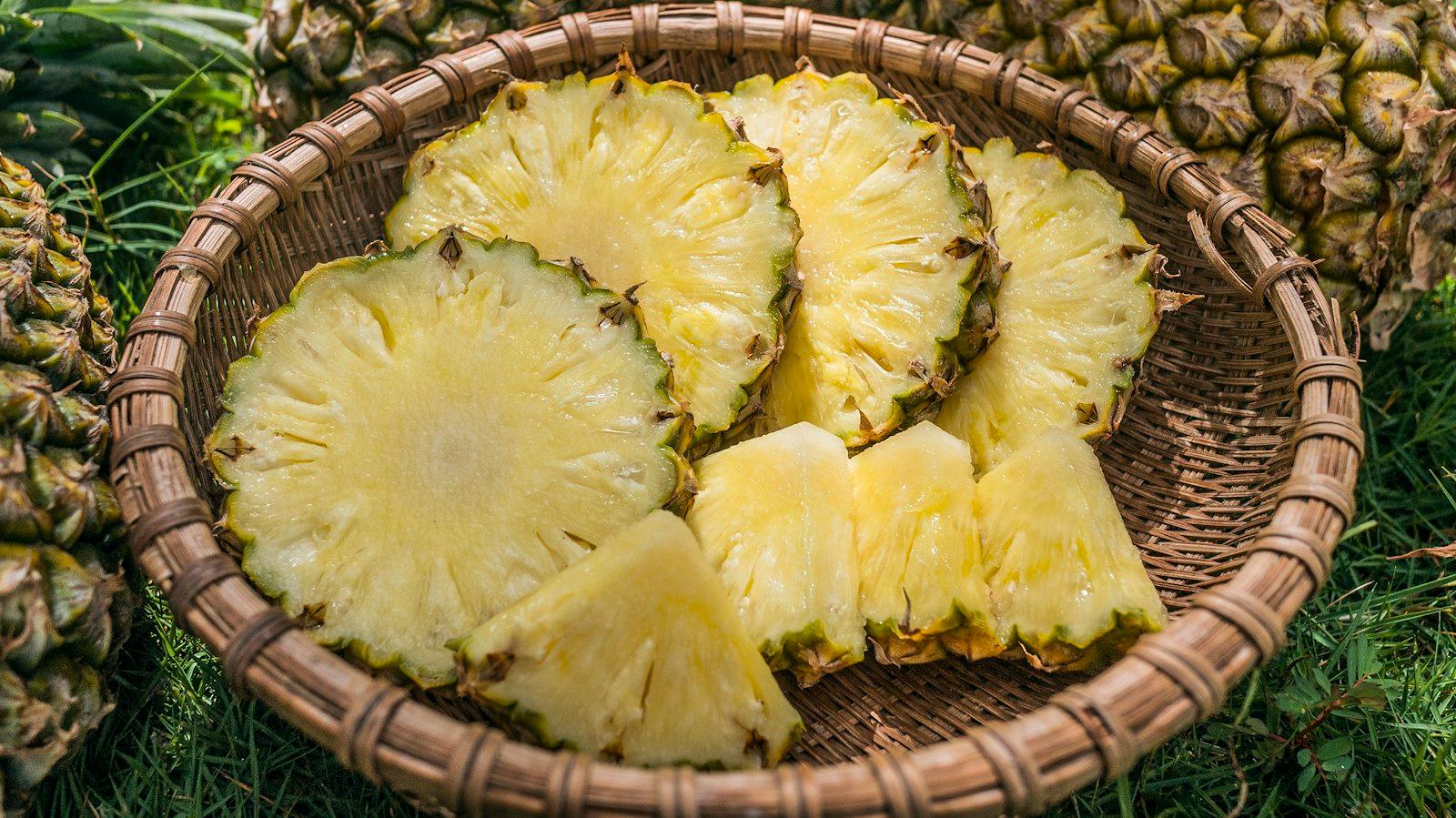
You can eat plain meat, fish, eggs, tofu, rice, oats, potatoes, lactose-free dairy, hard cheese, and fruit and vegetables that are low in FODMAPs at a measured portion, such as strawberries, grapes and pineapple. The restriction applies to the carbohydrate types, not to whole food groups, so most meals can be rebuilt with swaps rather than abandoned.
The idea behind the diet is to cut the poorly absorbed, rapidly fermentable carbohydrates that pull water into the gut and feed gas-producing bacteria. Gibson and Shepherd describe the FODMAPs as a monosaccharide (fructose), a disaccharide (lactose), oligosaccharides (fructans and galactans) and polyols (Gibson 2010). In a single-blind crossover trial, 30 people with IBS had lower overall symptom scores on 21 days of a low FODMAP diet (22.8 mm) than on a typical Australian diet (44.9 mm) (Halmos 2014). Most food in that trial was provided, with a target of under 0.5 g of FODMAPs per meal, which is much tighter than most home cooking will manage.
Two guideline bodies back a limited trial of the diet. The American College of Gastroenterology recommends a limited trial of a low FODMAP diet in IBS to improve global symptoms (Lacy 2021), and the AGA calls it currently the most evidence-based diet intervention for IBS (Chey 2022). The British Society of Gastroenterology positions it as a second-line dietary approach, delivered by a trained dietitian (Vasant 2021).
Here is the full list by food group. Items are marked with the subgroup that makes them high. "Usually fine" means commonly listed as low at a normal serving, not that any amount is safe.
Grains and starches
| Usually high (subgroup) | Usually fine, at a normal portion |
|---|---|
| Wheat bread, pasta, couscous (fructans) | Rice |
| Rye bread (fructans) | Oats |
| Many breakfast cereals and muesli bars (fructans, sometimes honey or dried fruit) | Potatoes and plain potato chips |
| Wheat-free muesli, depending on ingredients (fructans) | Spelt bread |
| Gluten-free products made with inulin or fruit concentrates (fructans, excess fructose) | Gluten-free grains such as plain rice, per dietitian guidance |
In a laboratory analysis of 55 grains, cereals, breads, pulses and biscuits, fructans were the most common short-chain carbohydrate in cereal products, ranging from 1.12 g per portion in couscous to 0 g in rice, 0.6 g in dark rye bread to 0.07 g in spelt bread, 0.96 g in wheat-free muesli to 0.11 g in oats, and 0.81 g in a muesli fruit bar to 0.05 g in potato chips (Biesiekierski 2011). Those are grams per portion as eaten in an Australian analysis, so they depend on the portion and product.
Protein
| Usually high (subgroup) | Usually fine |
|---|---|
| Most legumes: kidney beans, baked beans, lentils, split peas (GOS) | Plain cooked meat, fish and eggs |
| Falafel and hummus (legume-based, so GOS) | Tofu |
| Processed and seasoned meats (often onion or garlic, so fructans) | Tempeh |
| Soy cheese |
Raffinose and stachyose, the GOS compounds, were most common in pulses in the cereal and pulse analysis above (Biesiekierski 2011). A Cleveland Clinic page lists most legumes and processed meats among high FODMAP foods and plain-cooked meat, tofu and eggs among low ones (Cleveland Clinic 2022). A laboratory analysis of 35 plant-based foods classed tempeh and soy cheese among the 20 that were low FODMAP (Tuck 2018).
Dairy
| Usually high (subgroup) | Usually fine |
|---|---|
| Milk (lactose) | Lactose-free milk and yogurt |
| Yogurt (lactose) | Hard cheeses, commonly listed as very low lactose |
| Soft and fresh cheeses (lactose) | Butter, commonly listed as low |
Lactose is a disaccharide, and it is the one FODMAP many people already recognize. In a systematic review of 36 randomized studies in lactose intolerance, 12 to 15 g of lactose, roughly one cup of milk, was well tolerated by most adults (Shaukat 2010). That population was people with lactose intolerance, not IBS specifically, so it is a reminder that dose matters rather than a safe amount for you.
Fruit
| Usually high (subgroup) | Usually fine, as one portion |
|---|---|
| Apple, pear, mango, watermelon (excess fructose) | Strawberries |
| Clingstone peach (excess fructose) | Grapes |
| Stone fruits such as cherries, plums, apricots (polyols) | Pineapple |
| Dried fruit and fruit juice (concentrated sugars) | Unripe or just-yellow banana |
Apple, pear, mango, clingstone peach and watermelon all contained fructose in excess of glucose, and sorbitol was measured in 15 fruits in the same analysis (Muir 2009). The Cleveland Clinic page notes that a ripe banana is high in fructose, while an unripe one or a third of a ripe one is acceptable. Our full breakdown, with portions and the polyol side, is in the low FODMAP fruits list.
Vegetables
| Usually high (subgroup) | Usually fine |
|---|---|
| Garlic (fructans) | Many leafy and root vegetables, varying by type and amount |
| Onion, shallot, leek bulb (fructans) | Vegetable portions are small enough to matter |
| Artichoke (fructans) | Some vegetables, including some common ones (mannitol or sorbitol) |
Of 60 vegetables measured, garlic, artichoke, shallots, leek bulb and onions held the most fructans, ranging from 1.2 to 17.4 g per 100 g (Muir 2007). Sorbitol or mannitol was measured in 18 vegetables, and raffinose or stachyose in 7 (Muir 2009). I have deliberately not named individual "safe" vegetables here, because the published tables vary and the serving matters. Use a current, serving-based list for these. For flavor without the fructans, see onion and garlic substitutes on low FODMAP and low FODMAP salad dressing.
Drinks
| Usually high (subgroup) | Usually fine |
|---|---|
| Fruit juice, especially apple and pear (excess fructose) | Water |
| Milk and milk drinks (lactose) | |
| Sugary soft drinks made with high-fructose corn syrup (excess fructose) | Canned coconut milk in a small serving, per laboratory analysis |
| Sugar-free drinks and gums with sorbitol or mannitol (polyols) |
High-fructose corn syrup in processed US foods may contribute to higher excess fructose levels (Varney 2017). Sorbitol was found in certain fruits and sugar-free gum, and mannitol in certain vegetables (Yao 2014). Canned coconut milk measured 0.24 g of FODMAPs per serve in the plant-based food analysis (Tuck 2018). Drinks are quick to overdo: a glass of juice carries the sugar of several fruits.
Sweeteners
| Usually high (subgroup) | Usually fine |
|---|---|
| Honey (excess fructose) | Regular table sugar, in small amounts |
| Agave (excess fructose) | |
| High-fructose corn syrup (excess fructose) | |
| Sorbitol, mannitol, xylitol, maltitol (polyols) | |
| Inulin and chicory root fiber (fructans) |
A dietitian-written guide lists honey, agave, high-fructose corn syrup, inulin and sugar alcohols among the high FODMAP ingredients to look for (Leech 2026). Table sugar is not "excess fructose" because sucrose splits into equal parts glucose and fructose, which is why it sits on the usually-fine side. It is still a sugar, and the polyol and inulin traps are in "sugar-free" and "high fiber" products.
If you want the typical snack-aisle version of this list, we cover it in low FODMAP snacks, and low FODMAP breakfast ideas does the same for the first meal of the day.
What foods can't you eat on low FODMAP?
During the restriction phase you avoid foods high in fructans (onion, garlic, wheat, rye), GOS (most legumes), lactose (milk, soft dairy), excess fructose (apples, pears, mango, honey) and polyols (sugar-free gum and sweets, some fruits and vegetables). The aim is a short, temporary reduction, not a permanent ban on any of them.
The exclusions are easier to remember by subgroup than by food, because that is how the lab data are organized. The cutoffs that classify foods as low FODMAP relate to each FODMAP separately, including fructans and GOS, mannitol and sorbitol, lactose, and fructose in excess of glucose (Varney 2017).
| Subgroup | Where it hides | What to read for |
|---|---|---|
| Fructans | Wheat, rye, onion, garlic, shallot, leek, artichoke | Onion or garlic powder, inulin, chicory root |
| GOS | Legumes and pulses | Beans, lentils, falafel, hummus |
| Lactose | Milk, yogurt, soft cheese | Milk solids, whey in some products |
| Excess fructose | Apple, pear, mango, watermelon, honey | Honey, agave, high-fructose corn syrup |
| Polyols | Some fruits, some vegetables, sugar-free gum and sweets | Ingredients ending in -itol |
Here is the part that gets lost in list culture. In a double-blind rechallenge trial of 25 people with IBS who had improved on restriction, symptoms returned in 70% given fructose, 77% given fructans and 79% given both, against 14% given glucose, and they were induced in a dose-dependent manner (Shepherd 2008). In other words, the trial showed fructose and fructans can cause symptoms, and that the dose mattered. It did not show that any one food on a list is a problem for you.
The restriction phase has a ceiling. The AGA advises specific diet interventions be attempted for a predetermined length of time, and that if there is no clinical response the diet should be abandoned for another approach (Chey 2022). If your symptoms have not changed after the restriction phase, a longer list is not the answer. Our post on what to do if low FODMAP does not work covers the next steps.
What foods can you eat freely on a low FODMAP diet?
The safest foods are those with little or no carbohydrate to ferment: plain meat, fish, eggs, and cooking fats, plus rice, which measured 0 g of fructans in a laboratory analysis. "Freely" still has limits, because marinades, stock, sauces and seasonings are where onion, garlic and honey sneak in.
No food is free in the sense of unlimited, because the diet is about the total load across a meal and a day. But some foods are close to a blank slate. In the grain analysis above, rice had 0 g of fructans per portion, oats 0.11 g and plain potato chips 0.05 g (Biesiekierski 2011). Cleveland Clinic lists plain-cooked meat, tofu and eggs as low FODMAP foods (Cleveland Clinic 2022).
A realistic "safe base" for a first week is short and repetitive on purpose:
- Plain proteins: chicken, beef, turkey, fish, eggs, firm tofu or tempeh, cooked simply.
- Starch: rice, oats, potatoes, or a low FODMAP bread you have already checked.
- Fats and flavor: oil, butter, salt, herbs, and green onion (spring onion) tops rather than onion or garlic.
- Fruit and veg: the ones you have checked against a serving-based list, one portion at a time.
- Drinks: water.
The repetition is not a lifestyle. It is so you can tell what a change in symptoms means. A member of r/FODMAPS describes the same logic in a thread about turning every dinner into "food math": a common reply is that elimination only works if you hold serving size, timing and combinations steady and track sleep, stress and bowel habits, so that a reaction during reintroduction means something (r/FODMAPS, "food math"). That is lived experience, not evidence, but it matches why dietitians ask for a stable baseline.
Another theme in that thread is that people feel pushed into eating the same few foods in fear. If you are losing weight without trying, or eating so little that you are worried, that is a reason to tell your clinician, not to push on. The AGA lists people at risk of malnutrition or with an eating disorder as poor candidates for restrictive diets (Chey 2022). If low FODMAP has left you afraid of food, our post on whether the diet can cause an eating disorder is worth reading.
What are the top 10 worst high FODMAP foods?
No validated ranking of "worst" foods exists, because it depends on how much you eat. The ten most often named are garlic, onion, wheat bread and pasta, legumes, apples, pears, mango, milk, honey and sugar-free sweets. They are high in one FODMAP subgroup each, in amounts that add up quickly in everyday portions.
Treat this as a hit list, not a league table. Here is each one with the subgroup and the evidence behind it:
- Garlic (fructans). Among the highest-fructan vegetables measured, along with artichoke, shallots, leek bulb and onions, which ranged from 1.2 to 17.4 g per 100 g (Muir 2007).
- Onion, shallot and leek (fructans). Same analysis, same range. These are easy to miss because they are cooked into stocks, sauces and seasonings.
- Wheat bread, pasta and couscous (fructans). Couscous carried 1.12 g of fructans per portion in the grain analysis, against 0 g for rice (Biesiekierski 2011).
- Legumes (GOS). Raffinose and stachyose were most common in pulses (Biesiekierski 2011).
- Apples (excess fructose). Covered in its own section below.
- Pears (excess fructose). Measured alongside apple, mango, clingstone peach and watermelon (Muir 2009).
- Mango and watermelon (excess fructose). Same analysis.
- Milk, soft cheese and yogurt (lactose). Dairy is listed among the main high FODMAP groups (Cleveland Clinic 2022), while lactose tolerance varies widely by person.
- Honey, agave and high-fructose corn syrup (excess fructose). All three are named as high FODMAP ingredients in the dietitian guide (Leech 2026).
- Sugar-free gum, sweets and drinks (polyols). Sorbitol was found in sugar-free gum, and in a blinded trial a 10 g dose of sorbitol or mannitol increased symptoms in people with IBS but not in healthy controls (Yao 2014).
Honourable mention: inulin and chicory root fiber, which are fructans added to "high fiber" and "gut health" products.
What foods are surprisingly low in FODMAP?
Some foods people assume are off-limits come out low in laboratory tables: oats, rice, plain potato chips, tempeh, canned coconut milk, strawberries, grapes, pineapple and unripe banana. Many dairy foods are low too if they are lactose-free or hard cheeses, and gluten-free grains are generally lower in fermentable carbohydrate than wheat.
Several of these are surprising because "carb-heavy" or "sweet" sounds like trouble, but FODMAPs are specific carbohydrates, not carbs in general:
- Oats and rice. Oats carried 0.11 g of fructans per portion and rice 0 g in the grain analysis, compared with 1.12 g for couscous (Biesiekierski 2011).
- Plain potato chips. 0.05 g of fructans per portion in the same analysis. The flavored versions are a different matter, because seasoning often contains onion or garlic.
- Tempeh, soy cheese and canned coconut milk. All were classed as low FODMAP among the 35 plant-based foods tested (Tuck 2018).
- Canned and pickled plant foods. The same study found that processing such as pickling and canning produced the greatest reduction in FODMAP content (Tuck 2018). This is a food-composition finding, not a promise that a particular tin will suit you.
- Strawberries, grapes and pineapple. Listed among low FODMAP fruits (Cleveland Clinic 2022).
- Unripe banana. A ripe banana is high in fructose, whereas an unripe one or a third of a ripe one is acceptable, according to the same page.
- Almonds in a small handful. A dietitian guide gives almonds as low FODMAP at 10 but high at 20, which is the cleanest example of why portion matters (Leech 2026).
The flip side is the "free-from" aisle. A US analysis found that gluten-free baked products contained unlabelled excess fructose and fructo-oligosaccharides (Chumpitazi 2018). Low in gluten does not mean low in FODMAPs.
Clairop logs meals, symptoms and stool in seconds, then looks for the foods your gut reacts to, including reactions that land days later.
What is the most common FODMAP trigger?
No study names one trigger as the most common, because response is individual. Fructans from wheat, onion and garlic are among the most widely eaten FODMAPs, and a blinded trial found fructose and fructans both provoked symptoms in most participants with IBS. Reintroducing one group at a time shows which ones affect you.
The honest answer is that "which FODMAP is worst" is the wrong question. In the rechallenge trial above, symptoms returned in 70% of people given fructose, 77% given fructans and 79% given both (Shepherd 2008). Those figures describe 25 people who had already responded to dietary change, so they do not rank the subgroups for the general population. What they do show is that more than one type matters.
Fructans are worth singling out for a practical reason. In the cereal analysis, fructans were the most common short-chain carbohydrate in grain products (Biesiekierski 2011), and onion and garlic sit near the top of the vegetable fructan data (Muir 2007). Because they hide in bread, stock cubes, sauces and seasoning, fructans are often the main way people exceed their threshold without realizing.
There is also the matter of how a trigger stacks. A high-traffic idea in r/FODMAPS is the "bucket": rather than one trigger food, your tolerance fills up with the day's total load, stress and sleep, and a symptom appears when it overflows (r/FODMAPS, "The Bucket"). Several people in that thread say a dietitian taught them the same idea with a glass of water. It is a patient framework, not a proven model, but it fits what the trial data show about dose, and it is the reason FODMAP stacking matters: two "low" servings of different foods can add up.
A breath-test study adds a physical picture. In 15 people with IBS and 15 healthy people eating provided diets of 9 g or 50 g of FODMAPs a day for two days, breath hydrogen was higher on the high FODMAP diet in both groups, but gastrointestinal symptoms were induced only in the IBS group (Ong 2010). The same foods produce gas in everyone. The question is how sensitive your gut is to it.
Why can't you eat apples on a FODMAP diet?
Apples contain fructose in excess of glucose, one of the FODMAP types, and laboratory analysis confirmed this for apples, pears, mango, clingstone peach and watermelon. In people who absorb fructose poorly, this can bring on gas, bloating and loose stools. It is usually a restriction-phase pause, and apple is often tested again in reintroduction.
The mechanism is specific. Muir and colleagues measured the FODMAPs of 41 fruits and found apple, pear, mango, clingstone peach and watermelon all contained fructose in excess of glucose (Muir 2009). Fructose that comes with an equal amount of glucose is generally absorbed more easily, so it is the excess that is flagged. Because the cutoffs were derived from typical servings of foods that commonly trigger symptoms in IBS, an apple is listed high at a whole-fruit serving (Varney 2017).
Three nuances help here:
- It is a serving question. A slice or two is a different load from a whole apple, and apple juice is a different load again. Which portion is tolerable is something reintroduction can answer, not a list.
- Not everyone malabsorbs fructose. Gibson and Shepherd note that breath hydrogen tests can identify people who completely absorb a load of fructose and lactose, so that restriction can be less stringent for them (Gibson 2010).
- Other fruits are fine. Strawberries, grapes and pineapple are commonly listed as low. The full portion-by-portion detail is in our low FODMAP fruits list.
If apple is a food you love, test it with a plan rather than guessing. The order and the portions are covered in low FODMAP reintroduction order.
Can I stay on low FODMAP forever?
No, it is not designed to be permanent. The AGA describes three phases: restriction for no more than 4 to 6 weeks, reintroduction of FODMAP foods, and personalization based on what you learn. In one UK study of people who completed the process, most still followed an adapted, less restrictive diet afterwards.
The evidence for the long-term version is modest but consistent in shape. The AGA's best practice advice is that restriction should last no more than 4 to 6 weeks, followed by reintroduction and then personalization (Chey 2022). Whelan and colleagues describe the same three stages and note they can be covered in at least two dietetic appointments, with the second focusing on reintroduction to identify trigger foods (Whelan 2018).
What happens after? In a prospective study of 103 people with IBS who had completed dietitian-led education, 61% reported satisfactory symptom relief after restriction and 57% at long-term follow-up. By then 82% continued an "adapted FODMAP" diet, with a mean total FODMAP intake of 20.6 g a day against 29.4 g for those who had returned to a habitual diet, and nutritional adequacy was not compromised in either group (O'Keeffe 2018). That is a questionnaire study with no control group, so it describes what people do, not a guarantee of results.
There is a biological reason not to stay restricted. Restriction reduced luminal bifidobacteria in IBS patients in a trial that also reduced symptoms (Staudacher 2012). The clinical meaning is still debated, but it is part of why guidelines build in reintroduction. In the r/FODMAPS "food math" thread, one person says they stayed in restricted mode for years after poorly run reintroductions and believes it made things worse. That is one person's account, not evidence, but it matches the case for moving on.
How long should the first phase actually be? The sources differ a little. The AGA says no more than 4 to 6 weeks (Chey 2022), a Cleveland Clinic page says at least two and no more than six weeks, and one dietitian guide gives 3 to 8 weeks depending on response. We unpack the timing question, and what to do if you are still symptomatic, in how long should I do low FODMAP. For what the abbreviation actually stands for, see what does FODMAP stand for.
How do you use a low FODMAP food list without getting stuck?
A food list is only useful if it leads somewhere. Three habits make that likelier:
- Pick one list and serving-based quantities. Because published lists are often discordant (McMeans 2017), switching between them mid-diet creates noise.
- Log what you eat and what happens. Reintroduction depends on noticing patterns over days, not meals. A paper food diary is fine, and an app can add delayed-window analysis. Clairop scans a barcode and shows FODMAP load across all six subgroups with each value citing its published paper, shows "no data" rather than assuming low for ingredients not in its table, and tests each food in three time windows, but it is an iPhone-only tracker, not a medical device. How it works is on the how it works page, and our post on a low FODMAP barcode scanner app explains the limits of every scanner.
- Plan the exit on day one. Decide when you will start reintroduction and with whom. Dietitian support is the stated best-practice route: the AGA advises referral to a registered dietitian for people willing to collaborate with one (Chey 2022).
When should you see a doctor about a low FODMAP list?
A low FODMAP list is for managing diagnosed or suspected IBS, and the diagnosis should come first. See a doctor promptly for blood in your stool, black stools, unexplained weight loss, fever, symptoms that wake you at night, signs of anemia, a family history of bowel cancer or inflammatory bowel disease, or new symptoms after age 50. For people with Crohn's disease or ulcerative colitis, diet changes should be discussed with your gastroenterology team, because food choices cannot replace medical treatment for inflammation.
The ACG suggests serologic testing for celiac disease in people with IBS-type symptoms with diarrhea, and a fecal calprotectin test where inflammatory bowel disease is suspected (Lacy 2021). Those tests, not a food list, are how those conditions are separated from IBS.
Common myths
- "Low FODMAP means no carbs." It does not. Rice, oats and potatoes are carbohydrate foods that rate low.
- "Gluten-free means low FODMAP." Not reliably, as the US analysis of gluten-free baked goods showed (Chumpitazi 2018).
- "A high FODMAP food is a bad food." These are ordinary nutritious foods for most people. The diet is a diagnostic tool, not a verdict on them.
- "If a food is on the list, I can eat as much as I want." The rating is for a serving, and portions stack.
- "Once I am better, I stay on it." The plan is restriction, reintroduction, then a personalized diet (Chey 2022).
The short version
Use the tables above as a map, not a rulebook. Cut the high items for a few weeks, keep portions steady, hold a simple log, then test foods back in one group at a time, ideally with a dietitian. The aim is not a longer list of forbidden foods. It is a shorter one that is yours.